
About us
How We Classify Walking Safaris
Every camp on this site is judged on the same published tests, and this page sets them out in full.
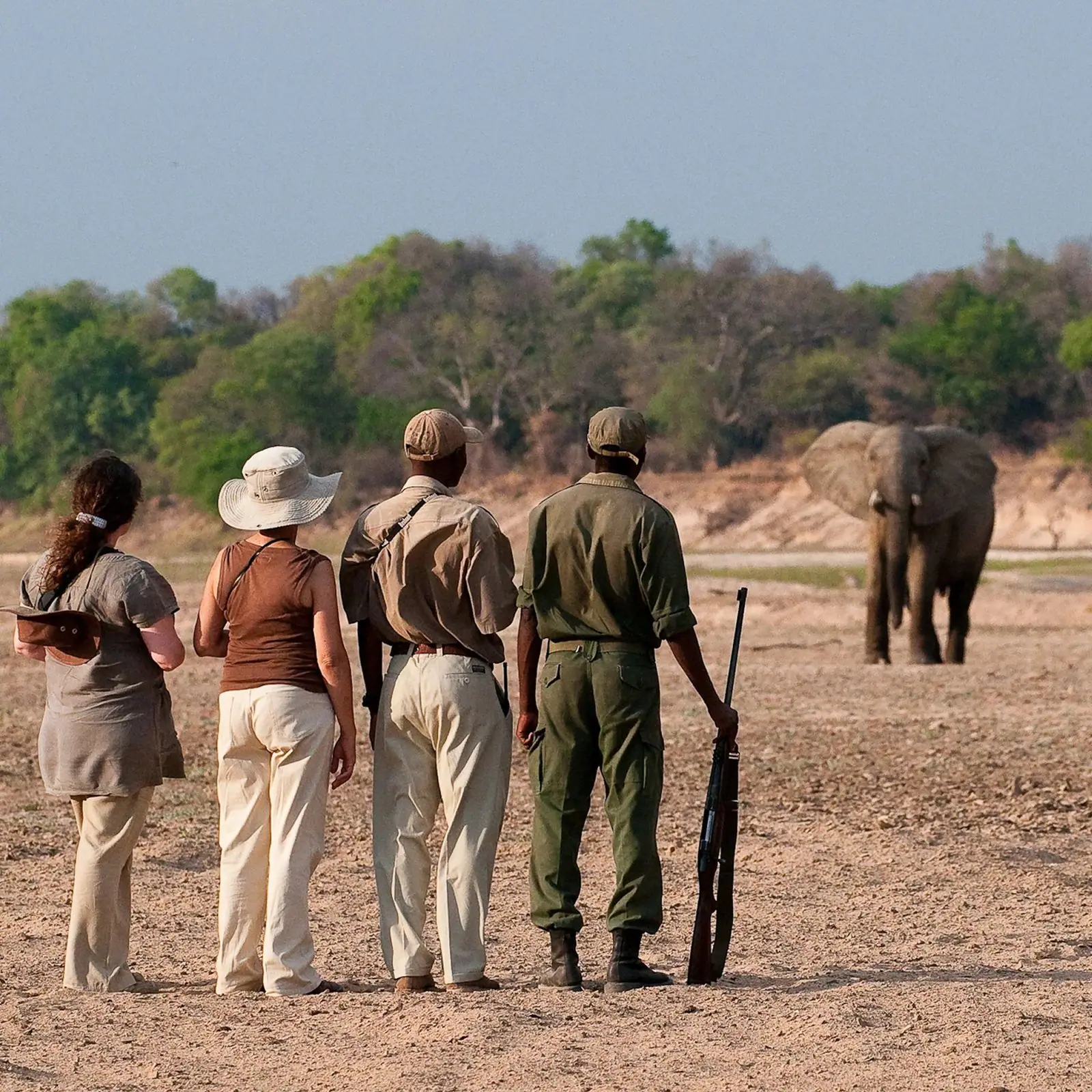 Photo: The Bushcamp Company
Plenty of safari camps offer a walk. Far fewer have built their trip around one. To tell them apart fairly, we apply one set of rules to every operator, in every country, and we publish those rules here.
The six tests
A camp passes our threshold when its walking meets all six of these tests, or nearly all of them.
- Daily scheduled walks. Walks run every day as standard, not "on request" or "conditions permitting."
- Dangerous-game country. Elephant, buffalo and lion are present where guests walk.
- Licensed armed leadership. The walk is led by a guide licensed for walking by the national authority, with a rifle carried by the guide or by an official armed escort.
- Real duration. Walks last two to four hours, or the product is a multi-day trail. Short strolls do not count.
- Small groups. In practice, six to eight walkers at most.
- Legally sanctioned. Walking is permitted in that area by law or by the terms of the concession.
Fencing is recorded but is not by itself a reason to fail a camp, as long as elephant, buffalo and lion are present.
The three formats
Camps that pass are placed in one of three formats. These describe how a trip is built. They are not a quality ranking.
- Walking Expedition: walking is the whole trip. This covers mobile walking camps, trail camps and multi-day walks. Vehicles are used only for transfers.
- Walking Camp: guided walks are offered every day as an equal choice with game drives, and guests choose each day. Walks end before dark, so evenings are drives.
- Walks Offered: a walk is on request or secondary to the drive. Camps that offer walks but have not yet been verified against the six tests also sit here until the evidence is in.
The format is our judgment, drawn from evidence. No operator uses these labels, and a camp can move between formats when new evidence appears. In our most recent review, for example, several camps moved from Walking Expedition to Walking Camp because they also run game drives.
How we count
The unit is the physical camp.
- A fixed or seasonal camp counts once.
- A mobile camp counts once for each unit operating at the same time.
- A fly camp or sleep-out that hangs off a base camp counts with that base camp. It is recorded as an attribute of the camp, not as a separate camp.
- A set-departure mobile trip counts as one.
- Sister camps are shown separately only where they have their own site.
- A camp must be operating or bookable for the current or coming season.
What we exclude
- Self-carry trails. Products where guests carry their own tents, gear or food fall outside our scope. Operator-staffed mobile camps stay in, whether staff, porters, camels or vehicles move the camp.
- Self-catering products. We cover commercial walking safari operations in which guests book rooms or tents with an operator.
- Add-on walks at public rest camps. Short walks booked at reception by guests staying in public, self-catering rest camps are activities, not walking safari operations.
- Discontinued products.
- Camps we cannot verify. A camp is listed only when a current public source, ideally the operator's own website, confirms that it is operating, where it is and that it offers guided walks. If we cannot confirm all three, the camp stays out of the directory until we can. We recheck every listing each season, and new camps go through the same check before they appear.
- Unarmed tracking on foot. Where trackers and guides carry no rifles, the product fails the third test. We may list it in a separate category.
State-run camps are listed but footnoted. Kruger's seven SANParks wilderness trails, for example, are bookable, staffed and catered, so we list and compare them. Because they are run by a state agency rather than a commercial operator, we footnote them wherever we count them.
What every camp profile records
Every qualifying camp is described on the same 12 attributes:
- Name, operator, park and camp type (fixed, seasonal or mobile)
- Format
- Walks per day, with duration or distance
- Maximum group per walk
- Armed personnel per walk, and the guide's qualification
- Game drives and night drives
- Beds or guests
- Season
- Minimum stay or set departures
- Rate, which we record for our like-for-like research but do not publish
- Whether the walking area is exclusive or shared
- Whether the area is fenced
Attributes 3 to 5 tell us whether walking is a real competency. The others explain why camps that look alike on paper feel different on the ground. Where a fact rests on a single secondary source, on conflicting sources or on nothing current, we treat it as unverified and do not publish it as fact.
Listings and payment
Every camp that qualifies gets a free basic listing: camp name, operator, park and area, format and season. Every qualifying camp appears, paid or not, because our park comparisons depend on a complete count.
Operators can pay for a featured listing, which adds a full profile, photographs, a description and contact details. Featured listings are labeled. Payment never changes a camp's format, its place in any comparison, or what our articles say about it. The camps owned by the company that runs this site are featured on the same terms and labeled the same way.
Corrections from operators
If you run a camp and believe your entry is wrong, tell us through our contact page. Send your operator name, the camp, the correction and, where you can, a current fact sheet or other evidence. We check every correction against the six tests, make changes promptly, and note significant corrections at the foot of the relevant article. Operators with featured listings supply and confirm their own profile details, which we check against the same criteria.
Sources
- walkingsafaris.com research: Bona fide walking safari inventory and like-for-like comparison of walking safari camps (internal research, October 2026)
- SANParks, Kruger Wilderness Trails: https://www.sanparks.org/parks/kruger/what-to-do/activities/wilderness-trails
- SANParks, Kruger guided walks: https://www.sanparks.org/parks/kruger/tourism/activities/walks.php
- SANParks, Kruger Backpacking Trails: https://www.sanparks.org/parks/kruger/what-to-do/activities/backpacking-trails
Spotted an error? Tell us. How we classify camps: our methodology.