
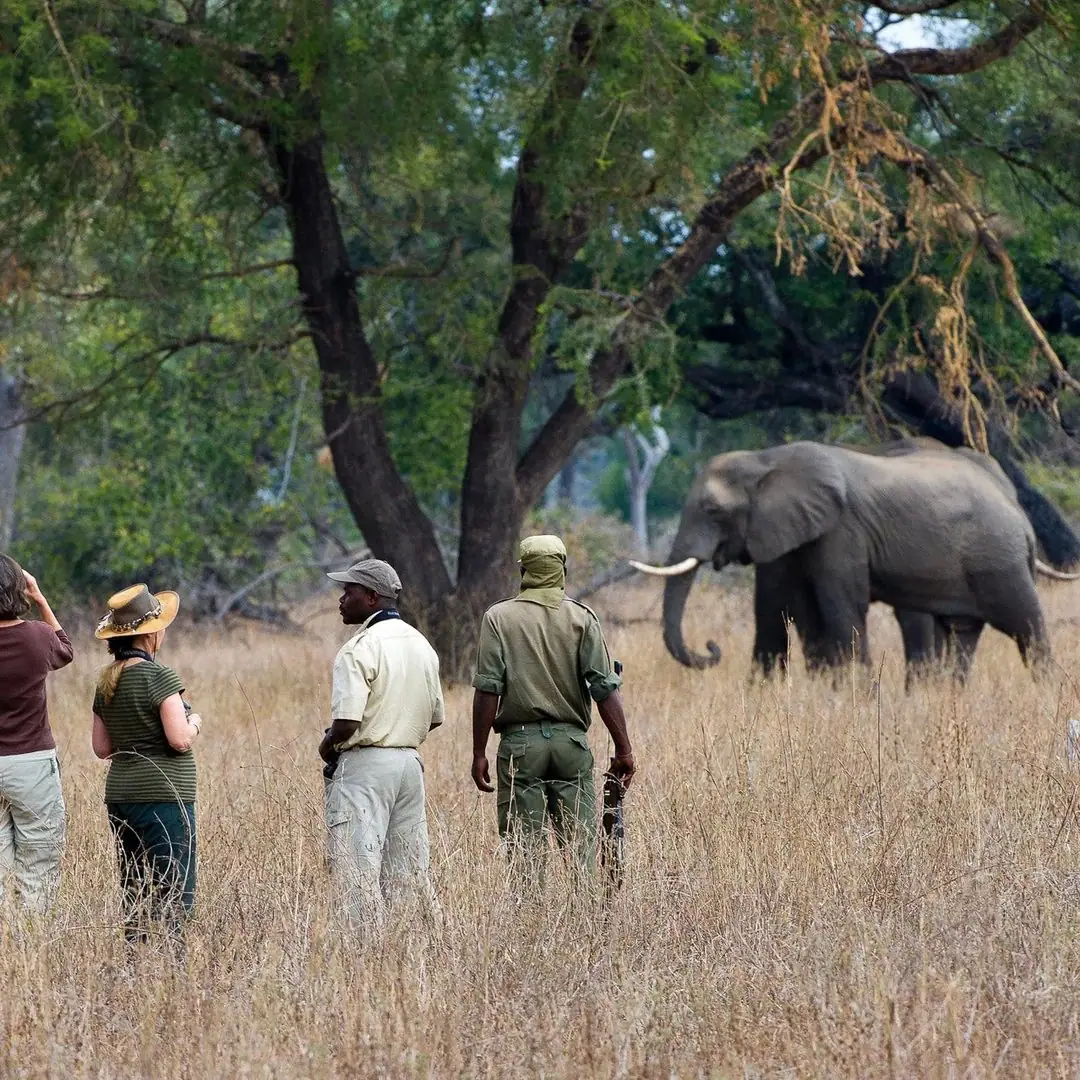
Why Walk
Why walk? Everything to know before your first walking safari
What a walking safari really is, how safe it is, how far you go and how it compares with a game drive. Plain answers, no brochure language.
Everything to know before you go
What Is a Walking Safari?
A walking safari is a guided journey on foot through wild, unfenced country, led by trained and armed professionals, and it shows…
Are Walking Safaris Safe?
A walking safari is built around managing risk: trained and armed professionals, small groups, a clear briefing and a few rules…
How Far Do You Actually Walk on a Walking Safari?
Less than most people expect, and more slowly: a typical morning walk in a Walking Camp covers 3–5 km, and the time goes on…
Walking Safari vs Game Drive: Why the Best Trips Do Both
Walking and driving are not rivals: each shows you a different Africa, and for most travelers the best trip gives you both and…
How Fit Do You Need to Be for a Walking Safari? Fitness and Health on Foot
Fitter than you need to be for a game drive, far less fit than you need to be for a mountain trek: what a walking safari really…
What Will You See on a Walking Safari?
Walking is not the best way to find lions, and that is not why people do it.
Walking Safari Age Limits, Country by Country
Most walking safari age limits are camp policy, not law, which is why two camps in the same park can give you two different…
A Morning on Foot: What Happens on a Walking Safari
A walking safari morning has a shape, and once you know it, the day makes sense: up before the sun, out on foot in the cool, back…
Mobile, Camp-Based or Trail: The Three Kinds of Walking Safari
Every safari brochure mentions walking, but the trips behind those words are built in three very different ways.
Who Leads Your Walk? Guide Licensing and Armed Escorts by Country
Every walking safari is only as good as the people at the front of the line, and each country decides differently who those…
Why Your Guide Matters Most on a Walking Safari
Three things shape a safari: where you go, where you stay, and who guides you. The third can outweigh the other two.
Walking Safari Etiquette: How to Behave on Foot
A walking safari has very few rules, and every one of them has a reason. Learn them before your first walk and you will be the…
Photography on a Walking Safari
A walk gives you photographs a vehicle never will: eye-level animals, tracks, textures and the people you walk with. It also asks…
Walking Safaris and Conservation: Why Going on Foot Matters
A walking safari is not just a quieter way to see Africa. It is one of the most direct ways a visitor can help keep wild places…
Walking and driving, side by side
On foot you notice what a vehicle passes by: tracks, sounds, the small life of the bush, and the feeling of being one more animal in the landscape. From a vehicle you cover distance, find predators and stay out after dark.
That is why most travelers are happiest in a Walking Camp, where a walk each morning and a drive each evening are offered as equals.
3–5 km
A typical morning walk
3–4 hrs
Mostly spent stopping and watching
6–8
Usual maximum walkers
Before dark
When every walk ends
Ready to choose where to go?
Which walking safari is right for you?