
Learn More · FAQ
Walking safari questions, answered
Short answers to the questions people ask most, with a link to the full guide for each.
What is a walking safari?
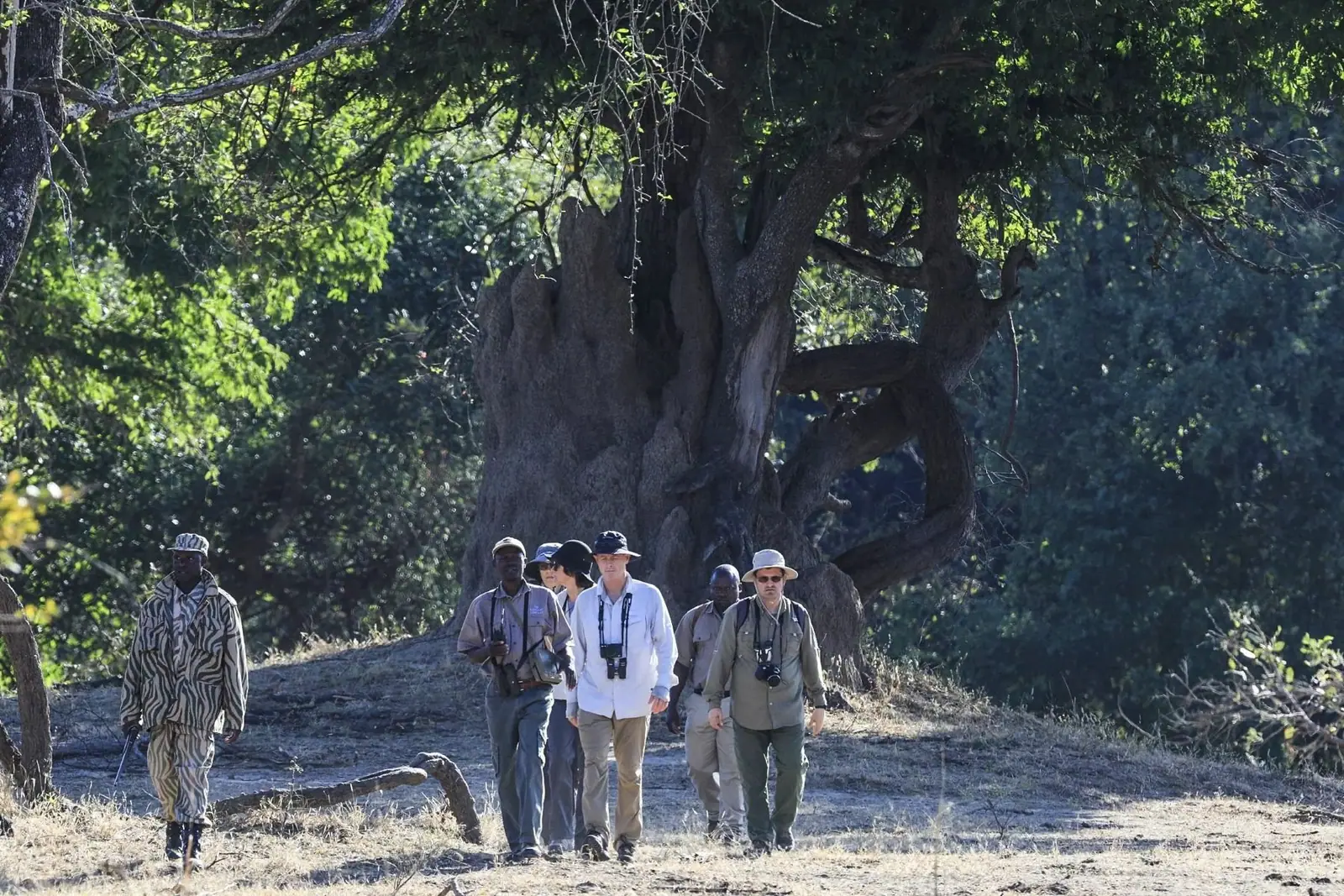
A guided walk through wild country with a professional guide, usually with an armed scout or ranger, looking at animals, tracks, plants and birds on foot rather than from a vehicle. Most last a morning.
Are walking safaris safe?
Yes, when they are run properly. Walks are led by licensed, highly trained guides, and in Zambia an armed government scout goes on every walk. Serious incidents are very rare. The few rules, like walking in single file and never running, exist to keep it that way.
How far do you walk?
In a Walking Camp, a typical morning walk covers about 3–5 km (2–3 miles) over three to four hours, with many stops. Walking Expeditions cover more, often 10 km or more a day.
How fit do I need to be?
If you can walk for three or four hours on uneven ground with stops, you are fit enough for most walking safaris. Heat and uneven ground matter more than speed or distance.
Am I too old for a walking safari?
Usually not. Most camps set a minimum age but no maximum. The main exception we found is Kruger’s multi-day wilderness trails, for ages 12 to 65. Choose a Walking Camp and you can decide each morning whether to walk or drive.
What is the minimum age?
In Zambia’s national parks the minimum walking age is 12, and some camps set a higher age. Rules differ by country and park, often 12 to 16.
Who leads the walk?
A licensed walking guide leads every walk. In Zambia an armed government scout from the Department of National Parks and Wildlife goes too. Licensing and escort rules differ by country.
What will I see on foot?
Antelope, birds and smaller life on almost every walk; often elephants, buffalo, giraffe and hippos; lions, leopards and wild dogs occasionally. A walk is about reading the bush, not ticking off animals.
What should I wear?
Muted bush colors such as khaki, olive, brown or gray, and comfortable closed shoes you have already walked in. Avoid white and bright colors, and avoid dark blue and black, which attract tsetse flies.
When is the best time for a walking safari?
In southern Africa, the dry season, roughly June to October, is the core walking season. Many walking camps close in the rains.
Where is the best place for a walking safari?
South Luangwa in Zambia has more walking camps than any other park in our directory, and walking there is an equal partner to the game drive. Mana Pools, North Luangwa, Greater Kruger and Hwange are also excellent.
Should I walk or take game drives?
Both. Walking gives you the detail, the sounds and the thrill of being on the ground; drives cover more distance and get you closer to the big animals. The best trips combine the two.
What happens if an animal charges?
It is rare, and most charges are warnings. Stand still, stay together behind the guide, never run, and do exactly what the guide says.
What are the three kinds of walking safari?
A Walking Expedition, where walking is the whole trip; a Walking Camp, where walks are offered every day as an equal choice with game drives; and Walks Offered, where a walk is an occasional extra.
Can I walk from camp to camp?
In some areas, yes. In parts of South Luangwa, neighboring bushcamps are close enough to walk between on request, with a vehicle moving the luggage.
How do I get to South Luangwa?
Fly to Lusaka, take a 70 to 80 minute domestic flight to Mfuwe, then drive to camp. Gateway camps are about 40 minutes from the airport; camps deeper in the park are two to four hours.
How much does a walking safari cost?
It depends on the country, the season and the kind of camp. Our cost guide explains what drives the price and what is usually included.
Can I take photographs on a walk?
Yes. Travel light with one camera and a versatile zoom, shoot quietly during stops, and put the camera down when the guide asks you to move.
Do I need malaria tablets?
The walking parks are malaria areas, and health authorities recommend antimalarials for travelers to countries such as Zambia. Talk to a travel clinic or your doctor before you go.
Who runs this site, and do camps pay to be listed?
WalkingSafaris.com is published by The Safari Heritage Collection. Every camp that meets our published criteria is listed free, assessed the same way. Featured listings are paid and clearly labeled.
Still have a question? Search the site or browse the Library.