
Where to Walk
Walking Safaris in Namibia
Namibia is one of Africa's great safari countries, but it is not one of its great walking countries. Most walks here are short and offered alongside drives. The exceptions are worth knowing, especially tracking rhino on foot.
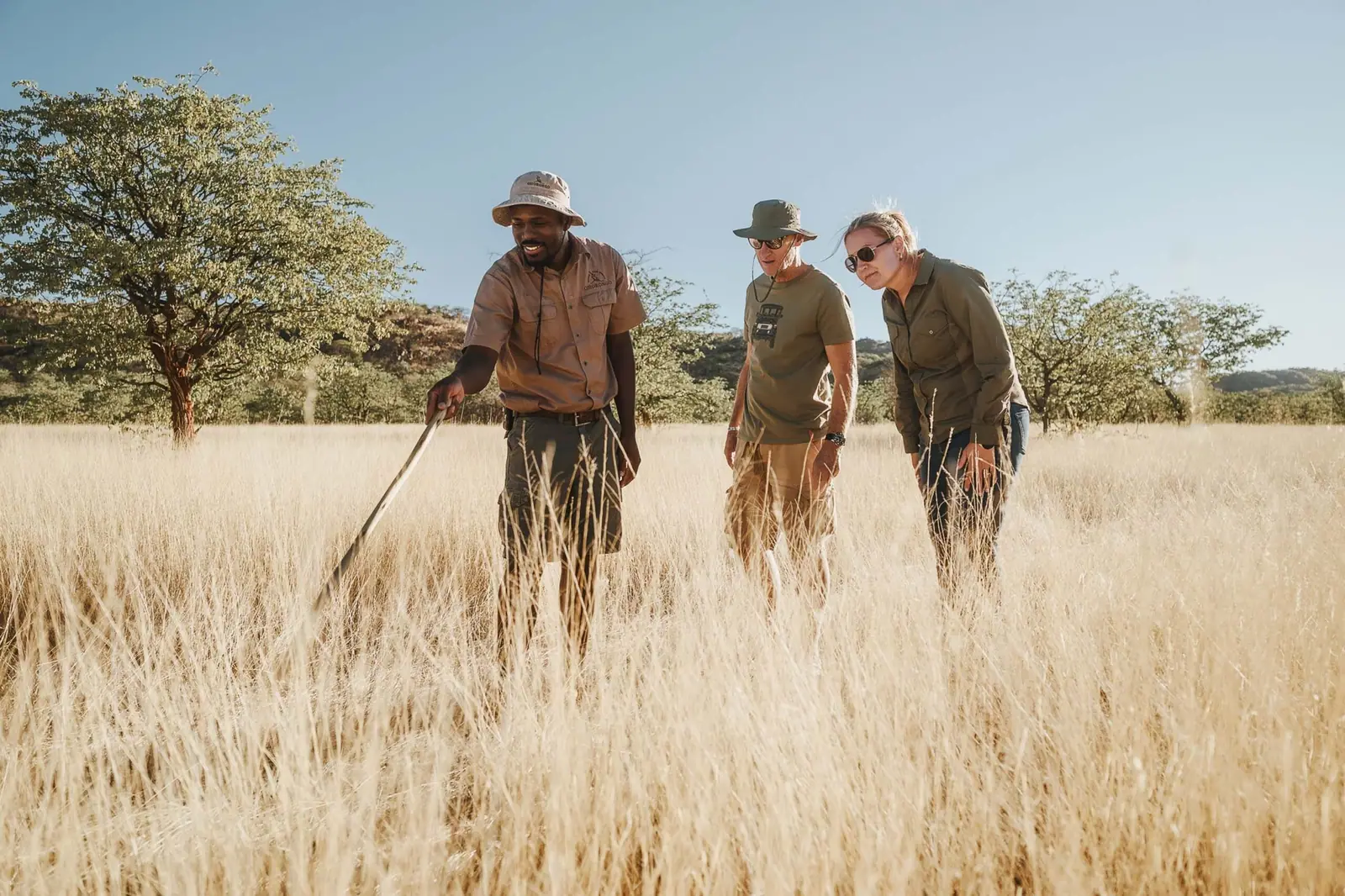 Photo: Ohorongo Game Reserve
Walking parks in Namibia
Select a park on the map.
Walking-led camps (larger dot, more camps)Walks offered onlyDrag to move · + and − to zoomRelief: NASA Earth Observatory · Rivers: Natural Earth
Why Namibia is different
Namibia's safari country is wide open and very dry. Its most famous park, Etosha, is built around game drives, and most of its wildlife viewing is done from a vehicle at waterholes. Lodges across the country offer a walk as a morning or afternoon option, typically short and focused on tracks, plants and small creatures rather than walking up to big game.
That is a fine way to stretch your legs and learn the desert. But it is a different experience from a classic walking safari, where walking with a guide and an armed scout through big-game country is the main event every day. If that is what you are after, Namibia works best as an add-on to a walking trip elsewhere. See The Best Walking Safaris in Africa.
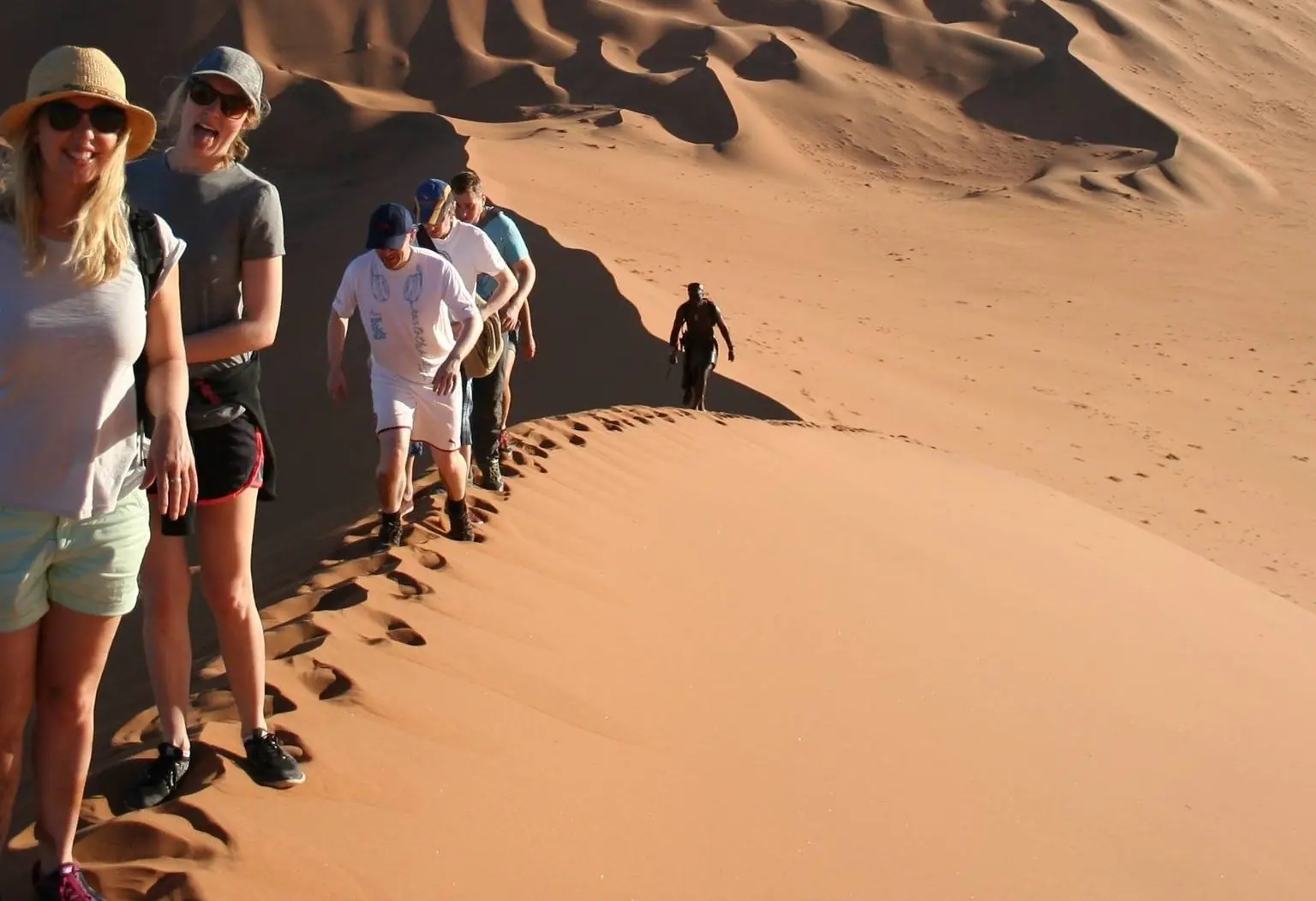 Photo: Namib-Naukluft National Park
Tracking rhino on foot in Damaraland
This is Namibia's one truly world-class walking experience. In the rugged basalt hills of Damaraland, desert-adapted black rhino roam free across a vast area. At Desert Rhino Camp, guests leave at sunrise with trackers from Save the Rhino Trust, a conservation group that knows the individual rhino of the region. Once a rhino is found, guests approach on foot, quietly, following the trackers' hand signals, and keep a safe distance. The trackers and guides carry no rifles [1].
It is a short, intense walk rather than a day on foot, but few wildlife encounters anywhere compare to it. See Rhino Tracking on Foot.
Etosha's private reserves
Game viewing inside Etosha National Park is by vehicle. Walking happens on the private reserves along its borders:
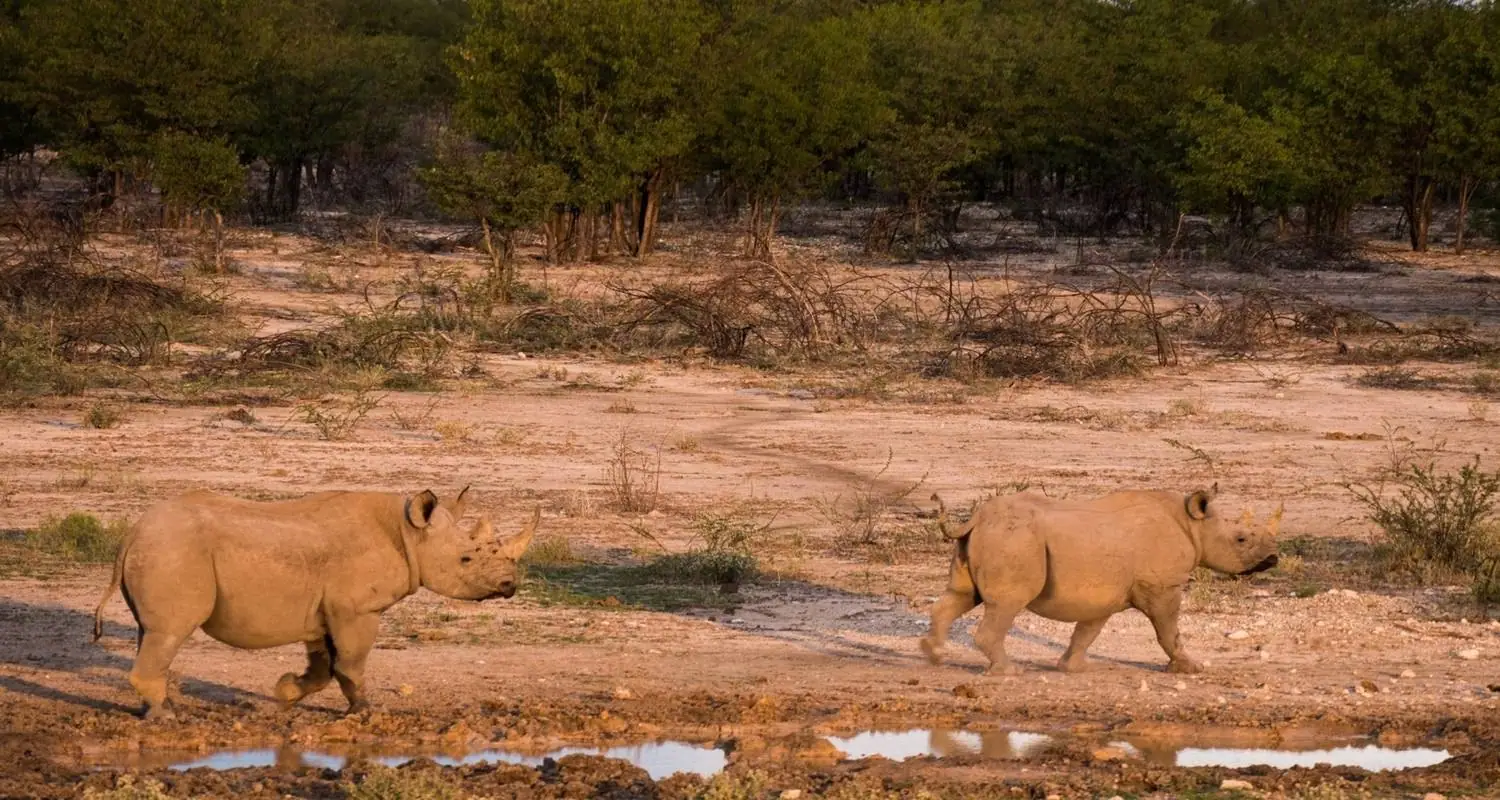 Photo: Etosha National Park
- Onguma Trails Camp is the standout: a seasonal camp of four tents for up to eight guests, built around dawn walks of about 6–8 km across dry riverbeds and plains, with a sundowner drive in the afternoon. It describes itself as Namibia's first true walking safari in big-game country [4]. In our directory it is a Walking Camp.
- Ongava offers guided walks with armed guides, often tracking white rhino, at Ongava Lodge, Andersson's at Ongava and Encounter by Ongava [2].
- Onguma's other camps and Safarihoek offer guided bush walks alongside drives [2].
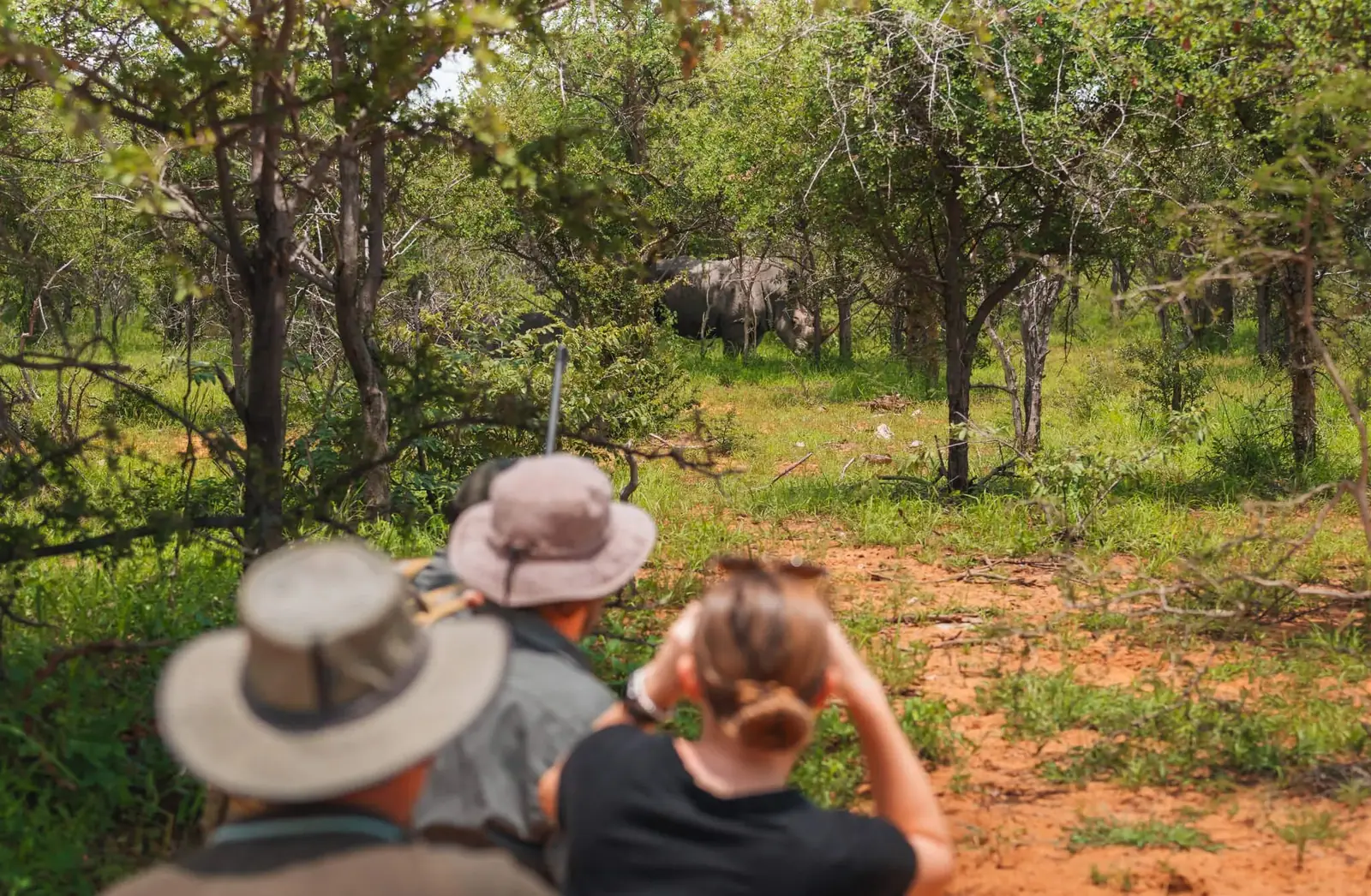 Photo: Onguma Private Reserve
Mundulea: walking first
Mundulea is the exception that proves the rule. On a private reserve of about 120 km² in the central highlands, the focus is firmly on walking, and there are no game drives. Guests stay in four walk-in tents, up to eight at a time, and walk twice a day on routes tailored to their fitness [5]. The wildlife is not the classic big-game experience, but for walkers who want time on foot in Namibia, it is the place.
The Zambezi Region
Namibia's green northeast, the former Caprivi Strip, feels nothing like the desert. Rivers, floodplains and woodland hold elephant, buffalo and hippo. Lodges such as Nkasa Lupala, beside Nkasa Rupara National Park, offer walks with a professional guide and an armed community ranger, while Nambwa in Bwabwata National Park and Kazile Island offer walks focused on small details [2]. Walks here are an option alongside drives and boating.
When to go
Walk in the cooler dry months, roughly May to September. Nights can be cold in the desert, but walking days are comfortable. From October, temperatures climb, and walks get shorter and earlier. Check seasons with each camp: Onguma Trails Camp is seasonal, and Mundulea closes from mid-December to mid-January [4][5].
The bottom line
Come to Namibia for its deserts, its space and Etosha, and add a walk or two. Track rhino on foot in Damaraland if you can, and if you want real time on foot, stay at Onguma Trails Camp or Mundulea. But for a true walking safari, with walking at the heart of every day in big-game country, plan your main trip in the classic walking parks.
Sources
- Expert Africa, Tracking rhinos on foot in Namibia — https://blog.expertafrica.com/rhino/tracking-rhinos-on-foot-in-namibia/
- Expert Africa, Walking safaris in Namibia — https://www.expertafrica.com/walking-safaris/namibia
- Discover Africa, Private concessions in Etosha — https://discoverafrica.com/safaris/etosha-national-park/private-concessions-in-etosha
- Onguma, Walking safari near Etosha: Onguma Trails Camp — https://onguma.com/?p=8553
- Expert Africa, Mundulea Reserve — https://www.expertafrica.com/namibia/central-highlands/mundulea-reserve/in-detail
Spotted an error? Tell us. How we classify camps: our methodology.