
Where to Walk
The Best Walking Safaris in Africa
There is no single best walking safari in Africa, but there is a best one for the way you want to walk, and the evidence points to a short list of parks.
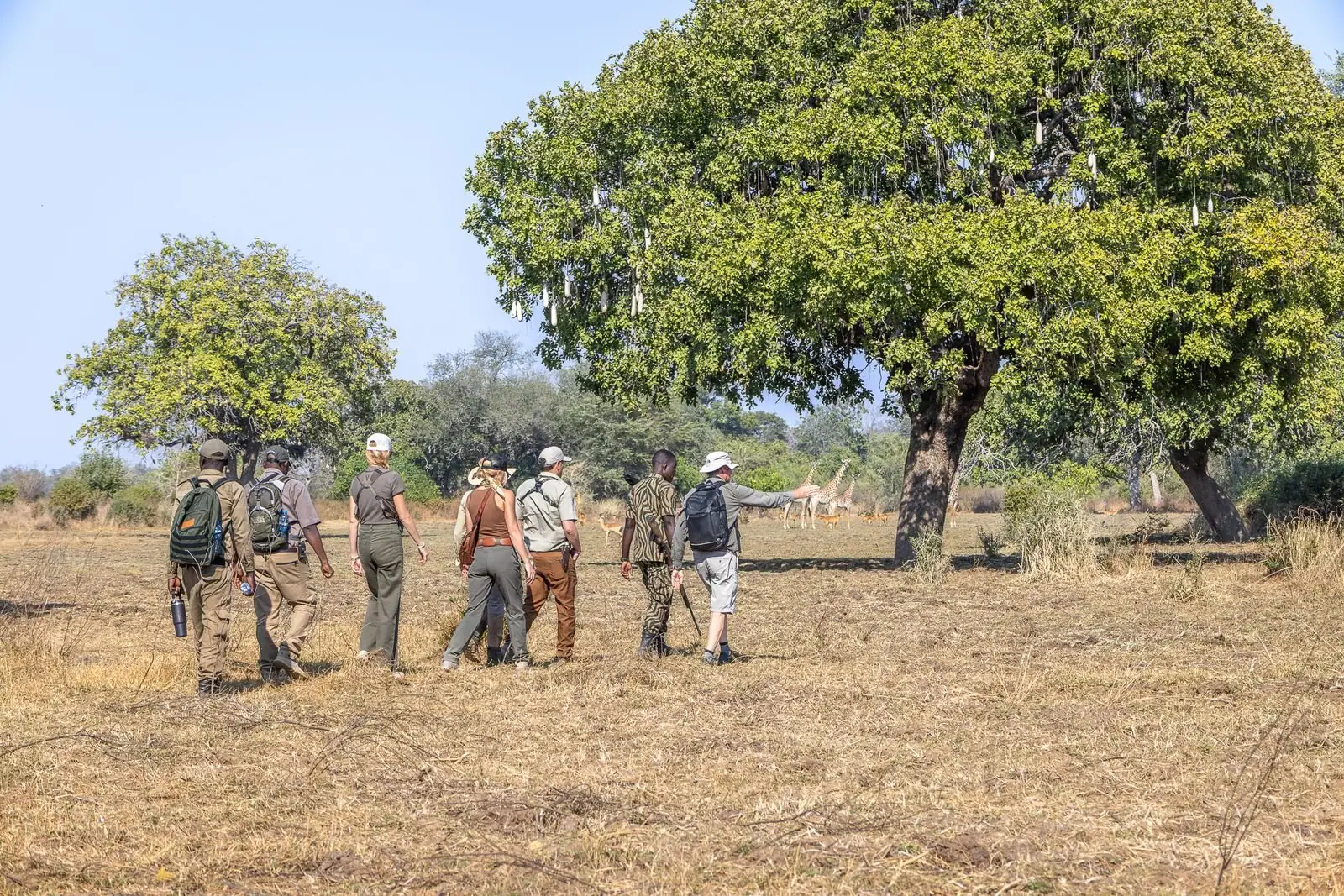 Photo: The Bushcamp Company
Most "best of" lists rank lodges by price or polish. This one does not. We judge walking safaris on the same six tests we apply to every camp on this site: daily scheduled walks, dangerous-game country, licensed armed leadership, walks of real length, small groups, and walking that is legally sanctioned. The full method is set out in How We Classify Walking Safaris.
Each camp below carries one of our three formats. A Walking Expedition is a safari where walking is the whole point. A Walking Camp offers a guided walk every day as an equal choice with the game drive. Walks Offered means walking is not a core activity. The formats describe how a safari is built, not how good it is (more on the three formats).
This guide is organized by what kind of walker you are, not ranked by money. Every camp named comes from our camp directory, where paid and unpaid listings are classified on the same terms [1].
How the leading parks compare
| Park | Country | Walking share of commercial camps | Who leads walks | Main walking season |
|---|---|---|---|---|
| South Luangwa | Zambia | About half (49–62%); 24 walking-led camps | Licensed guide and armed DNPW scout | Roughly June–October |
| Mana Pools | Zimbabwe | About two-thirds to three-quarters | Armed Zimbabwe Professional Guide | Camps mostly April–November; peak August–October |
| Hwange | Zimbabwe | 10–13% | Licensed professional guide carrying a rifle | Dry months, roughly June–October; some camps year-round |
| Greater Kruger | South Africa | 5–7%* | Armed trails guides | Year-round on the SANParks trails; private trail camps mostly March–November |
| North Luangwa | Zambia | Not measured; all three confirmed camps are built around walking | Licensed guide and armed national park scout | Mid-June–October |
| Kafue | Zambia | Not measured; mostly Walks Offered | Guide and armed national park scout | Dry season, roughly June–November |
| Ruaha | Tanzania | Not measured; most walking products in Tanzania | Armed guide or ranger, with a TANAPA ranger | Mostly dry months; one Walking Camp year-round |
| Laikipia | Kenya | Not measured | Armed conservancy ranger or guide with a firearms license | Year-round at the main walking camps |
Walking share is the number of walking-led camps, meaning Walking Expeditions plus Walking Camps, as a share of all commercial camps in a park. We have measured it for four parks so far. The method and caveats are in Where Walking Really Matters: Walking Share by Park. Guide licensing by country is covered in Who Leads Your Walk?.
* Excludes Kruger's seven state-run SANParks wilderness trails. Including them would raise the figure to about 8–12%.
Best overall walking destination: South Luangwa
South Luangwa National Park in eastern Zambia covers about 9,050 km² (some 2.2 million acres) of unfenced river valley. About half of its commercial camps are walking-led, and its 24 walking-led camps are more than in any other park we have assessed. A licensed guide and an armed scout from the Department of National Parks and Wildlife (DNPW) go on every walk inside the park, and night drives are permitted, so a morning on foot can be followed by an evening drive after dark.
What sets South Luangwa apart is breadth: many operators, and a choice between larger camps and four-chalet bushcamps, busy sectors and remote ones. Examples:
- Luwi Bush Camp (Time + Tide), Walking Camp: a daily walk with a guide and armed scout is one of two included activities, alongside day and night drives.
- Tena Tena (Robin Pope Safaris), Walking Camp: an eight-tent camp with two activities a day, walk or drive.
- Three Rivers Camp (Kafunta Safaris), Walking Camp on the east bank of the Luangwa: walking with an armed DNPW scout is the signature activity.
- Tafika (Remote Africa Safaris), Walking Camp: the base for the Tafika Walking Trails, whose small camps are reached on foot.
The Bushcamp Company's six seasonal bushcamps in the south of the park, such as Bilimungwe and Kapamba, are also classed as Walking Camps, as are smaller owner-run camps such as Nkonzi Camp and Mwamba Bush Camp (Shenton Safaris).
Read more: South Luangwa Walking Safari Guide · Walking Safaris in Zambia
Best open walking country: Mana Pools
Mana Pools, on the south bank of the Zambezi in northern Zimbabwe, has the highest walking share of any park we track: roughly two-thirds to three-quarters of its commercial camps are walking-led. Its floodplain woodland of Ana trees gives walkers unusually clear sightlines. Walks at camps are led by armed Zimbabwe Professional Guides, holders of a license widely regarded as one of the most demanding in Africa. If South Luangwa wins on the number of camps, Mana Pools wins on how much of the park is given over to walking.
- Chikwenya Camp (Wilderness), Walking Camp: walking is described as the core activity, with day and night drives.
- Nyamatusi Camp (African Bush Camps), Walking Camp: walks, drives and canoeing in a private concession in the east of the park.
- Camp Mana (Sunpath Safaris), Walking Camp: an owner-run seasonal camp on the Zambezi where walking is the main focus.
- Hideaways Mhara River Camp (Hideaways), Walking Camp: a six-tent camp above the Chitake River with guided morning walks and evening drives, open all year.
Read more: Mana Pools Walking Safari Guide · South Luangwa vs Mana Pools · Walking Safaris in Zimbabwe
Best for a first walking safari
For a first walking safari, choose a Walking Camp: walk in the morning, drive in the afternoon. A typical Walking Camp walk covers 3 to 5 km over three to four hours, and you are back in camp by lunch.
South Luangwa is the natural place to start, with Mana Pools a strong alternative. In South Africa, a small group of Greater Kruger camps offers the same pattern:
- Nsefu Camp (Robin Pope Safaris), South Luangwa, Walking Camp: guests choose a walk or a drive for each of two daily activities, and night drives are offered.
- Mchenja (Time + Tide), South Luangwa, Walking Camp: a four-unit camp with a daily walk alongside day and night drives.
- Africa on Foot Camp (Africa on Foot), Greater Kruger, Walking Camp: a morning walk of about three hours, then an afternoon drive into the night.
- Plains Camp (Seolo Africa), Greater Kruger, Walking Camp: four tents, with morning walks of 5–12 km led by two armed guides.
Read more: Your First Walking Safari · Which Walking Safari Is Right for You?
Best for serious walkers: Walking Expeditions
If you want to walk all day, a Walking Camp's single morning walk will feel short. Choose a Walking Expedition, where vehicles are used only for transfers and walking fills the day.
- Robin Pope Safaris Mobile Walking Safari (Robin Pope Safaris), South Luangwa, Walking Expedition: set departures from June to mid-September on the Mupamadzi River in the far north of the park. Guests walk twice a day, 3 to 10 km each time, in a group of no more than six, while staff move camp ahead. No walkers under 16 [2].
- Mwaleshi Camp (Remote Africa Safaris), North Luangwa, Walking Expedition: game viewing is on foot only, with a vehicle used only to reach more remote walking areas. Open June 15 to October 31, with an armed scout on every walk [3].
- Camp Chitake (Natureways Safaris), Mana Pools, Walking Expedition: a temporary camp set up at Chitake Spring for each group and removed when it leaves.
- Charlie Ruaha (Nomad Tanzania), Walking Camp: Nomad's roaming walking camp, renamed in 2026, for up to six guests. Walking is still central, now paired with game drives.
For the longest days, look at Greater Kruger's trails and Kenya's Tsavo, both covered below. Botswana's Northern Tuli also has two multi-day trails, including WalkMashatu (Mashatu), a three-night Walking Expedition with fly-camp overnights. See Walking in Botswana.
Best for walking plus game drives: South Luangwa
If you want both, a morning on foot and a full program of game drives, South Luangwa is the clear choice. No other park we track puts the two together so completely.
- Walking and driving as equals. Most of the park's 24 walking-led camps are Walking Camps: a walk with a licensed guide and an armed DNPW scout every morning, a drive every afternoon, and you choose which you prefer each day.
- Night drives inside the park. Spotlit night drives are permitted inside the park, which is not the case in many of Africa's national parks, so the afternoon drive runs on into the dark. That is when the leopards, for which the valley is famous, are most active.
- Game density. The Luangwa River and its oxbow lagoons hold big concentrations of elephant, buffalo, hippo, lion and leopard through the dry season, so both the walk and the drive deliver.
- Choice of camps. From four-chalet bushcamps to larger lodges, run by many different operators, in busy and remote parts of the park.
Good examples include Nsefu Camp and Tena Tena (Robin Pope Safaris), Luwi Bush Camp and Kakuli (Time + Tide), and Tafika (Remote Africa Safaris). Each runs daily walks alongside day and night drives.
Honorable mentions
- Hwange, Zimbabwe. A drive-led park with good walking in its private concessions, led by licensed Zimbabwean guides. Camp Hwange and Somalisa Expeditions (African Bush Camps) are both Walking Camps.
- Kafue, Zambia. Zambia's largest park, where walking is mostly an option alongside drives and boating. A few northern camps, such as Musekese Camp, make walking a real focus.
- Greater Kruger, South Africa. Excellent drives in the private reserves, with a handful of Walking Camps such as Africa on Foot Camp and Plains Camp.
- Lower Zambezi, Zambia. A river park, where walking is generally secondary to boating and canoeing. Go for the river, and plan your walking elsewhere.
Read more: South Luangwa Walking Safari Guide · Walking Safari vs Game Drive · Hwange Walking Safari Guide · Kafue Walking Safari
Best for big walking wilderness away from crowds
North Luangwa is the clearest answer. It is a separate park from South Luangwa, further up the same valley, with three small seasonal camps that we could confirm, all built around walking. Part of the park is managed as a wilderness zone, closed to game-drive vehicles.
- Mwaleshi Camp (Remote Africa Safaris), Walking Expedition (see above).
- Takwela Camp (Remote Africa Safaris), Walking Camp: morning walks plus day and night drives, downstream of Mwaleshi.
- Kutandala (Classic Zambia), Walking Camp: a relaunched five-tent camp on the Mwaleshi River where walking is the focus.
In Tanzania, Ruaha is large and remote, with few camps for its size and more walking products than any other Tanzanian park. Kichaka Zumbua (Kichaka) is a Walking Camp for six guests, with a morning walk and an afternoon drive. Further west, Chada Katavi (Nomad Tanzania) is a Walking Camp in remote Katavi with an armed scout on every walk and fly camps you can walk out to.
Read more: North Luangwa: Zambia's Walking Wilderness · Walking Safaris Take You Away from the Crowds
Best in South Africa: Greater Kruger
Greater Kruger has a low walking share, about 5–7% of commercial camps, because most of its lodges lead with the game drive. But it has real depth in walking-only products. It has more commercial Walking Expedition camps than South Luangwa, typically capped at eight walkers, plus Kruger's seven state-run SANParks wilderness trails.* Each trail runs for three nights, with two long walking days of up to 20 km, for walkers aged 12 to 65.
- Wolhuter Wilderness Trail (SANParks), Walking Expedition: Kruger's first wilderness trail, opened in 1978, run year-round.*
- Simbavati Trails Camp (Simbavati), Walking Expedition: four Meru tents, a three-to-four-hour morning walk and a shorter afternoon walk.
- Tanda Tula Field Camp (Tanda Tula), Walking Expedition: a seasonal four-tent camp for exclusive use, with a sunrise walk and a shorter afternoon walk.
- Africa on Foot Wilderness Trails (Africa on Foot), Walking Expedition: a mobile camp moved daily, with a long morning walk of three to five hours and an evening drive.
Most Sabi Sand lodges, by contrast, offer walks only as an alternative to the morning drive, so they are classed as Walks Offered.
Read more: Walking Safaris in Kruger · South Luangwa vs Kruger · Rhino Tracking on Foot
* The SANParks wilderness trails are run by South African National Parks, a state agency, rather than a commercial operator. We list them for completeness.
Best in East Africa: Ruaha and Laikipia
Walking in East Africa is more limited than in Zambia or Zimbabwe. In Tanzania's national parks, every walk includes an armed TANAPA ranger. In Kenya, walking is prohibited in most national parks and reserves and happens mainly on conservancies and private ranches.
Ruaha leads in Tanzania. Besides Kichaka Zumbua, Kichaka Wild and Fly Camp (Kichaka) is a Walking Expedition in northern Ruaha, mainly walking, with armed guides and a TANAPA ranger. Laikipia, the plateau of private ranches and conservancies north of Mount Kenya, holds much of Kenya's serious walking.
- Karisia Walking Safaris (Karisia), Walking Expedition: a camel-supported mobile walking safari. Guests walk about 8–15 km a day over four to five hours, finishing around lunch, while camels carry the main luggage [4].
- Laikipia Wilderness Camp, Walking Camp: a small family-owned camp that specializes in bush walks and runs a lightweight mobile walking camp.
For distance, Kenya's Walking with Giants (Africa Geographic) in Tsavo is an eleven-night set-departure Walking Expedition of about 11–16 km a day, for walkers 18 and over.
Read more: Walking Safaris in Tanzania · Walking Safaris in Kenya
Best for families
Age limits come first. Most walking safaris set a minimum walking age of 12 to 16. In most places this is camp policy, not law. In Zambia's national parks, DNPW sets the minimum at 12, though many camps set 16. Kruger's SANParks wilderness trails take ages 12 to 65.
For families with teenagers of walking age, a Walking Camp usually works best, because each family member can choose a walk or a drive each day. For younger children, a few options stand out:
- Karisia Walking Safaris (Karisia), Laikipia, Walking Expedition: Expert Africa reports that children as young as 4 have joined its walks, though they need to be active and used to plenty of exercise [4].
- WalkMashatu (Mashatu), Northern Tuli, Walking Expedition: walkers from age 12.
- Molori Mashuma (Molori), Mana Pools, Walks Offered: walking is not a core activity, but walks are open to children from age 8.
- Nyamatusi Mahogany (African Bush Camps), Mana Pools, Walking Camp: a family-oriented camp, though walkers must be 16 or over.
Read more: Walking Safari Age Limits, Country by Country
How to choose
Start with the format, then the park. First-timers should book a Walking Camp; committed walkers, a Walking Expedition. South Luangwa offers the most choice, Mana Pools the most open walking country, North Luangwa the most solitude, Greater Kruger the most year-round trail walking, and Laikipia the best walking with camels carrying the gear. Timing matters everywhere: most walking runs in the dry season (see The Best Time of Year for a Walking Safari).
Whatever you choose, ask every camp the same questions: how many walks run each day, who leads them, how far they go, and how many people walk together.
From The Bushcamp Company's Guide to the Luangwa: Where Is the Best Walking Country in South Luangwa?
Publisher's note. WalkingSafaris.com is published by The Safari Heritage Collection, custodians of Chibembe and owners of Lion Camp and The Bushcamp Company. Some of our camps appear in this article, and they are assessed on exactly the same published criteria as every other camp in Africa. Who we are
Sources
- walkingsafaris.com, Camp directory and park data (October 2026), compiled from operator websites and specialist agents' listings — internal research
- Expert Africa, Robin Pope Safaris walking safari: in detail — https://www.expertafrica.com/zambia/south-luangwa-national-park/robin-pope-safaris-walking-safari/in-detail
- Expert Africa, Mwaleshi Camp: our full report — https://www.expertafrica.com/zambia/north-luangwa-national-park/mwaleshi-camp/in-detail
- Expert Africa, Karisia Walking Safaris: in detail — https://www.expertafrica.com/kenya/laikipia/karisia-walking-safaris/in-detail
Spotted an error? Tell us. How we classify camps: our methodology.