
Where to Walk
Rhino Tracking on Foot: Where to Do It
Rhino tracking on foot is a focused search for one animal, and in several of the best places to do it, nobody in the group carries a rifle.
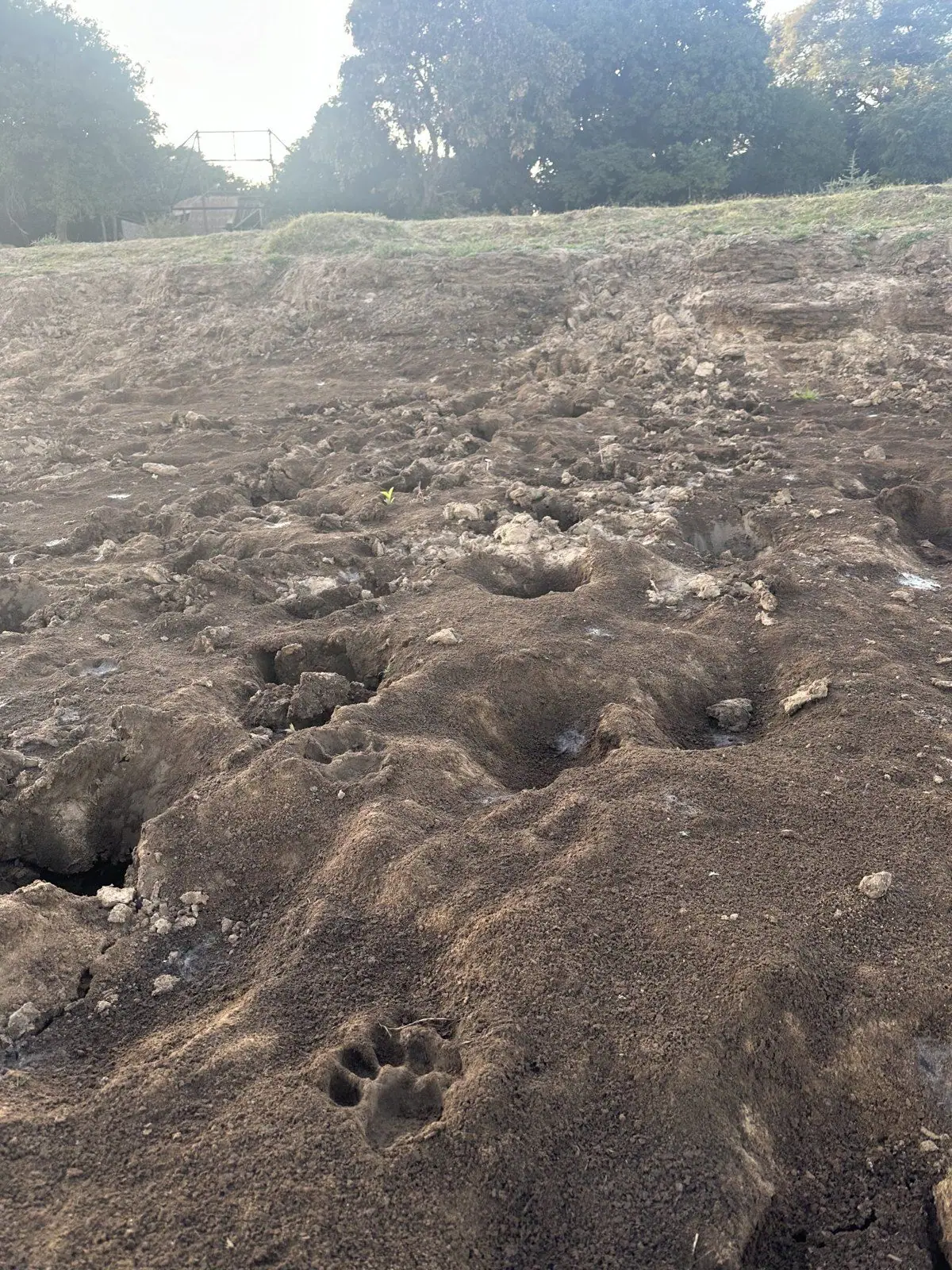 Photo: Chibembe Wildlife Reserve
How it differs from a walking safari
A walking safari is about the whole landscape. You follow what the morning offers: tracks, birds, plants, an elephant at a distance. Rhino tracking has one goal. Trackers find fresh spoor, often at dawn, and the group follows it on multi-hour walks [3].
Most of the effort is often in a vehicle. At Desert Rhino Camp, guests leave early in a 4x4 that follows the tracking team, and drives can be long because the rhino may be far away. The vehicle is parked once a rhino is located, and the group walks in [1]. At Saruni Rhino in Kenya, guides drive guests to within tracking distance before they continue on foot [9]. Some outings are short. Tracking at Uganda's Ziwa sanctuary can take about an hour on foot [10].
The final approach is the point of it. Guests walk quietly and stand still on command while the guides check the wind [6]. Sightings are never guaranteed [3].
How we classify rhino tracking
Our six tests decide whether a camp offers a walking safari in the full sense. One of them is licensed armed leadership: the walk must be led by a licensed guide, with a rifle carried by the guide or by an official armed escort. Our methodology states that unarmed tracking on foot fails that test, and that we may list it separately. We do.
So rhino tracking appears in its own category in our directory. It does not count toward any park's walking share. Two other tests also matter here:
- Dangerous-game country. Some rhino areas have no lion or elephant. Matobo in Zimbabwe has neither [8]. Mkhaya in Eswatini removed its elephants in 2015 [11]. At Ziwa in Uganda, the predators listed are leopard and smaller cats, not lion [10]. These walks can be excellent, but they are not walking safaris under our tests, even where the guide is armed.
- Licensed armed leadership. Where sources say who carries a rifle, we say so below. Where they don't, we say that too.
See How We Classify Walking Safaris for the full method.
Where to track rhino on foot
Namibia: the Kunene and Damaraland
Desert Rhino Camp (Wilderness). The camp sits in the Palmwag Concession in Damaraland and was set up in 2003 with Save the Rhino Trust (SRT) [2]. Guests join SRT's rangers as they monitor desert-adapted black rhino, a population Save the Rhino calls "the last truly wild population of any rhino species on the planet" [2]. Guides come from SRT and three local community conservancies [4].
The trackers are unarmed. One agent explains that this is "due to scarcity of the black rhino and the excellent visibility of the terrain" [1]. Another tells clients to note that "the guides here carry no firearms" before booking [4]. SRT gives a briefing the evening before [1]. Tracking runs year-round, subject to the SRT team's availability [1].
Ongava Reserve. A private reserve in the Etosha area, where both black and white rhino are present, along with lion, leopard and hyena [5]. Walks are led by "expertly trained, armed guides" and often focus on tracking white rhino [5][12]. The minimum age for rhino tracking is 16 [5].
Zimbabwe: Matobo
Matobo National Park, south of Bulawayo, has a fenced game park that is an Intensive Protection Zone for black and white rhino [13]. Expert Africa says rhino "can reliably be tracked on foot" here, from lodges just outside the park such as Amalinda and Big Cave Camp [8]. Big Cave Camp's walk focuses on white rhino [14]. Guides work with the park's anti-poaching scouts [14], and one agent describes the walk as led by an armed guide [15]. Walks last from about one to four hours [15]. The park has no lion or elephant [8]. More in Walking Safaris in Zimbabwe.
Kenya: Sera
Saruni Rhino sits in the Sera Community Conservancy in northern Kenya, where black rhino were reintroduced in 2015 [6]. National Geographic calls the sanctuary the "first and only community-managed black rhino sanctuary in East Africa" [6]. Tracking is led by two armed rangers with the guide [6]. Guides teach guests to read dung and to toss sand to check the wind [6]. See Walking Safaris in Kenya.
Uganda: Ziwa
Ziwa Rhino Sanctuary, about 70 km² in size, is managed by the Uganda Wildlife Authority, according to a 2025 account [10]. Rhino tracking is a short walk with rangers. The source does not describe the tracking rangers as armed; it mentions an armed ranger only for night walks [10]. The predators the account lists are leopard and smaller cats; it does not mention lion [10].
Eswatini: Mkhaya
Mkhaya Game Reserve, run by Big Game Parks, is known for black rhino. Its operator says it may offer "probably the best chance of seeing Black Rhino in the wild in Africa today" [11]. Mkhaya also has Eswatini's only buffalo [11]. Walks are led by the reserve's field guides from Stone Camp, for ages 13 and up. Short bush trails of one or two nights take groups of four to eight from April to September [11]. The operator does not say whether guides are armed [11].
South Africa: Kruger and Hluhluwe-iMfolozi
South Africa has walking in rhino country inside full dangerous-game areas. At Plains Camp in southern Kruger, two armed guides lead each walk, and the concession holds rhino [7]. We class it as a Walking Camp; see Walking Safaris in Kruger. In Hluhluwe-iMfolozi, state-run wilderness trails of two to four nights are led by rifle-carrying guides, and one account of a two-night trail reports several white rhino sightings on foot [16]. These are walking safaris that often find rhino, rather than dedicated tracking products.
Safety
The two species behave differently. White rhino are grazers and usually more placid; they often run from a threat, though they can still be dangerous. Black rhino are browsers with a reputation for being "more aggressive and inquisitive," and close encounters in thick bush can provoke defensive behavior [17].
Rhino see poorly but smell and hear well [6][17]. That is why trackers manage the wind, ask for silence and stop the group well short of the animal. At Desert Rhino Camp, trackers keep guests from getting too close [1].
In open desert, good visibility is part of the safety case for walking unarmed [1]. Where sightlines are short, or lion and elephant are present, an armed escort matters more. If a rifle is important to you, ask the operator directly who carries one.
Conservation and fees
Tracking money often pays for the tracking itself. Save the Rhino says much of Desert Rhino Camp's revenue goes to SRT's running costs, and the camp's tracking team is funded entirely by the venture [2]. A portion of every guest's fee goes to SRT's community tracker program [3]. Wilderness and SRT report that poaching in the area has fallen by 80% over their partnership [3].
At Sera, the community owns the land and the lodge's fixed assets [6]. At Ziwa, published fees in September 2025 were $20 entry and $30 for rhino tracking for international visitors, valid to mid-2026 [10]. Check current rates before you go.
Group size, fitness and age
Groups are small. The National Geographic writer at Sera was one of two guests [6]. Mkhaya's overnight trails cap groups at eight [11].
Fitness needs vary. At Desert Rhino Camp, walks can last several hours over rocky ground [3]. At Ziwa, the walk may be an hour on flat ground [10]. Minimum ages range from 13 at Mkhaya to 16 at Ongava [5][11]. See How Fit Do You Need to Be for a Walking Safari?.
When to go
Desert Rhino Camp runs tracking all year [1]. In Zimbabwe, the dry months from about May to October bring cooler mornings and thinner bush [18]. Mkhaya's bush trails run from April to September [11]. Most tracking starts early in the morning [3][6].
Sources
- Tribes Travel, Rhino tracking at Desert Rhino Camp — https://www.tribes.co.uk/experiences/tracking-black-rhinos/
- Save the Rhino International, Namibia: Save the Rhino Trust — https://www.savetherhino.org/programmes/save-the-rhino-trust/
- Wilderness, Desert Rhino Camp: 19 years of protecting Namibia's black rhinos — https://wildernessdestinations.com/journal/our-collective/wilderness-desert-rhino-camp-19-years-of-protecting-namibias-black-rhinos
- Yellow Zebra Safaris, Desert Rhino Camp — https://yellowzebrasafaris.com/namibia/accommodation/desert-rhino-camp/
- Expert Africa, Ongava Lodge — https://www.expertafrica.com/namibia/etosha-national-park/ongava-lodge/in-detail
- National Geographic, This animal sanctuary lets you track rare rhinos on foot in Kenya (April 2025) — https://www.nationalgeographic.com/travel/article/tracking-rhinos-on-foot-kenya
- Yellow Zebra Safaris, Plains Camp — https://yellowzebrasafaris.com/south-africa/accommodation/plains-camp/
- Expert Africa, Matobo National Park — https://www.expertafrica.com/zimbabwe/matobo-national-park/in-detail
- Expert Africa, Saruni Rhino (information from owner) — https://www.expertafrica.com/kenya/northern-kenya/saruni-rhino/info-from-owner
- Muzungu Blog Uganda, Tracking rhinos on foot at Ziwa (September 2025) — https://www.muzungubloguganda.com/conservation/from-snorting-to-snoozing-tracking-rhinos-on-foot-at-ziwa/
- Big Game Parks, Mkhaya Game Reserve — https://biggameparks.org/properties/mkhaya-game-reserve
- Expert Africa, Namibia walking safaris — https://www.expertafrica.com/walking-safaris/namibia
- Wikipedia, Matobo National Park — https://en.wikipedia.org/wiki/Matobo_National_Park
- Big Cave Camp, Game viewing and rhino tracking — https://www.bigcavematopos.com/game-viewing--rhino-tracking.html
- Timbuktu, Track rhino on foot with an armed guide in Matobo — https://www.timbuktutravel.com/experience/track-rhino-on-foot-with-an-armed-guide-in-matobo
- Routinely Nomadic, South Africa walking safari (Hluhluwe-iMfolozi) — https://routinelynomadic.com/south-africa-walking-safari/
- Londolozi Blog, What is the difference between a black and white rhino? — https://blog.londolozi.com/?p=43405
- Discover Africa, Zimbabwe walking safaris — https://lite.discoverafrica.com/safaris/zimbabwe/walking-safaris/
Spotted an error? Tell us. How we classify camps: our methodology.