
Plan
The Best Time of Year for a Walking Safari
Walking safaris follow the dry season: in most of southern and eastern Africa that means roughly June to October, with the details changing from park to park.
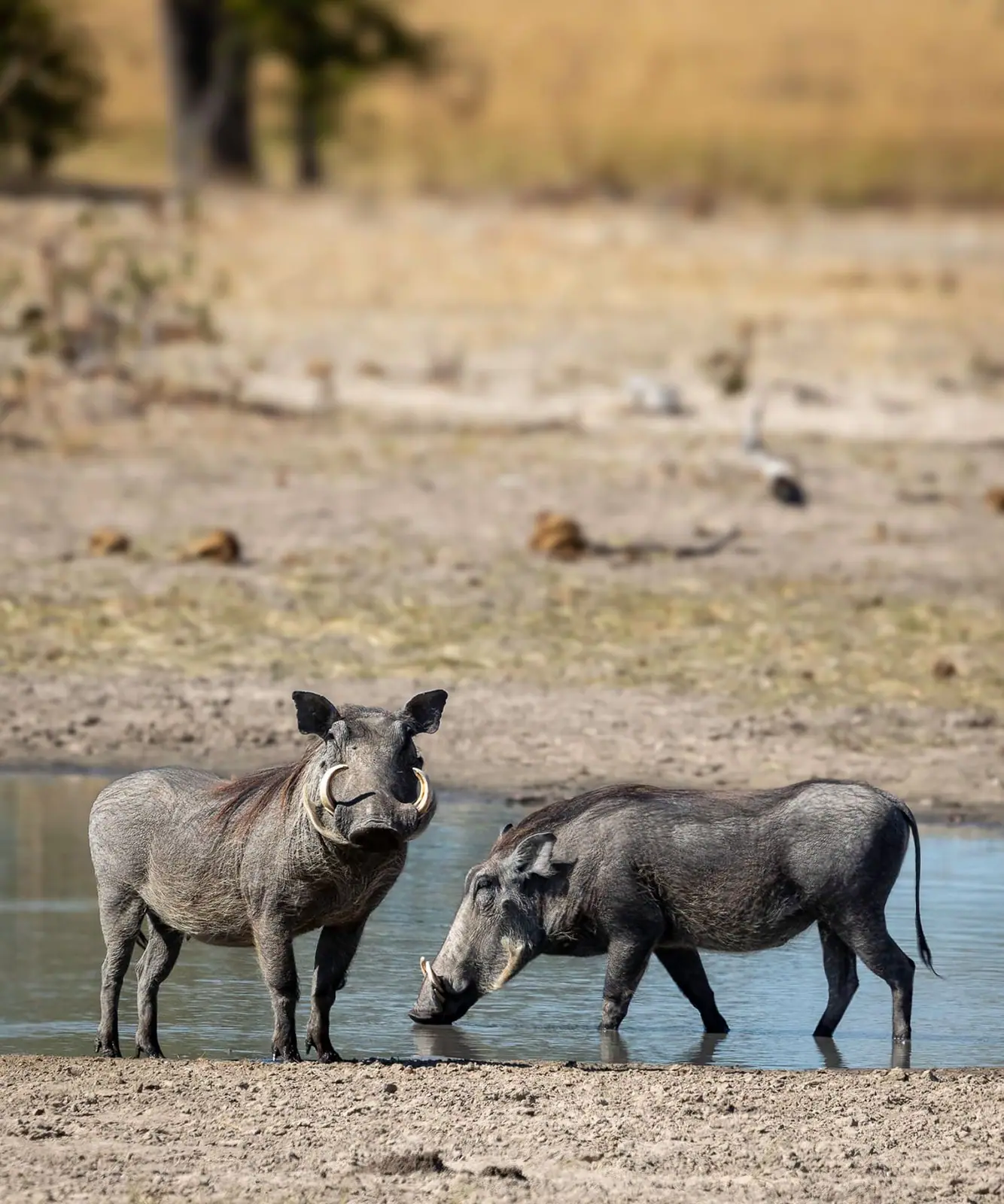 Photo: Wild Expeditions
Why the dry season
Walking depends on being able to see. A walking guide needs to spot an animal early, judge its mood and give it room. In the rains, grass grows tall and the bush thickens, and that sight line disappears. One South Luangwa planning guide puts it simply: tall grass makes walking unsafe in the rains [1]. In Tanzania's Nyerere National Park, walking is unlikely even in June, because the grass is still long after the wet season [2]. In Botswana's Okavango Delta, one walking camp runs walks of three to four hours when the grass is low, and shorter walks when it is high [3].
There are practical reasons too. Rain closes roads and airstrips, and many walking camps are seasonal camps that are taken down each year. In Mana Pools, all camps traditionally close from December to March, and November rains can close airstrips [4]. Most of North Luangwa's camps close from November to May [5].
As the dry season goes on, the grass dies back, the bush opens up, and animals concentrate around the water that is left. That is why the late dry season is the classic time to walk.
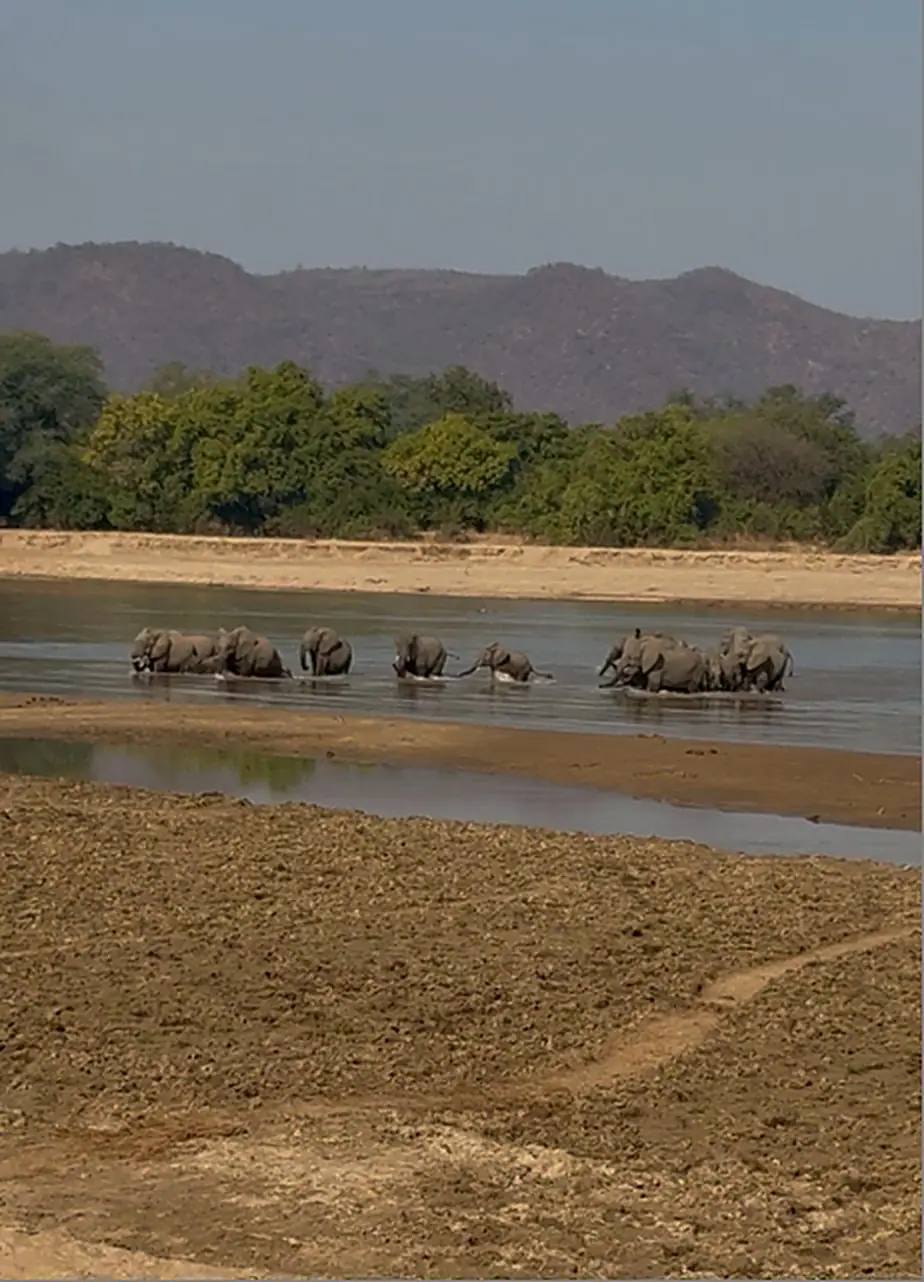 Photo: The Bushcamp Company
Season by park
| Park or country | Main walking season | Notes |
|---|---|---|
| South Luangwa, Zambia | Roughly June to October | Bushcamps typically open late May or early June and close late October or early November [1][6]. A few camps open longer. |
| North Luangwa, Zambia | June to end of October | Camps close November to May [5][7]. |
| Mana Pools, Zimbabwe | April to November; best August to October | August and September are rated the best months; October can top 40°C (104°F) [4]. |
| Hwange, Zimbabwe | May to October; best August to October | Walking is restricted in the wet months and resumes as vegetation dies back in May [8]. |
| Kruger, South Africa | State-run wilderness trails year-round; private trail camps mostly March or April to October or November | Some trails don't operate in the hottest months, November to February [9][10][11]. |
| Tanzania | Mostly the dry season, roughly May to November | Serengeti walking moves with the seasons [12][20]. |
| Kenya | Many conservancy camps year-round | Several camps close or offer lower green-season rates in April and May [13][14]. |
| Botswana | Roughly March to October or November | Northern Tuli walking is discouraged November to February [3][15][16]. |
Zambia: South and North Luangwa
Zambia's walking season is roughly June to October, and walking stops in the rains [1]. In South Luangwa, most seasonal bushcamps open between late May and early June and close between late October and early November [6]. Mobile walking safaris and camp-to-camp walks run within the same window, typically June to October [17]. Some camps open earlier or close later, and at least one switches to boating in the flood season [6].
North Luangwa is more remote and its season is shorter. Its camps open in June, several of them in mid-June, and close at the end of October [5][7].
Zimbabwe: Mana Pools and Hwange
Mana Pools is a dry-season park. Camps usually run from April to November, and August and September are rated the best months to visit [4]. October is still very good, but temperatures can top 40°C (104°F) [4]. Late in the season, game concentrates on the Zambezi floodplain, while Chitake Spring, inland, flows year-round [4][18]. A few camps now say they stay open all year [19].
In Hwange, most visitors come between May and October, and the highest numbers of animals are seen from August to October [8]. Hwange's higher elevation keeps October temperatures in the 30s Celsius, and late July to early September can be cold at night [8]. Walking is restricted in the wet months and becomes possible again in May, as vegetation dies back [8].
South Africa: Kruger
Kruger is the exception. South Africa's national parks agency prices its wilderness trails across all twelve months, so trails can be booked year-round [9]. The private walking camps in the reserves around Kruger mostly close over the summer rains, and run from about March or April to October or November [11]. Some trails don't operate in the hottest months, November to February [10].
Tanzania and Kenya
Most Tanzanian walking is seasonal and follows the dry season, with dates that vary by park and camp. One Ruaha lodge offers walks only in the dry season, May to November [20]. The Serengeti is different, because walking follows the migration: one mobile walking camp walks in the Kilimafeza area from December to May and the Kogatende area from June to November [12].
Kenya's conservancies and private ranches have longer seasons. One Laikipia walking operator runs for most or all of the year [21], while several camps close or move to green-season rates in April and May [13][14].
Botswana
Botswana's walking happens in private concessions and in the Northern Tuli Game Reserve, not in Moremi Game Reserve, where walking is not permitted [22]. One Okavango walking camp is open March to November [3]. Northern Tuli walking trails run from March to October, and walking there is discouraged from November to February [15][16].
Early season or late?
Within the dry season, you are choosing between comfort and concentration.
- Early (June and July): cooler mornings and greener country. In some parks the grass has not yet fully died back.
- Late (August to October): the bush is open, water is scarce, and animals gather where it remains. It is also the hottest part of the year, which is why walks start at first light and end by late morning.
If heat worries you, choose the earlier months. If seeing game concentrated around water matters most, choose the later ones.
The bottom line
Walk in the dry season. For most parks that means June to October, and August to October if you can handle the heat. Kruger's wilderness trails, some Kenyan conservancies and the Serengeti's seasonal walking areas give you options outside those months. Wherever you go, ask each camp when its walking season starts and ends, because dates vary from camp to camp and year to year.
From The Bushcamp Company's Guide to the Luangwa: When to Visit South Luangwa: A Month-by-Month Guide
Sources
- Safarigo, Walking safaris in South Luangwa: before you go — https://safarigo.com/guide/walking-safaris-south-luangwa-before-you-go-431
- Expert Africa, Sand Rivers fly-camping — https://expertafrica.com/tanzania/nyerere-national-park/sand-rivers-fly-camping/in-detail
- Expert Africa, Shinde Footsteps — https://www.expertafrica.com/botswana/okavango-delta-safari-reserves/shinde-footsteps
- Expert Africa, Mana Pools National Park — https://www.expertafrica.com/zimbabwe/mana-pools-national-park
- Yellow Zebra Safaris, North Luangwa National Park — https://yellowzebrasafaris.com/au/zambia/where-to-go/north-luangwa-national-park/
- Expert Africa, South Luangwa reference map — https://www.expertafrica.com/zambia/south-luangwa-national-park/reference-map
- Zambia Tourism, Mwaleshi Camp — https://www.zambiatourism.com/listing/mwaleshi-camp/
- Expert Africa, Hwange National Park — https://www.expertafrica.com/zimbabwe/hwange-national-park
- SANParks, Tariffs 2024–25 — https://www.sanparks.org/wp-content/uploads/2024/05/Tariffs-2024-2025.pdf
- South African Tourism, Walking trails in the Kruger National Park — https://southafrica.net/gl/en/travel/article/walking-trails-in-the-kruger-national-park
- Timbuktu Travel, Pafuri Walking Trails — https://www.timbuktutravel.com/lodge/pafuri-walking-trails ; Go2Africa, Tanda Tula Field Camp — https://www.go2africa.com/accommodation/tanda-tula-field-camp
- Expert Africa, Serengeti Walking Mobile Camp — https://expertafrica.com/tanzania/serengeti-migration-area/serengeti-walking-mobile-camp/in-detail
- Elewana, Lewa Safari Camp rates and seasons — https://www.elewanacollection.com/lewa-safari-camp/rates-and-seasons
- AfricanMecca, Kicheche Laikipia — https://www.africanmeccasafaris.com/travel-guide/kenya/accommodation/laikipia/southern/kicheche-laikipia-camp/room-rates
- Safari Frank, Walking the Northern Tuli — https://safarifrank.com/adventures/walking-northen-tuli/
- African Pride, Mashatu walking safari — https://www.african-pride.co.uk/botswana/info/botswana-experiences-mashatu-walking-safari
- Go2Africa, Insider's guide to walking safaris in South Luangwa — https://www.go2africa.com/african-travel-blog/insiders-guide-walking-safaris-south-luangwa
- Africa Geographic, Chitake Springs — https://travel.africageographic.com/destinations/zimbabwe/chitake-springs
- Yellow Zebra Safaris, Tembo Plains Camp — https://yellowzebrasafaris.com/zimbabwe/accommodation/tembo-plains-camp/
- Safari.co.za, Ruaha River Lodge activities — https://www.safari.co.za/Tanzania_Safari_Lodges-travel/safaris-tanzania-ruaha-river-lodge_activities.html
- Expert Africa, Karisia Walking Safaris — https://www.expertafrica.com/kenya/laikipia/karisia-walking-safaris/in-detail
- Expert Africa, Moremi Game Reserve — https://www.expertafrica.com/area/Moremi_Game_Reserve.htm
Spotted an error? Tell us. How we classify camps: our methodology.