
Why Walk
Are Walking Safaris Safe?
A walking safari is built around managing risk: trained and armed professionals, small groups, a clear briefing and a few rules that every walker follows.
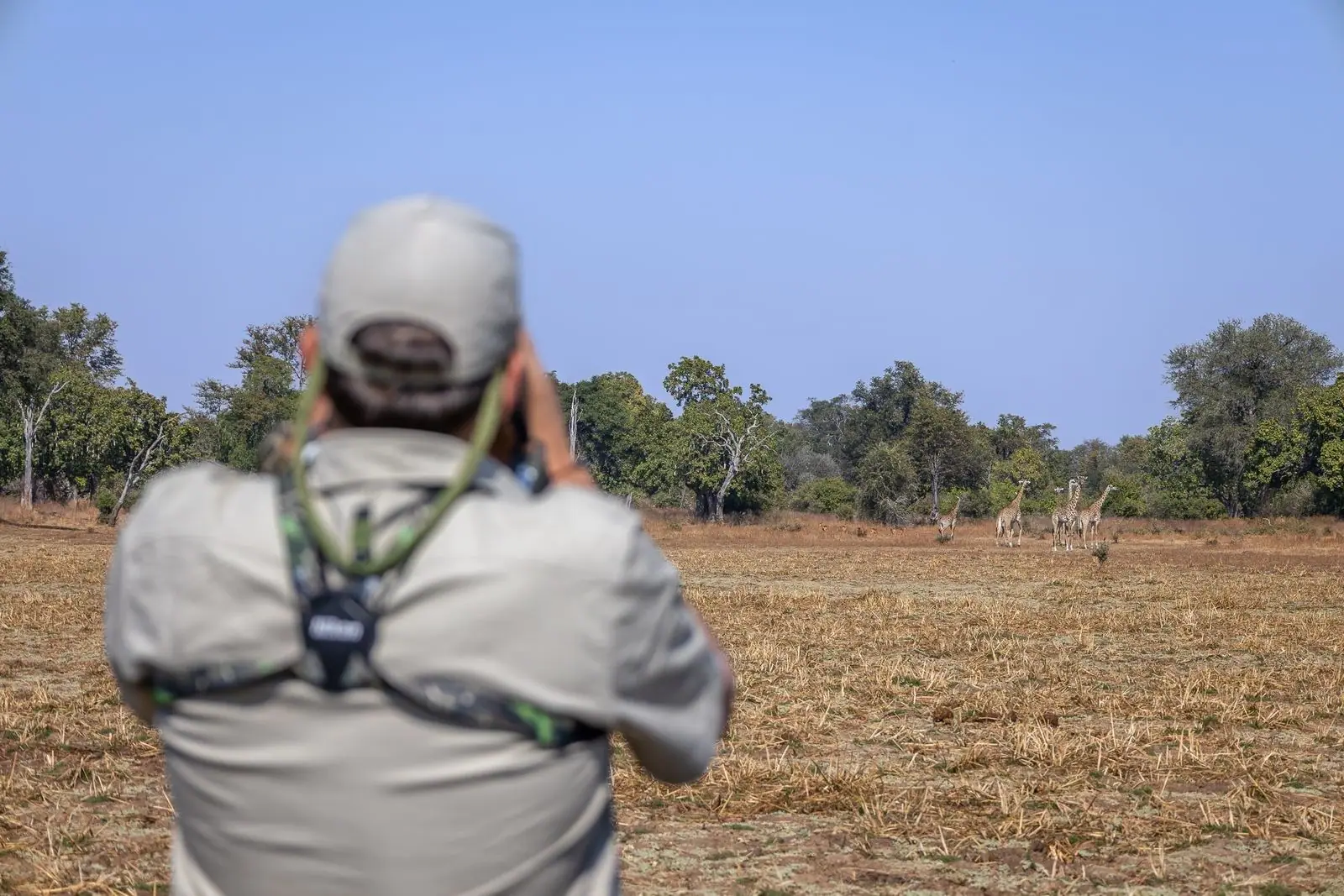 Photo: Chibembe Wildlife Reserve
The honest answer
Walking in country with elephant, buffalo and lion is not risk-free, and no responsible operator says it is. What makes a guided walk a sound choice is that the risk is managed by people trained for exactly this. Walks are led by licensed guides, backed by armed escorts, in small groups that follow a set of simple rules. Every part of a well-run walk is designed to avoid a close encounter, not to create one.
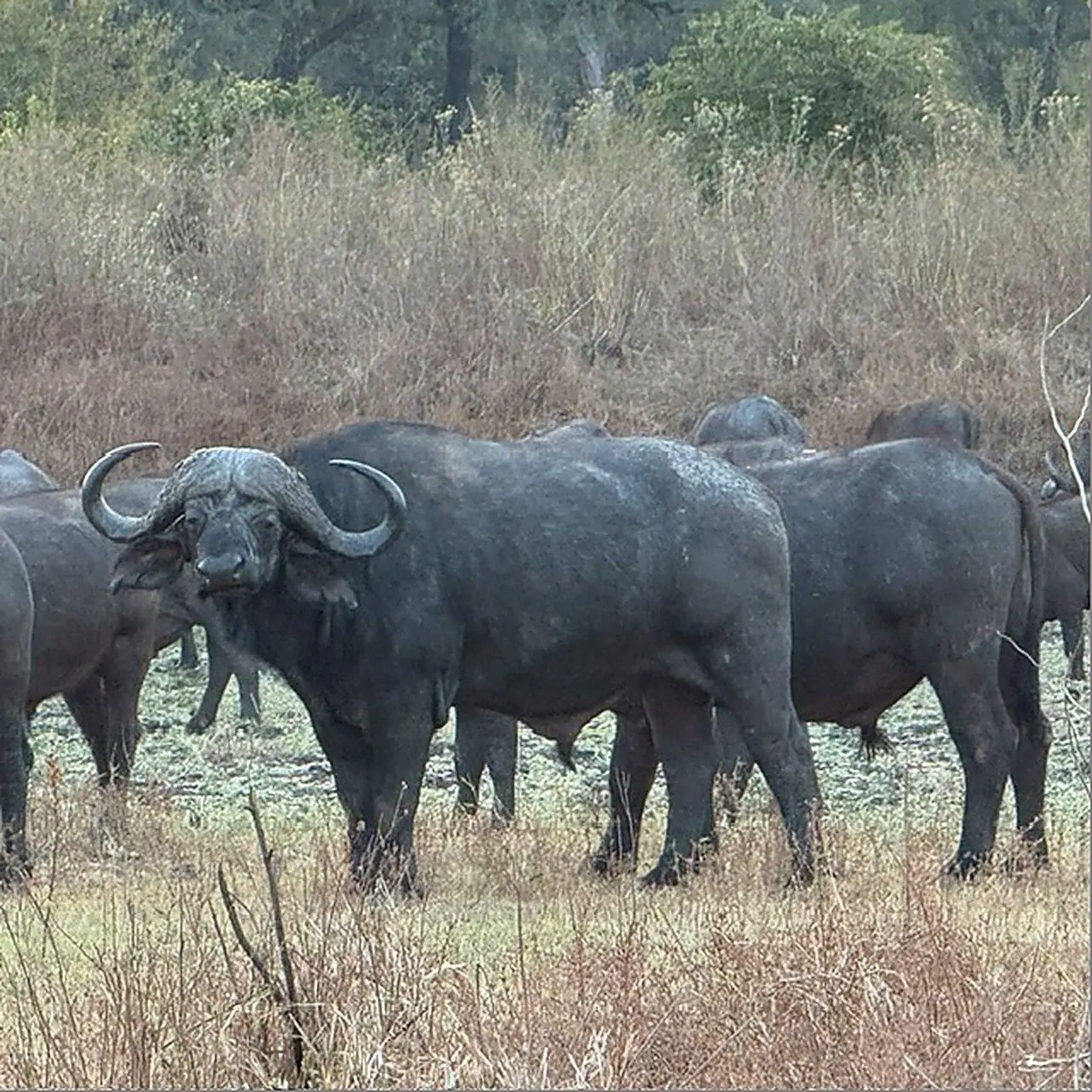 Photo: The Bushcamp Company
There is no reliable public dataset of walking safari incidents across Africa, so this guide does not quote one. It explains instead how safety works, so you can judge an operator for yourself.
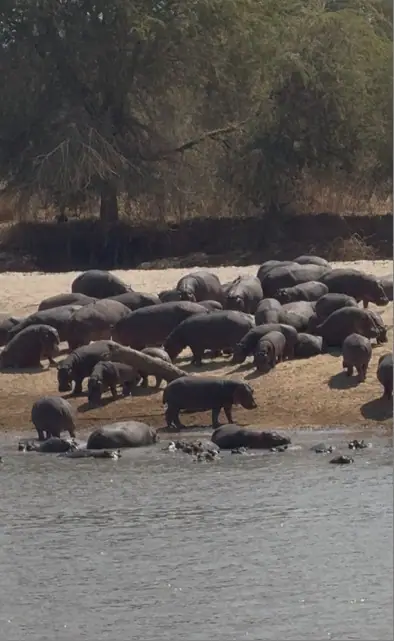 Photo: Chibembe Wildlife Reserve
Who walks with you, country by country
The arrangement for armed escorts depends on where you walk.
- Zambia. Every walk in a national park goes out with a licensed walking guide and an armed scout from the Department of National Parks and Wildlife (DNPW), a state wildlife officer. Operators describe this as standard practice on every walk [1][2]. Zambian walking guides train for about two years to qualify for their walking license [2].
- Zimbabwe. Walks are led by an armed, fully licensed Professional Guide. The license is widely regarded as one of the most demanding guide qualifications in Africa: at least two years' apprenticeship under a licensed guide, a dangerous-game shooting test, an oral board and a seven-day practical exam [3].
- South Africa. Walks are led by qualified trails guides. Where the number is published, two armed guides accompany the group: on the morning walks sold at Kruger's SANParks rest camps, and at Plains Camp in a Kruger concession [4][5]. Other camps state one armed guide.
- Tanzania. Walks in national parks are accompanied by an armed national parks (TANAPA) ranger, alongside the operator's guide, with a reported cap of six guests [6].
- Kenya. Walking happens on conservancies and ranches, and in Tsavo East with Kenya Wildlife Service escorts, with safety resting on armed rangers or licensed armed guides [7].
When you compare operators, ask who walks with the group, whether they are armed, and what license the lead guide holds.
Small groups
Walking groups are kept small so the guide can see and control everyone. Most operators cap a walk at six to eight guests. Kruger's wilderness trails and most of its private trail camps take a maximum of eight [8]. Where Zambian and Tanzanian camps publish a cap, it is often six [6]. A small group is also quieter, which is better for both safety and wildlife.
The briefing and the rules
Every walk starts with a briefing. The guide explains the order of walking, the signals they will use, and what to do if the group meets an animal [2][9]. The rules are simple and the same almost everywhere.
- Walk in single file. The group moves as one unit behind the guide, so the armed escort is out in front and can spot trouble first [10].
- Stay behind the guide and the rifle. Never step ahead of the lead.
- Keep quiet. Silence lets the guide hear what is ahead and gives you a better chance of seeing shy animals [10].
- Follow instructions at once. If the guide says stop, stop. If the guide says move, move [9].
- Never run. Running can turn a harmless encounter into a dangerous one. Stand still and let the guide manage the situation [10][11].
- Wear neutral colors and sturdy closed shoes. Earth tones help you blend in, and the ground is uneven [2].
Age limits
Minimum ages are mostly set by each operator. Zambia is an exception: DNPW sets 12 as the minimum walking age in its national parks, and camps may set a higher limit. Most walking safaris accept walkers aged 16 and over, and a few accept younger children on short walks [12]. SANParks takes walkers aged 12 to 65 on its Kruger wilderness trails [8]. If you are traveling with teenagers, check the policy of each camp before booking.
Seasons
Walking is a dry-season activity. In Zambia it runs roughly from June to October, and stops in the rains, when grass is tall and visibility poor. In Mana Pools, camps open roughly April to November and close in the rains [13]. Late in the dry season the grass is short and sightlines are long, which helps the guide see what is ahead.
A note on unguided walking in Mana Pools
Mana Pools in Zimbabwe is unusual. Visitors with a park permit may walk on their own, at their own risk, on the open floodplain. A ban on unguided walking introduced in May 2015 was lifted in August 2015 [13]. Visitors can also hire an armed park scout. Even where walking alone is permitted, walking with a licensed guide is the safer choice, and it is the one we recommend for anyone without long experience in big-game country.
The bottom line
A walking safari asks you to trust your guide and follow a few simple rules. In return you see Africa on its own terms. Choose an operator that is clear about who walks with you, how big the group is and what the guide's license is, and listen closely to the briefing.
Sources
- Zambia Tourism, Tafika Walking Trails — https://www.zambiatourism.com/listing/tafika-walking-trails
- Kafunta Safaris, Walking safari Zambia: what to know — https://kafuntasafaris.com/walking-safari-zambia-what-to-know/
- Zimbabwe Professional Guides Association, Education — https://zpga.org/areas-of-focus/education/
- SANParks, Kruger guided walks — https://www.sanparks.org/parks/kruger/tourism/activities/walks.php
- Yellow Zebra Safaris, Plains Camp — https://yellowzebrasafaris.com/us/south-africa/accommodation/plains-camp/
- Expert Africa, Walking safaris in Tanzania — https://www.expertafrica.com/walking-safaris/tanzania
- Expert Africa, Walking safaris in Kenya — https://www.expertafrica.com/walking-safaris/kenya
- SANParks, Kruger Wilderness Trails — https://www.sanparks.org/parks/kruger/what-to-do/activities/wilderness-trails
- Responsible Travel, Safety and practicalities on a walking safari — https://www.responsibletravel.com/holidays/walking-safaris/travel-guide/safety-and-practicalities
- Victoria Falls Guide, How to survive a walking safari (2017) — https://blog.victoriafalls-guide.net/2017/08/how-to-survive-walking-safari.html
- Rhino Africa, Top 5 questions about walking safaris answered — https://blog.rhinoafrica.com/2024/05/28/5-things-about-walking-safaris-you-should-know/
- Yellow Zebra Safaris, Zimbabwe family safari — https://yellowzebrasafaris.com/zimbabwe/safari-styles/family-safari/
- Expert Africa, Mana Pools — https://expertafrica.com/zimbabwe/mana-pools-national-park ; Tourism Update, Mana Pools bans unguided walks (May 2015) — https://www.tourismupdate.com/article/mana-pools-bans-unguided-walks ; Mana Pools Code of Conduct — https://www.manapools.com/wp-content/uploads/2022/04/Mana-Pools-Code-of-Conduct.pdf
Spotted an error? Tell us. How we classify camps: our methodology.