
Why Walk
Walking Safari vs Game Drive: Why the Best Trips Do Both
Walking and driving are not rivals: each shows you a different Africa, and for most travelers the best trip gives you both and lets you choose each day.
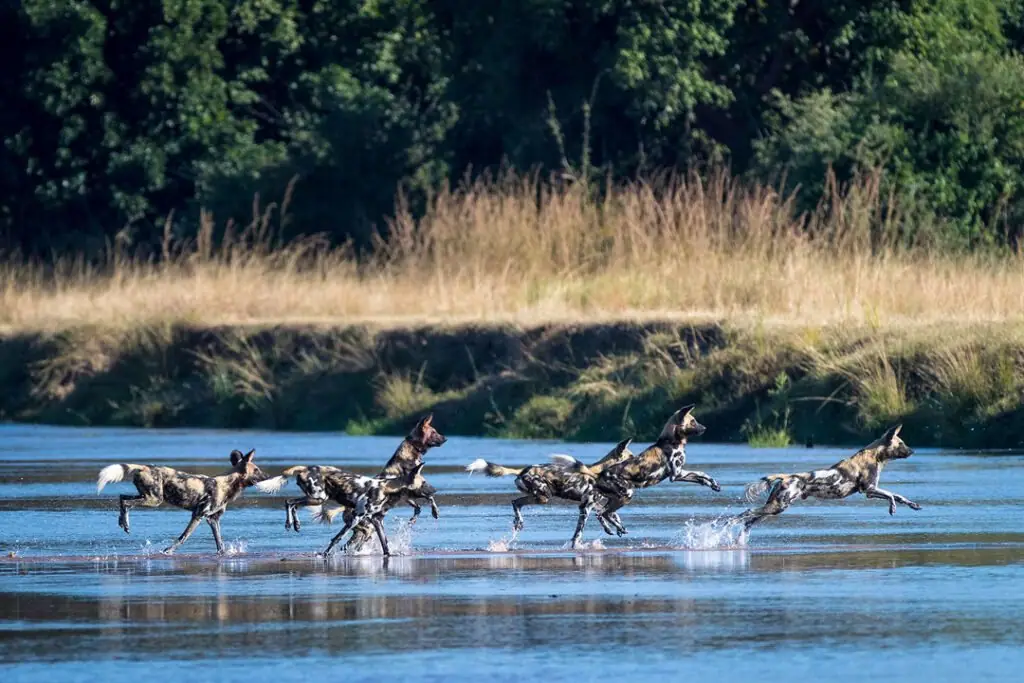 Photo: The Bushcamp Company
What you see on foot
A walk changes what you notice. Out of the vehicle, you are at ground level, at walking pace, with no engine noise. Guides stop often to examine tracks, look at plants and watch behavior up close [1]. The bush becomes a set of clues: tracks and signs left by animals that moved through in the night, a dung beetle rolling its ball, a column of ants, a lizard on a log [1].
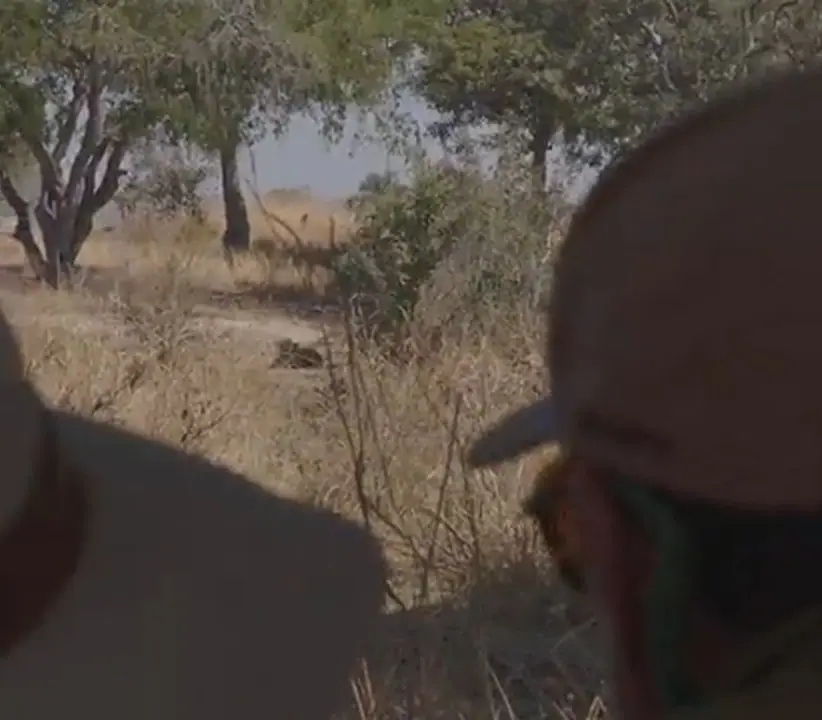 Photo: The Bushcamp Company
You also feel the scale of things. An elephant seen from a vehicle is large. An elephant seen from the ground, at a distance your guide has judged carefully, is something else entirely. On foot, every sound matters, and nothing is behind glass.
What a walk is not, is a way to get close to large animals. A good guide keeps a respectful distance and will often move the group away rather than toward them. Walks also cover modest ground, typically 3–5 km over a morning in a Walking Camp, so you will see fewer animals than on a drive.
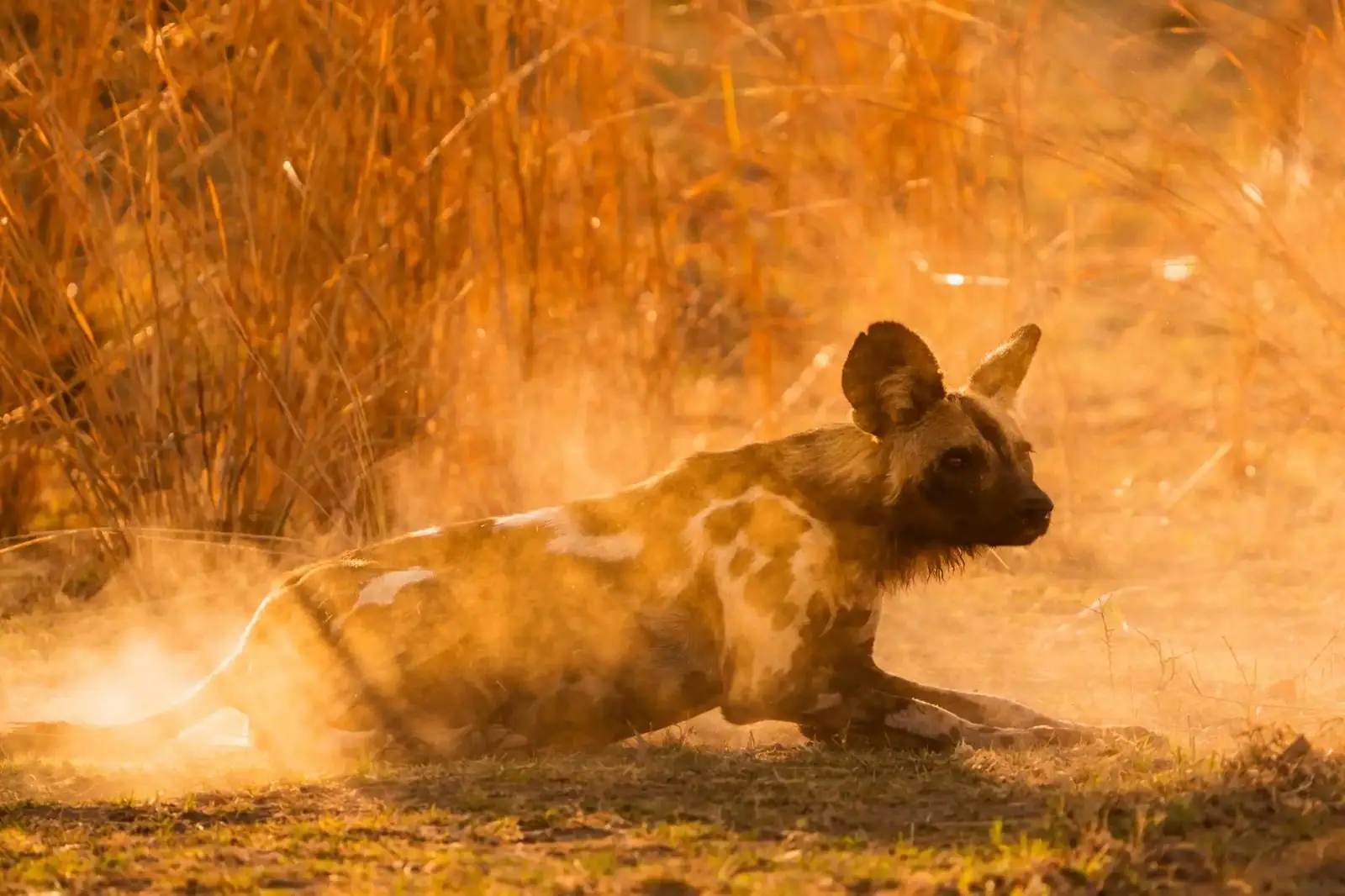 Photo: Lion Camp
What you see from a vehicle
A game drive does the things a walk cannot. It covers far more ground, so you have a much better chance of finding lion, leopard, wild dog and the large herds. It lets you watch animals at a distance without changing their behavior, and stay with a sighting for as long as it holds your interest. In many parks, animals are used to vehicles and carry on with what they are doing.
A vehicle is also where most serious photography happens. You can carry long lenses, brace them on the vehicle and wait for the light.
Why evenings belong to the vehicle
Walks end before dark. That is a safety rule, not a preference, and it shapes the whole day. A typical day in a Walking Camp is a morning walk, lunch and a rest through the heat, then an afternoon drive that runs into the evening.
Where night drives are permitted, the drive continues after sunset with a spotlight, and a different set of animals appears: the nocturnal species you will only ever see as tracks on a morning walk. In South Luangwa in Zambia, night drives are permitted inside the national park and are offered at nearly every Walking Camp [2]. Night drives also run in private reserves and conservancies elsewhere, but inside a national park they are less common.
That pairing is part of what makes a mixed day so satisfying. You find the tracks in the morning and, with luck, the animal that made them that night.
The sundowner
The sundowner, a drink at a viewpoint as the sun goes down, is one of the rituals of an African safari. It belongs to the vehicle. A long afternoon walk cannot carry a proper sundowner with ice, and it would need to be back before dark in any case. A camp that offers drives in the afternoon keeps this part of the day.
The case for a Walking Camp
This site sorts walking safaris into three formats: the Walking Expedition, where walking is the whole trip; the Walking Camp, where walks and drives are offered every day as equals; and Walks Offered, where a walk is on request or secondary to the drive. They describe how a trip is built, not how good it is.
For most travelers, the Walking Camp is the best fit. You can walk every morning, or skip a morning if you are tired, or drive when the guide expects something worth finding by vehicle. You keep the night drive and the sundowner. Most importantly, you decide each day.
South Luangwa is the clearest example of this format at scale. About half of its commercial camps make walking a daily core activity, and it has more walking-led camps than any other park in our research [5]. A common day there is a morning walk followed by an afternoon drive that runs into a night drive, and guests choose a walk or a drive for each activity. Every walk goes out with a licensed guide and an armed government scout [2][3]. In Greater Kruger, by contrast, walking is a daily core activity at fewer than one camp in ten, and at most lodges it is an optional extra to the drive [5].
Who should choose an expedition instead
Some travelers already know they want to walk, all day, every day. For them, a Walking Expedition is the better choice. On a mobile walking safari or a trails camp, vehicles are used only for transfers. Expect two walks a day and longer distances: Kruger's state-run wilderness trails walk up to 20 km a day, with no game drives or night drives [4].
Choose an expedition if you are a fit and experienced walker, if you value solitude and simplicity over comfort and choice, and if you are happy to give up the night drive and the sundowner. Choose a Walking Camp if this is your first walking safari, if you are traveling with people who want to drive as well, or if you want a long, varied day.
The bottom line
Walking versus driving is a false choice. The walk gives you the detail; the drive gives you the range and the night. The best trip offers both as equals, and leaves the choice to you each day.
From The Bushcamp Company's Guide to the Luangwa: What to Expect on a Night Drive in South Luangwa
Sources
- Kafunta Safaris, Walking safari Zambia: what to know — https://kafuntasafaris.com/walking-safari-zambia-what-to-know/
- Yellow Zebra Safaris, Luwi Bush Camp — https://yellowzebrasafaris.com/us/zambia/accommodation/luwi-bush-camp/ ; Expert Africa, Nsefu — https://www.expertafrica.com/zambia/south-luangwa-national-park/nsefu
- Zambia Tourism, Tafika Walking Trails — https://www.zambiatourism.com/listing/tafika-walking-trails
- SANParks, Kruger Wilderness Trails — https://www.sanparks.org/parks/kruger/what-to-do/activities/wilderness-trails
- walkingsafaris.com research, walking share of commercial camps by park (Oct 2026), compiled from tour operator and agent listings
Spotted an error? Tell us. How we classify camps: our methodology.