
Stories
A Walking Safari of Another Kind: When Elephants Walk Through the Lobby at Mfuwe Lodge
At the end of each dry season, a family of elephants walks through the front door of a safari lodge in Zambia, on the way to a tree that was there first.
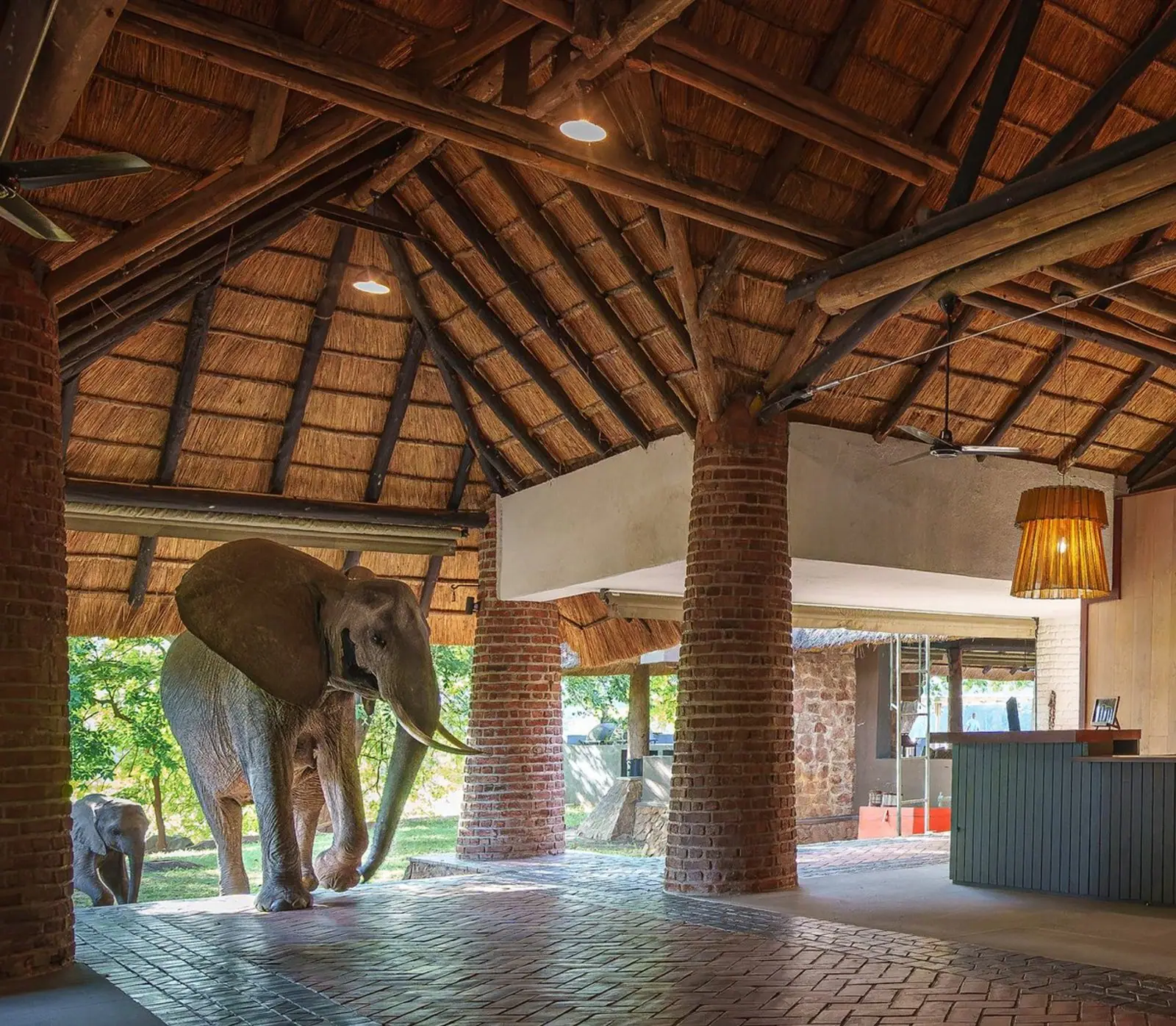 Photo: The Bushcamp Company
The tree and the path
In the courtyard of Mfuwe Lodge stands a large wild mango, Cordyla africana [3]. It is not the mango of the fruit bowl, but its fallen fruit is a seasonal store of food that elephants seek out [3].
The tree came before the building. Accounts of the lodge describe the mango as mature and older than the reception, and the lodge as built around it [5]. The Bushcamp Company puts it plainly: the elephants were following this route "long before the lodge was built around their path" [2]. The reception sits between the bush and the tree. For an elephant heading for the fruit, the most direct way in is through the front door [4].
So, each year, they use it.
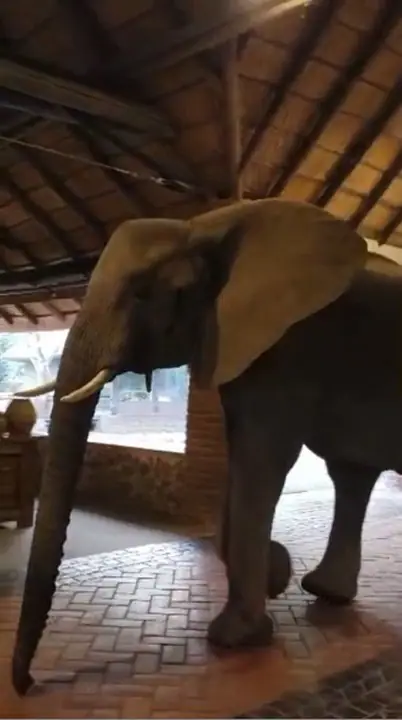 Photo: The Bushcamp Company
What happens
When the fruit starts to drop, usually from late October, an elephant family arrives at the lodge [2][4]. Led by the matriarch, the elephants walk in across the reception floor, past the front desk and out into the courtyard to feed under the tree [4]. They come back, often more than once a day, for as long as the fruit lasts [6].
They are calm about it. The lodge describes them as "entirely unbothered by the guests" and notes that they are not performing but "following a route that belongs to them" [2]. Elephants have been seen dozing in the shade near reception. On at least one occasion a check-in was delayed so guests could watch a sleeping elephant [2]. Earlier reports describe the herd's curiosity reaching the gift shop and the bar [7].
The same families have returned year after year [2]. A 2008 report described a herd of about ten led by a matriarch the staff had nicknamed Wonky Tusk [6]. A 2012 report recorded that she had a new calf with her [7]. Zambia Tourism, writing about the visits, noted that at least three generations of one family had returned every year [3].
Guests watch from a respectful distance [2]. This is a wild family of elephants, not a tame one, and the lodge treats it that way.
Why November
November is the turn of the season in the Luangwa Valley. The long dry months are ending and the first rains are close. The Bushcamp Company calls November the start of its "emerald season" [8]. The wild mango ripens in this window, from late October into December [4], at the end of the dry season, when the bush is at its driest.
This is also the end of the main walking season. Walking in South Luangwa runs roughly from June to October and stops when the rains arrive. Most of the seasonal bushcamps close. Mfuwe Lodge stays open all year [1], which is why it is the place in the valley to see the elephants come in.
What it shows about the valley
It would be easy to treat this as a novelty. It is better read as a lesson in how the Luangwa works.
Elephants remember. A family that returns to the same tree in the same weeks every year, generation after generation, is using knowledge passed down by its matriarchs. Where the fruit is, and when, is part of what the family knows. The lodge happens to stand on the route.
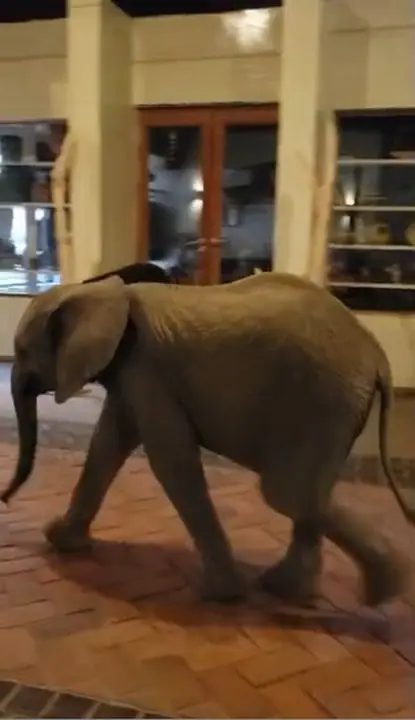 Photo: The Bushcamp Company
The valley is open. South Luangwa is unfenced. Animals move freely through the park, along the river and around the camps. Most of the time this is quieter and less visible than an elephant at the front desk, but it is the same thing: the lodges are in the animals' country, not the other way around.
People adapt to wildlife. Rather than fence the tree or move the path, the lodge left the reception open and let the elephants keep their route [5]. That fits a long tradition in the valley. Norman Carr, who opened what is generally described as the first public game-viewing camp in what is now Zambia around 1950, built his work on the conviction that wildlife survives only when the people who live alongside it have reason to protect it. A lodge that makes room for an elephant family is a small, everyday version of that idea.
Seeing animals on their own terms matters. This is what a walking safari is about, too. On foot you see animals going about their lives, on their paths and to their timetable. The elephants at Mfuwe Lodge make the same point from the other side. For a few weeks a year, they are the ones walking in.
Planning a visit
- Timing: aim for November for the best chance. Late October and early December are possible but less certain. The elephants follow the fruit, not the calendar, and no visit is guaranteed.
- Where to stay: Mfuwe Lodge is the iconic main lodge of The Bushcamp Company, the largest operator in South Luangwa, which also runs six seasonal bushcamps and The Villas at KuKaya [1][9].
- Activities: game drives and night drives are the main activities at Mfuwe Lodge in November. Night drives are permitted in South Luangwa and included at the lodge [10].
- Walking: walks from Mfuwe Lodge need a private guide, arranged in advance. Every walk inside the park goes out with a licensed guide and an armed scout from the Department of National Parks and Wildlife. For a trip built around walking, the bushcamps in the dry season are the better choice, and November is best treated as an elephant visit with walking as an option.
- Weather: November sits at the turn of the season, so expect heat and the chance of early rain.
From The Bushcamp Company's Guide to the Luangwa: The Lodge the Elephants Kept
Publisher's note. WalkingSafaris.com is published by The Safari Heritage Collection, custodians of Chibembe and owners of Lion Camp and The Bushcamp Company. Some of our camps appear in this article, and they are assessed on exactly the same published criteria as every other camp in Africa. Who we are
Sources
- Zambia Tourism, Mfuwe Lodge (The Bushcamp Company) — https://www.zambiatourism.com/listing/mfuwe-lodge-the-bushcamp-company/
- The Bushcamp Company, The lodge that the elephants walk through — https://bushcampcompany.com/pages/elephants-in-reception
- Zambia Tourism, Elephants in reception: a dispatch from The Bushcamp Company and Mfuwe Lodge — https://www.zambiatourism.com/elephants-in-reception/
- Sun Safaris, Mfuwe Lodge elephants walk through reception during October (2017) — https://blog.sunsafaris.com/2017/09/mfuwe-lodge-elephants-walk-through-reception-during-october/
- Uniq Hotels, Mfuwe Lodge — https://www.uniqhotels.com/mfuwe-lodge/
- DOGOnews, Elephants never forget, especially when it involves yummy mangoes (Oct 2008) — https://www.dogonews.com/2008/10/3/elephants-never-forget-especially-when-it-involves-yummy-mangoes
- Sun Safaris, Elephants walk through the reception at Zambia's Mfuwe Lodge (Nov 2012) — https://blog.sunsafaris.com/2012/11/elephants-walk-through-the-reception-at-zambias-mfuwe-lodge/
- The Bushcamp Company, Elephants at Mfuwe Lodge — https://bushcampcompany.com/collections/elephants-at-mfuwe-lodge
- The Bushcamp Company, About — https://bushcampcompany.com/about-us/
- The Bushcamp Company, Night Drives — https://bushcampcompany.com/products/night-drives
Spotted an error? Tell us. How we classify camps: our methodology.