
Why Walk
What Will You See on a Walking Safari?
Walking is not the best way to find lions, and that is not why people do it.
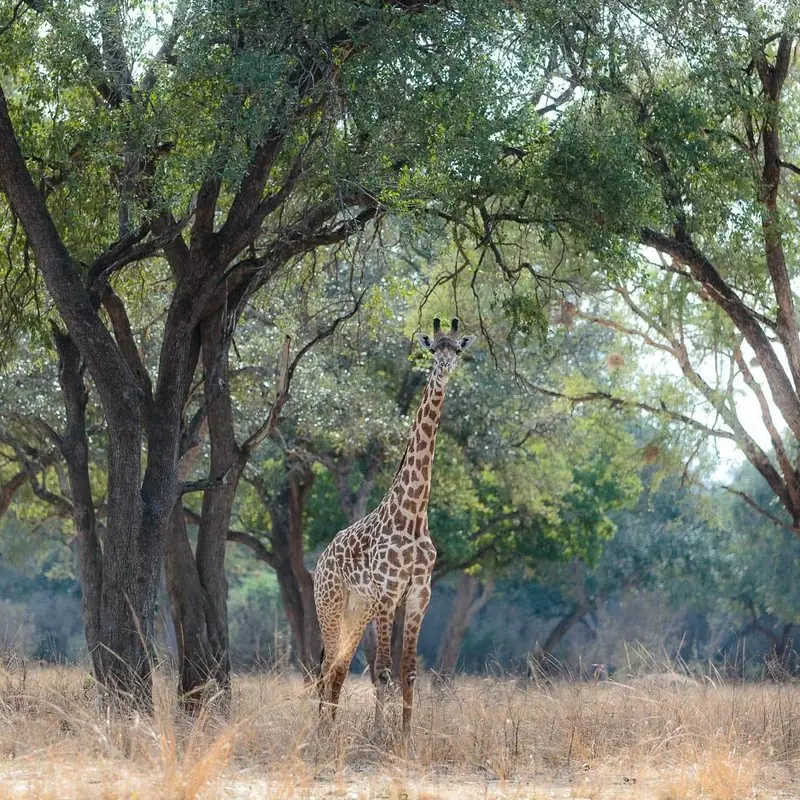 Photo: The Bushcamp Company
At a glance - Seen on most walks: antelope, baboons and monkeys, and a great many birds. - Often seen: elephants, buffalo herds, giraffes, zebras, kudu and waterbuck. In the Luangwa Valley, hippos and crocodiles in large numbers. - Rare, but it happens: lions, leopards and wild dogs. - Seen on every walk: tracks, dung, trees, termite mounds, and the sounds of the bush, explained by your guide.
Set your expectations: this is not a game drive on foot
If seeing a leopard is the main goal of your trip, a vehicle is the better tool. Vehicles cover distance, go out after dark and let you sit close to predators for long periods. A walk covers a few kilometers in a morning and stays well back from dangerous animals.
On foot, encounters with lions, leopards and wild dogs are rare. They do happen, and they are among the most memorable moments in safari travel, but a good guide will not go looking for them, and you should not book a walking safari expecting them.
What a walk offers instead is everything a vehicle drives past.
What you are likely to see
Antelope, almost always. Impala, puku, bushbuck and other antelope are the animals you will meet most often. Walking gives you a different view of them: the alarm snort that warns the herd, and how close they will let you come before they move off.
Baboons and monkeys. Troops of baboons and vervet monkeys are a constant presence near rivers and camps. Their alarm calls are one of the bush's early warning systems, and your guide will teach you to listen for them.
Birds, everywhere. Even keen game viewers are often surprised by how much of a walk is spent on birds: kingfishers and bee-eaters along the riverbanks, hornbills and starlings in the woodland, and raptors overhead. In the dry season, colonies of carmine bee-eaters nest in the riverbanks of the Luangwa Valley.
Hippos and crocodiles. In the Luangwa Valley in particular, the river and its lagoons hold large numbers of both. Walking along a high bank above a pod of hippos is one of the classic Luangwa experiences, and one where your guide's knowledge of where to stand matters most.
Elephants, buffalo and giraffes. Elephants and herds of buffalo are seen regularly, along with giraffes, zebras, kudu and waterbuck. On foot, scale changes everything. An elephant feeding fifty meters away looks very different from the ground than it does from a vehicle seat, and your guide will keep you downwind and at a respectful distance.
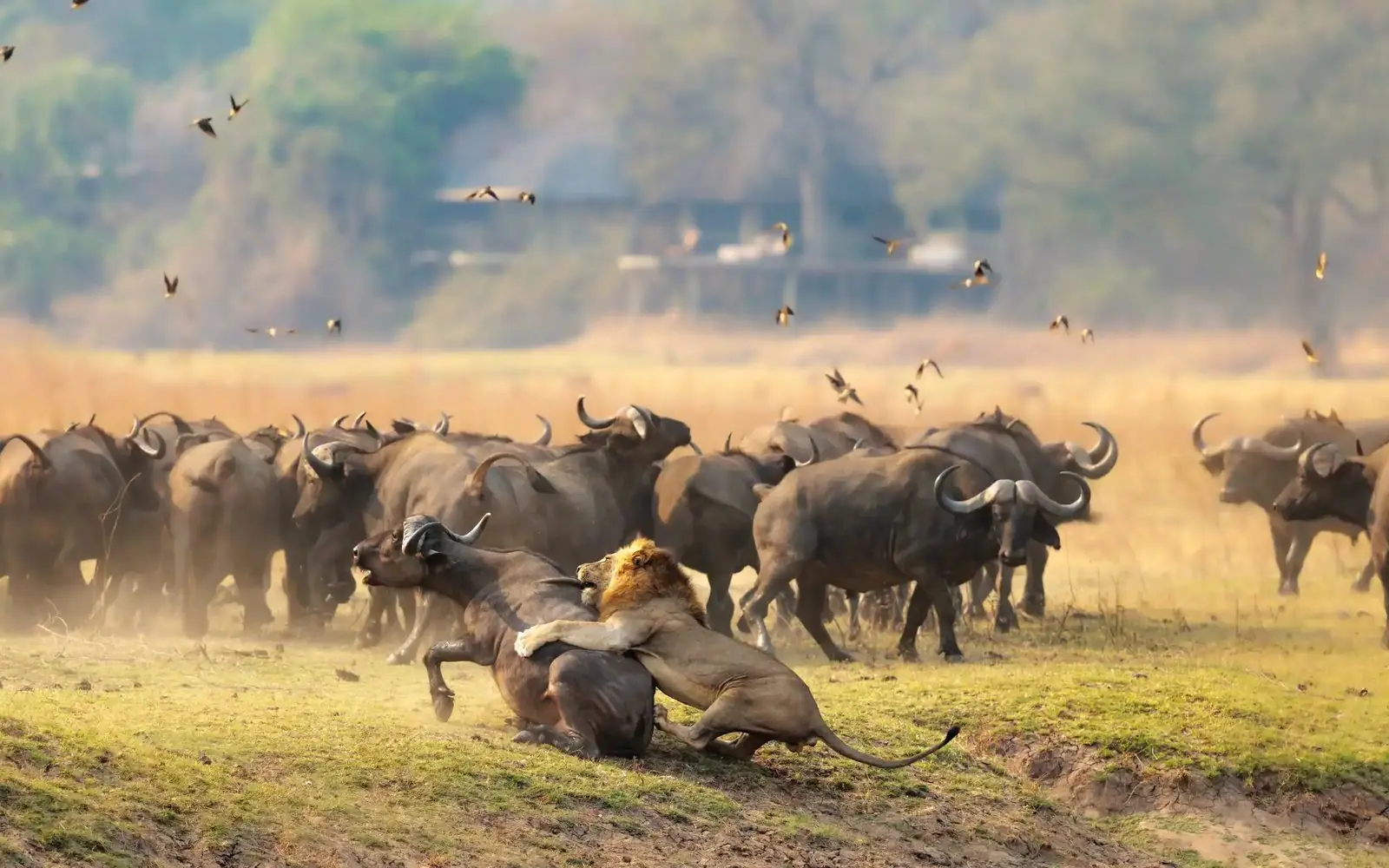 Photo: Lion Camp
The real point: learning the bush
The most rewarding part of a walking safari is not on any checklist. It is the way a good guide turns the bush into something you can read.
Tracks and signs
Every walk starts with the ground. Overnight tracks in sand tell you which animals passed, in which direction, how fast and how recently. Your guide will show you how to tell a hyena's track from a leopard's, read the drag marks of a feeding hippo, and work out a story from dung, scuff marks and broken branches. By the end of a few walks, most guests are starting to read tracks themselves.
Sounds and calls
The bush is never silent. On foot, without an engine, you start to hear it: the bark of a baboon sentry, the snort of an impala, the chatter of a squirrel at a snake, the call of a francolin at dawn. Each sound means something, and many of them are warnings passed from one species to another. Learning to hear the bush as a conversation is one of the lasting gifts of a walking safari.
Trees and plants
Guides know the trees as well as the animals: which ones elephants strip for bark, which fruits draw baboons and antelope, which plants the local communities have used for generations as medicine, food or building material. A single large tree can host birds, insects, reptiles and mammals, and understanding it explains why animals are where they are.
Termite mounds and how it all connects
Termite mounds are a good example of what walking reveals. From a vehicle, they look like earth. On foot, your guide can show you how termites recycle dead wood and grass, how their mounds create richer soil where trees take hold, and how those mounds become lookout points, shelters and dens for other animals. Pull on one thread, and the whole ecosystem comes with it.
That is the heart of a walking safari: not ticking off animals, but understanding how the pieces fit together.
Now and then, a cat or wild dogs. Every so often a walk crosses paths with a leopard resting in a tree, a pride of lions in the shade, or a pack of wild dogs on the move. These moments are rare and can't be planned, which is part of why walkers remember them for the rest of their lives. When it happens, your guide will keep the group together and at a safe distance, and let the animal set the terms.
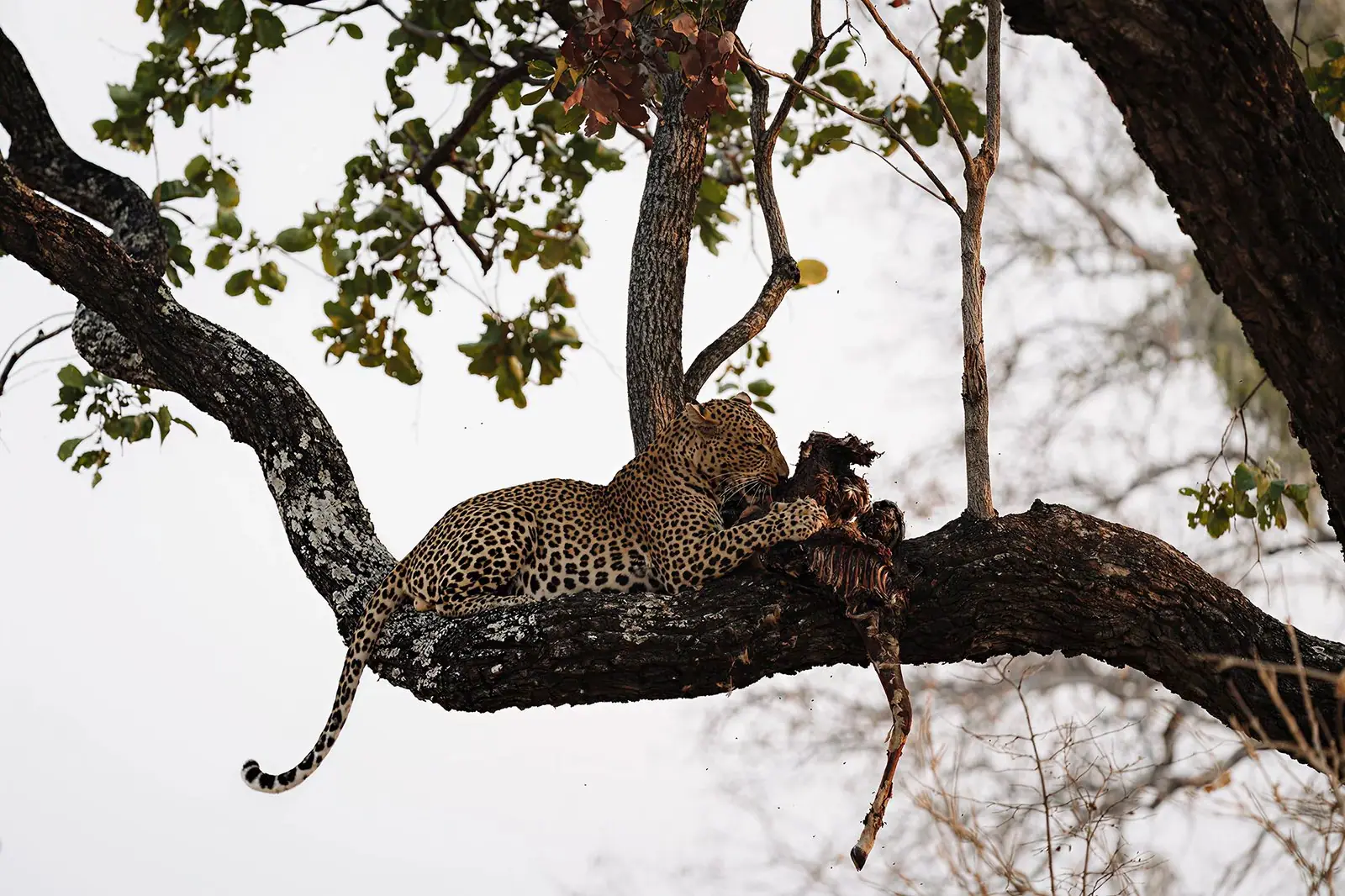 Photo: The Bushcamp Company
How to get the most from a walk
- Ask questions. Guides love curious walkers. The best walks are conversations.
- Look down as well as up. The tracks, dung and insects at your feet often tell the best stories.
- Listen. Stop when the guide stops, and stay quiet. Many animals are heard long before they are seen.
- Combine walking and driving. The best trips do both: walk in the morning to learn the bush, and drive in the afternoon and evening to cover ground and look for predators.
From The Bushcamp Company's Guide to the Luangwa: Guide to South Luangwa Wildlife · Why South Luangwa Is One of Africa's Best Places to See Leopards
Sources: walkingsafaris.com research and operator walking programs; Mumbulu Trails (carmine bee-eater nesting season), https://mumbulu.com/
Spotted an error? Tell us. How we classify camps: our methodology.