
Stories
Kuyenda: Phil Berry's Walking Camp
Kuyenda means "to walk" in Nyanja, the local language. Fittingly, it was built by a man who had spent thirty years walking the valley before he put up a single hut.
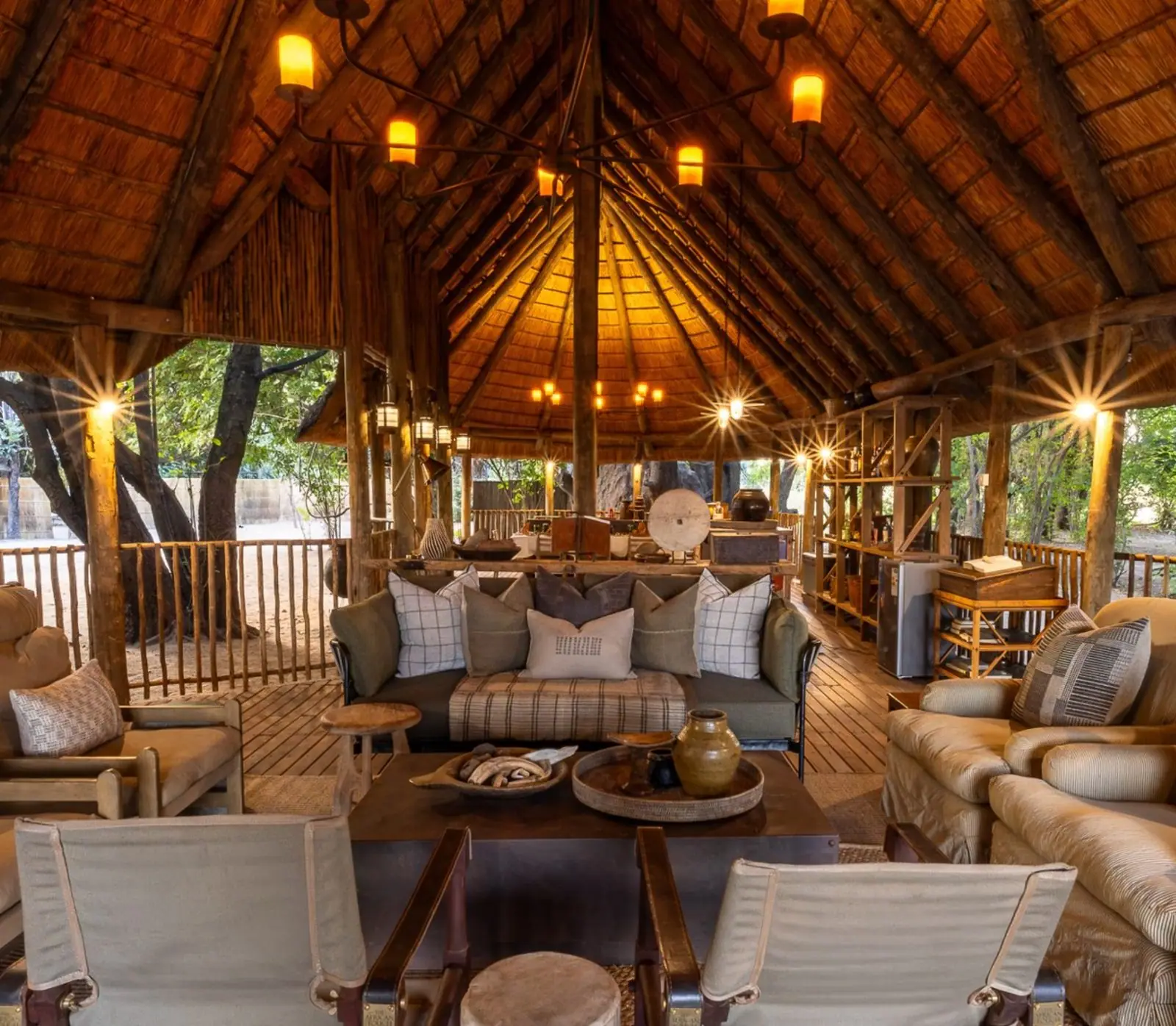 Photo: The Bushcamp Company
A ranger on foot
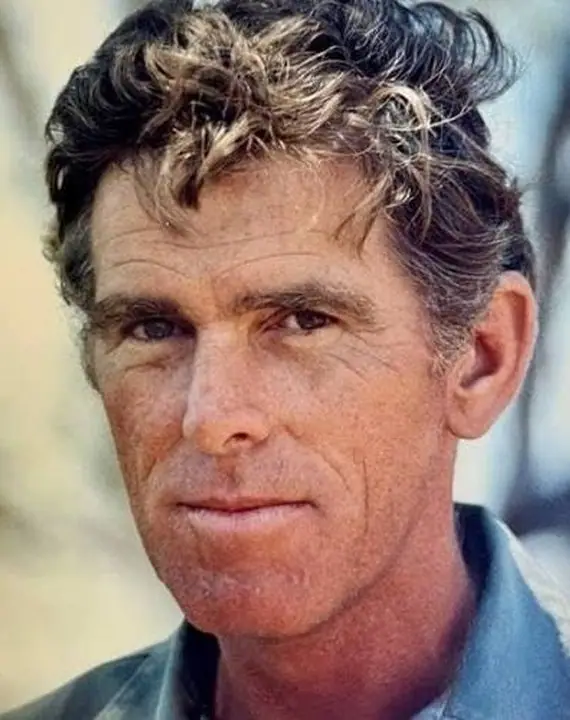
Phil Berry came to the Luangwa Valley as a young man. In 1960, at 18, he joined what was then the Department of Game and Fisheries, and he spent the next twelve years patrolling the valley on foot, rising to Chief Ranger [1]. It was the same decade in which Norman Carr's guests first crossed the Luangwa at Chibembe and walked to Lion Camp, and walking was simply how a ranger knew his country.
Those years gave Berry what every great walking guide needs and no course can teach: a working knowledge of the ground. Where the elephants crossed. Which lagoons held water late into the dry season. How buffalo behaved in the long grass, and how to read a lion's track in the sand. Travel writers and operators would later describe him as one of Norman Carr's protégés [2].
Building the walking safari
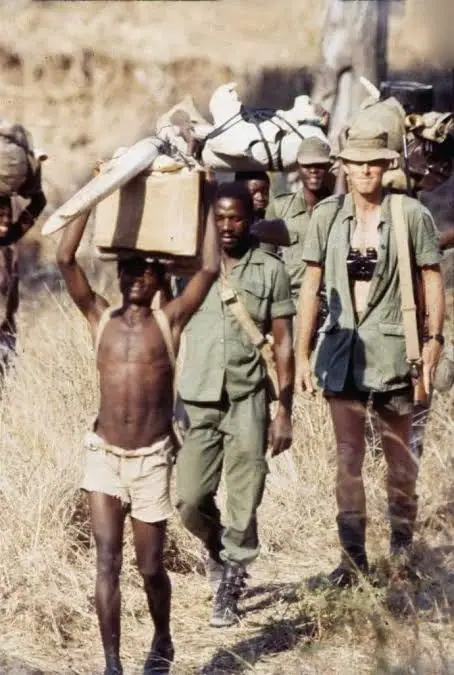
After his years with the government, Berry turned to the safari industry, which in the Luangwa was still young. Through the 1970s he helped develop walking safaris in the park [1], at a time when the idea of paying guests walking among elephant and lion was still new to most of the world. Chibembe, the camp at the start of Carr's walking circuit, trained many of the guides who went on to shape the valley's safari industry, and its own history names Berry among those who worked there [4].
By 1980 his work had turned to front-line conservation, including the fight against the poaching that was devastating the valley's elephant and rhino [1]. He played a leading role in efforts to protect Zambia's black rhinos [3], a fight the valley ultimately lost: black rhino were gone from South Luangwa by 1987 [5].
The giraffe man
Berry's other great work was quieter. Over decades of personal observation, he came to be recognized as the world's leading authority on Thornicroft's giraffe [3]. These giraffe live only in the Luangwa Valley, and the whole wild population is estimated at about 550 animals [5]. Much of what is known about them began with one man watching them, year after year, on foot.
Kuyenda
In 1992 Berry founded Kuyenda in the south of the park [1]. He chose the site for its walking. The camp sits under a grove of Natal mahogany trees beside the Manzi River, a sandy riverbed for most of the dry season, close to the Manzi and Kuyenda lagoons. Around it lie open plains, palm islands, riverbanks and natural salt springs, country that rewards a walker at every turn [2].
He named it for what it was for. Kuyenda means "to walk."
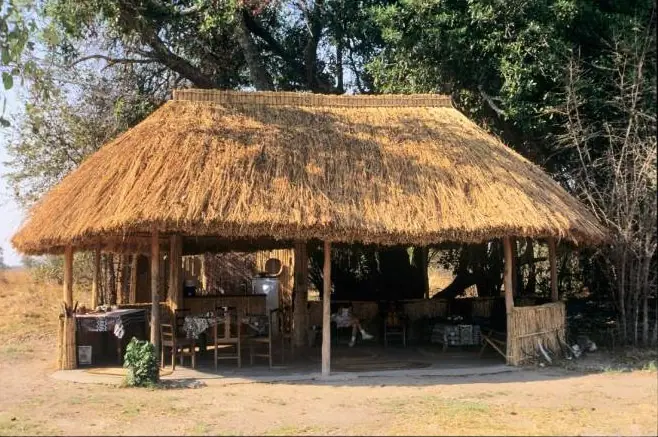
The camp was simple then and has stayed close to its roots: thatched rondavels spread well apart, open-air bathrooms, and a raised main area looking out over the floodplain [2]. In 2000 Kuyenda joined The Bushcamp Company [1], and Berry stayed on. For more than twenty years he guided guests, welcomed them and walked with them, with his partner Babette Alfieri at his side [1][2]. Guest reviews from those years often mention meeting Phil and Babette at camp [2].
A legacy on foot
Phil Berry died in July 2022 [6]. The Bushcamp Company called him the valley's "elder statesman and undisputed wildlife expert," and wrote that few had contributed more to South Luangwa's standing as one of Africa's great safari destinations [6]. In his memory, the Frankfurt Zoological Society, a long-term partner, set up the Phil Berry Fund to support a new generation of Zambian researchers and conservationists [3].
His most lasting legacy may be the guides. Over six decades he mentored generations of young Zambians in reading the landscape, understanding animal behavior and guiding with integrity [1]. Many of the people who lead walks in the Luangwa today learned, directly or at one remove, from him.
Kuyenda is still a walking camp. Guests choose a morning walk with a licensed guide and an armed scout from the Department of National Parks and Wildlife, and the plains Berry chose more than thirty years ago are still some of the best walking country in the park. As The Bushcamp Company put it, the park and the camp are "fitting monuments to a unique man" [6].
Visiting Kuyenda
- Where: the south of South Luangwa National Park, about two hours by road from Mfuwe [2].
- Season: early June to the start of November.
- Walking: a morning walk most days, with a licensed guide and an armed DNPW scout. Walking is optional, and guests choose a walk or a drive. Walkers must be at least 12.
- Combine it: Kuyenda pairs well with the other southern bushcamps, and a walked circuit between camps can be arranged on request.
From The Bushcamp Company's Guide to the Luangwa: Where Is the Best Walking Country in South Luangwa?
Publisher's note. WalkingSafaris.com is published by The Safari Heritage Collection, custodians of Chibembe and owners of Lion Camp and The Bushcamp Company. Some of our camps appear in this article, and they are assessed on exactly the same published criteria as every other camp in Africa. Who we are
Sources
- The Bushcamp Company, Bwana Phil: A Life in the Luangwa — https://bushcampcompany.com/blogs/bwana-phil-a-life-in-the-luangwa-1/bwana-phil-a-life-in-the-luangwa
- Expert Africa, Kuyenda Bushcamp in detail — https://expertafrica.com/zambia/south-luangwa-national-park/kuyenda-bushcamp/in-detail
- Frankfurt Zoological Society, The Phil Berry Fund — https://fzs.org/en/about-us/fzs-us/the-phil-berry-fund/
- Chibembe Wildlife Reserve, History — https://www.chibembewildlifereserve.com/history
- Wikipedia, South Luangwa National Park; Thornicroft's giraffe — https://en.wikipedia.org/wiki/South_Luangwa_National_Park · https://en.wikipedia.org/wiki/Thornicroft%27s_giraffe
- APTA, The Bushcamp Company remembers Phil Berry (August 2022) — https://apta.biz/2022/08/08/the-bushcamp-company-remembers-phil-berry/
Spotted an error? Tell us. How we classify camps: our methodology.