
Stories
True Experiential Travel: Walking Safaris
Most travel lets you look at a place. A walking safari asks you to take part in it.
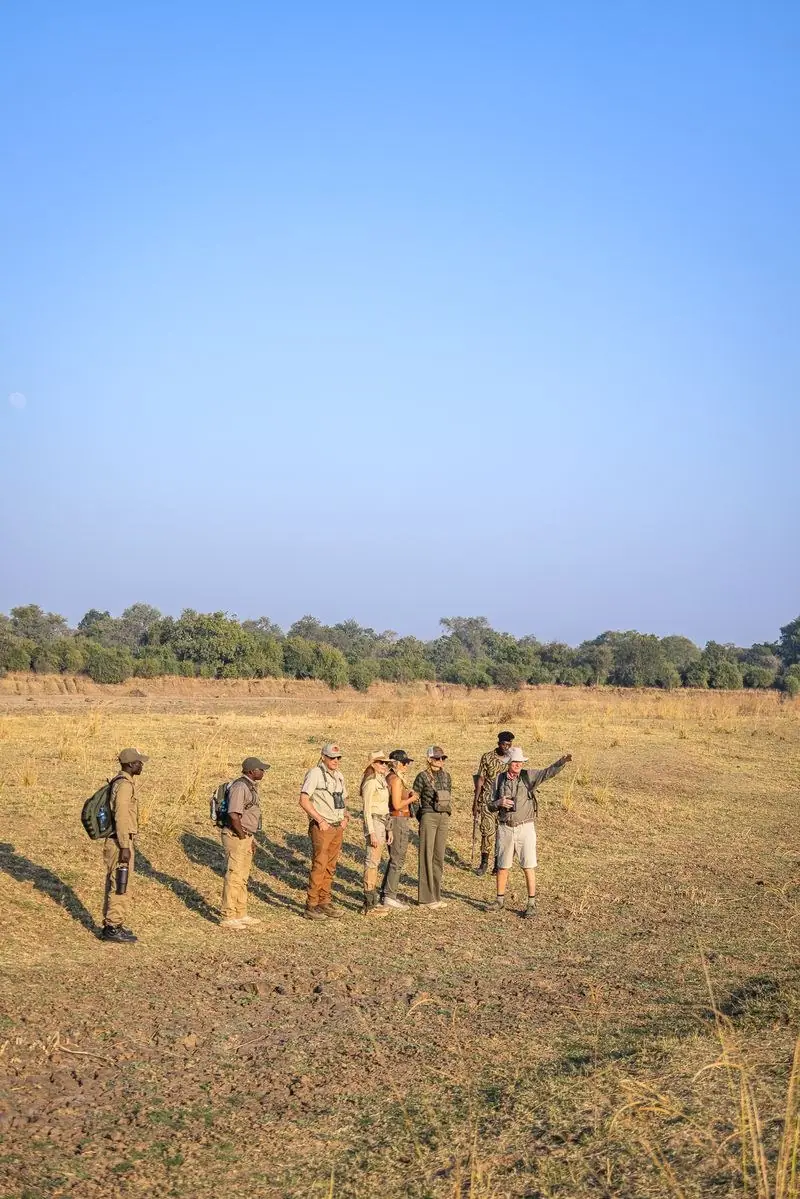 Photo: Chibembe Wildlife Reserve
Experiences, not sights
For years the safari was sold as a list: the animals you would tick off and the photographs you would take home. That has changed. Travelers increasingly choose a trip for what they will do there, and especially for experiences that are hands-on, guided by people who know the place, and hard to find anywhere else [1].
"Experiential travel" has become a marketing phrase, and plenty of trips that carry the label are really sightseeing with a new name. The honest test is simple: are you doing something, or are you being shown something? By that test, a game drive is a fine way to see Africa. A walking safari is a way to take part in it.
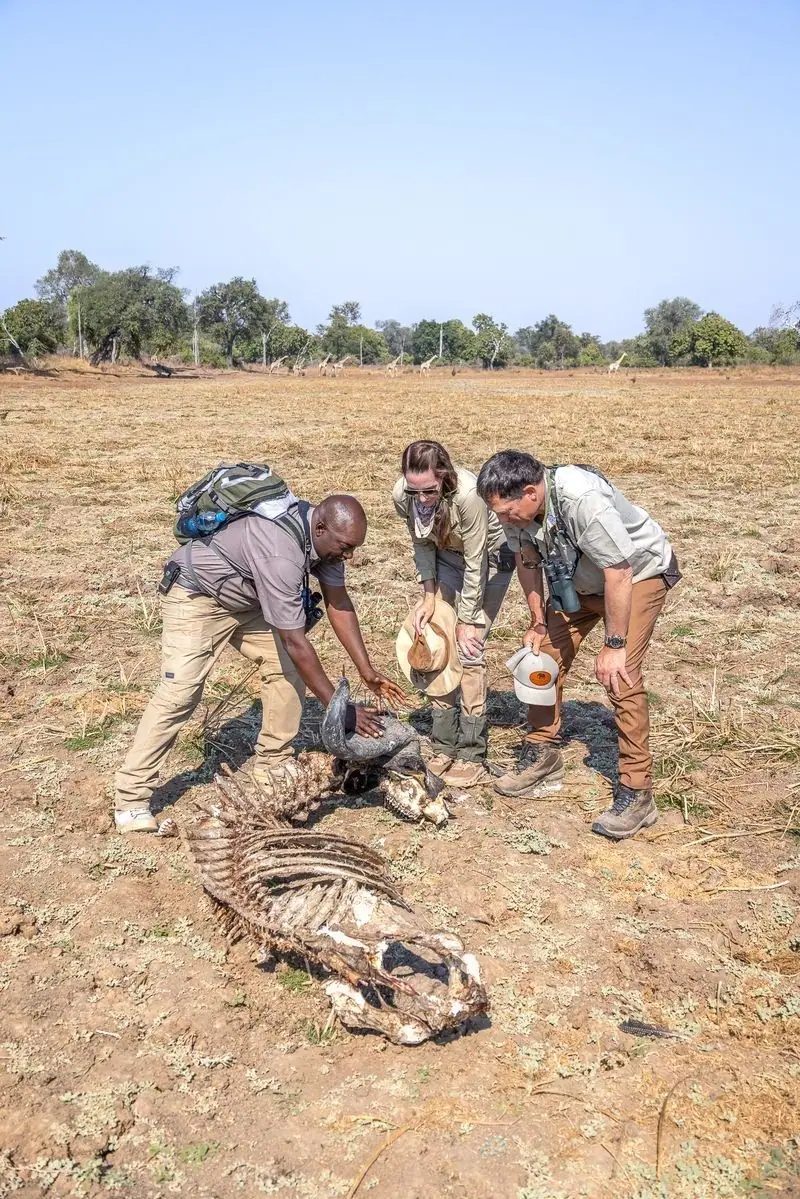 Photo: Chibembe Wildlife Reserve
What makes a walk an experience
You use every sense. In a vehicle, the engine and the seat put a layer between you and the bush. On foot, the layer is gone. You hear the francolins call, and you notice when the birds suddenly fall quiet. Guides read those sounds closely: oxpeckers chattering nearby often mean buffalo or other large animals are close [4]. You smell crushed grass underfoot, the dust, and sometimes an elephant before you see it. You feel the heat come up off the sand as the morning warms.
You learn to read the ground. Much of a walk is spent looking down. Your guide shows you how to tell a hyena's track from a leopard's, how fresh a track is, which way an animal was heading and what it was doing. By the second or third morning, you start spotting signs before your guide points them out. Few other kinds of travel teach you a new way of seeing in a few days.
You make decisions together. Where to go next, whether to follow a set of tracks, when to wait quietly downwind: these are judgment calls your guide makes in front of you, and often talks through with you. You are not a passenger. You are part of a small team working its way through wild country, and that changes how the morning feels.
Small things become big. A dung beetle rolling its ball across the path. A lion's footprint in the riverbed. A termite mound taller than you, or the hole an aardvark dug in it. A vehicle drives past most of this. On foot it fills the morning.
The big moments land harder. When you meet an elephant on foot, at a respectful distance with your guide and scout beside you, you feel it in a way no vehicle can match. Walkers often say it is the moment of their trip they remember most clearly.
 Photo: Chibembe Wildlife Reserve
Where it works best
The experience is deepest where walking is part of everyday life, not an add-on. A few parks stand out.
- South Luangwa, Zambia: where walking safaris began. It has 24 walking-led camps, the most of any park we track, with a morning walk and an afternoon drive the usual rhythm [3]. Walks go out with a licensed guide and an armed DNPW scout [2].
- Mana Pools, Zimbabwe: open floodplain and big elephants, and some of the most beautiful walking ground in Africa.
- North Luangwa, Zambia: very few camps and the wildest country of all, for walkers who want true remoteness.
- Kruger, South Africa: multi-night wilderness trails and walking-focused private camps, and the chance to track rhino on foot.
Wherever you go, the balance matters. Walks run in the cool of the morning and drives in the afternoon, so you get the hands-on experience of walking without giving up the reach of a vehicle. For most travelers, that mix is what makes a first walking safari work.
Making it a true experience
- Choose a Walking Camp or Walking Expedition. A lodge where a walk is only an add-on gives you a taste, not the experience. Our directory classifies every camp by how central walking is.
- Walk on more than one morning. The real change, when you start reading the bush for yourself, comes on day two or three.
- Ask questions. Guides love curious walkers. The more you ask, the more you will learn.
- Leave the camera down sometimes. Some of the best moments on foot are the ones you just stand still and take in.
From The Bushcamp Company's Guide to the Luangwa: Why South Luangwa Defines the Classic African Safari
Publisher's note. WalkingSafaris.com is published by The Safari Heritage Collection, which runs walking camps in South Luangwa, one of the parks discussed here. Every park and camp is assessed on the same published criteria. Who we are
Sources
- Arival, More Travelers Putting Experiences First in 2025 (2025 U.S. Experiences Traveler Outlook, March 2025) — https://arival.travel/?p=183501
- Kafunta Safaris, Walking safari Zambia: what to know — https://kafuntasafaris.com/walking-safari-zambia-what-to-know/
- walkingsafaris.com camp directory (October 2026), compiled from operator websites and Expert Africa's South Luangwa listings — https://www.expertafrica.com/zambia/south-luangwa-national-park
- Londolozi Blog, Walking on the wild side (February 2025) — https://blog.londolozi.com/2025/02/27/walking-on-the-wild-side/
Spotted an error? Tell us. How we classify camps: our methodology.