
Where to Walk
Walking Safaris in Mozambique
Mozambique is better known for its beaches than its bush, but one of Africa's great conservation comebacks is happening inland. In Gorongosa, you can now walk through a park that was almost emptied of wildlife a generation ago.
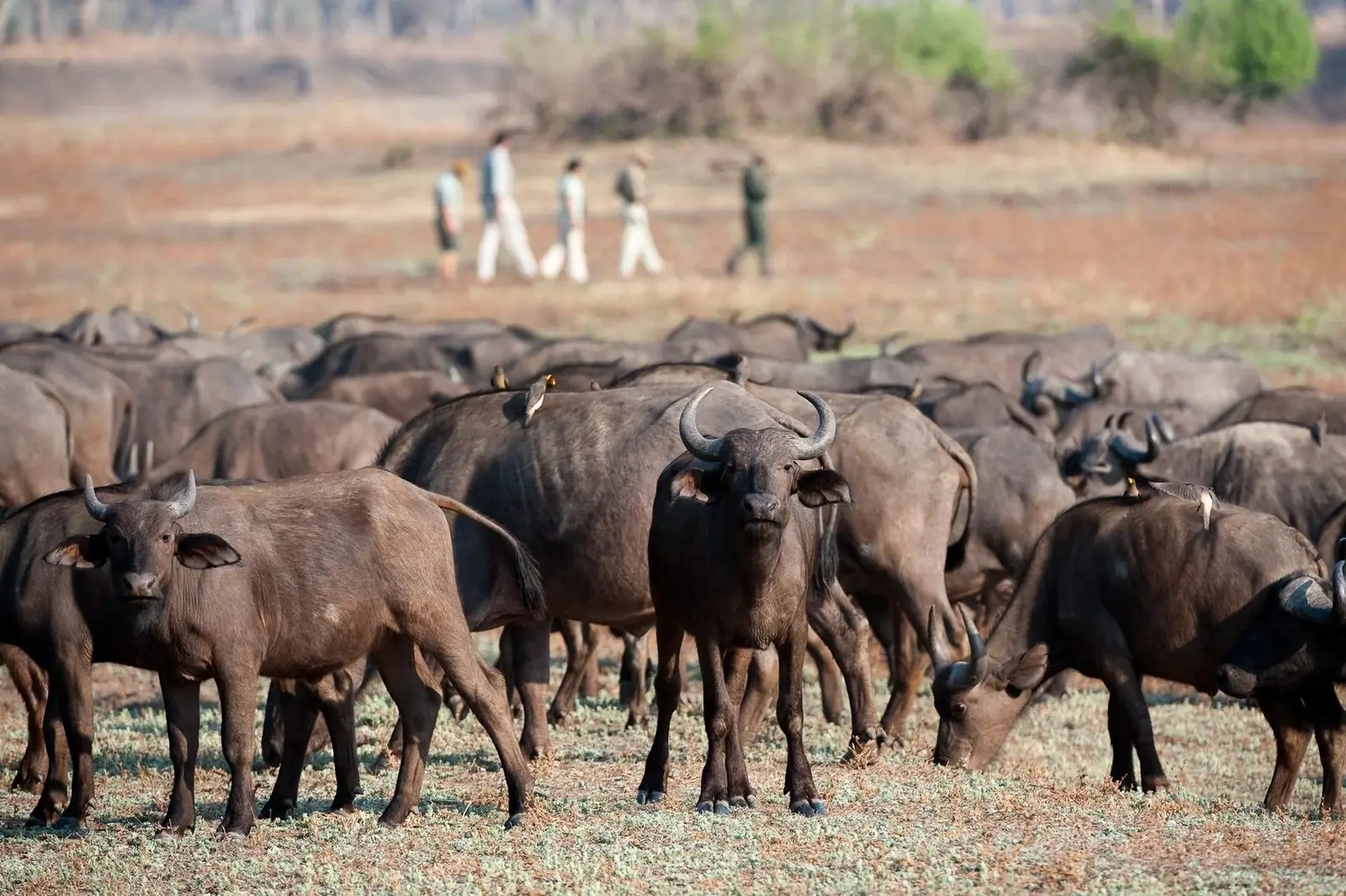 Photo: The Bushcamp Company
Walking parks in Mozambique
Select a park on the map.
Walking-led camps (larger dot, more camps)Walks offered onlyDrag to move · + and − to zoomRelief: NASA Earth Observatory · Rivers: Natural Earth
A park brought back to life
Gorongosa was once one of Africa's great parks. Then civil war, from 1977 to 1992, all but emptied it: by the mid-1990s, wildlife numbers had fallen by 90% or more. Elephants dropped from about 2,200 to about 100. Lions and buffalo, once counted in the hundreds and tens of thousands, were gone [7].
In 2008, the Greg C. Carr Foundation and the government of Mozambique began a 30-year partnership to restore the park [7]. Wildlife has come back strongly, with more than 110,000 animals across 20 species counted in a recent census, and predators including African wild dogs and leopards returned to the ecosystem [7]. The park's work reaches beyond its boundaries, too: community farming programs around the park grow coffee, cashews and chilies, and tourism revenue is reinvested in conservation and communities [7].
That story is part of what makes a walk here special. You are not just seeing wildlife; you are walking through a recovery in progress. See Walking Safaris and Conservation.
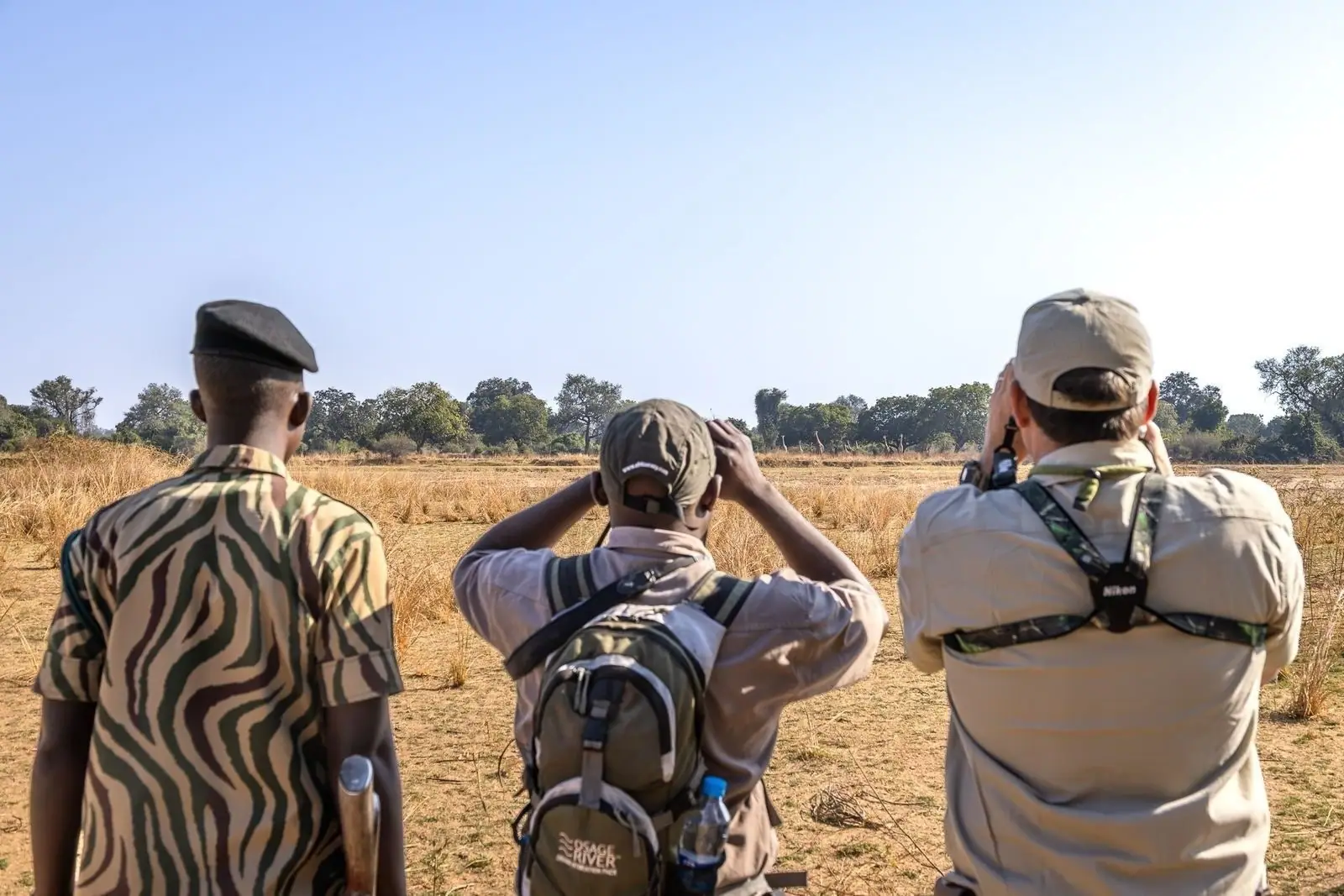 Photo: The Bushcamp Company
Where to walk in Gorongosa
Expedition Camp (Gorongosa Safaris): Walking Expedition. A private, exclusive-use fly camp set up for one group of one to six guests, in remote parts of the park that ordinary safaris do not reach. Expert walking guides lead the walks, with game drives and a guided hike to Murombodzi Falls as options. It runs June to November in 2026, with a shorter season in 2027, and welcomes children aged 12 and over [2][3].
Muzimu Lodge (Turismo da Gorongosa): Walks Offered. The park's first lodge: six tents in riverine forest beside an oxbow lake. Guided walks are offered alongside game drives, night drives, and visits to the restoration and community projects [3][4].
The park also offers private walking safaris for small groups, with a maximum of eight walkers, and shorter guided walks such as a two- to three-hour walk to the Pungue River [1].
When to go
Walk in the dry season. Wildlife viewing is possible from about April to November, and many park roads close in the wet season, roughly December to March, when flooding makes travel difficult [1]. Expedition Camp runs from June [2].
Getting there
Most visitors fly into Beira, which has direct flights from Johannesburg, then drive about 200 km (roughly three hours) to the park's Chitengo area. Chimoio is about two hours away by road. From Maputo, connect by air to Beira or Chimoio [1]. Ask your camp about road or air transfers.
Beyond Gorongosa
Zinave National Park. Restored since 2016 by Mozambique's conservation agency, ANAC, with the Peace Parks Foundation, Zinave has received more than 2,500 animals of 16 species. With the arrival of white rhinos in 2026, it is now the only national park in Mozambique with the Big Five [5]. We found no established walking camp there yet.
Niassa Special Reserve. A vast wilderness in the far north with a long walking tradition. Its best-known walking camp, Lugenda Wilderness Camp, has closed, and the seasonal Mpopo Trails Camp runs a handful of private departures each dry season [6]. Check current conditions and operators before you plan a trip.
How Mozambique fits a trip
Gorongosa pairs naturally with Mozambique's coast, such as the Bazaruto Archipelago, for a bush-and-beach trip. It also works as a contrast to the classic walking parks: for the deepest walking tradition, combine it with South Luangwa or Mana Pools. See the South Luangwa Walking Safari Guide and the Mana Pools guide.
The bottom line
Mozambique is a young walking destination, but Gorongosa offers something no other park can: walking through one of the most remarkable wildlife recoveries in Africa. Choose Expedition Camp for a true walking safari, or Muzimu for walks alongside drives, and keep an eye on Zinave and Niassa as they grow.
Sources
- Wikivoyage, Gorongosa National Park — https://en.wikivoyage.org/wiki/Gorongosa_National_Park
- Chalo Africa, Expedition Camp, Gorongosa National Park — https://www.chaloafrica.com/accommodation/expedition-camp-gorongosa-national-park-mozambique/
- Gorongosa National Park, Accommodation at Gorongosa — https://gorongosa.org/accommodation-at-gorongosa
- Go2Africa, Muzimu Lodge — https://www.go2africa.com/accommodation/muzimu-lodge
- ATTA, Zinave National Park's wildlife revival reaches new milestone (2026) — https://atta.travel/resource/zinave-national-park-s-wildlife-revival-reaches-new-milestone.html
- Timbuktu Travel, Where to stay in Niassa National Reserve — https://www.timbuktutravel.com/region/niassa-national-reserve-safari/where-to-stay
- Rhino Africa, Impact in Gorongosa: how a national park rebuilt itself (2026) — https://blog.rhinoafrica.com/2026/02/24/impact-in-gorongosa-how-a-national-park-rebuilt-itself/
Spotted an error? Tell us. How we classify camps: our methodology.