
Why Walk
Walking Safaris and Conservation: Why Going on Foot Matters
A walking safari is not just a quieter way to see Africa. It is one of the most direct ways a visitor can help keep wild places wild, and it began, more than seventy years ago, with the idea that the people living beside wildlife should benefit from it.
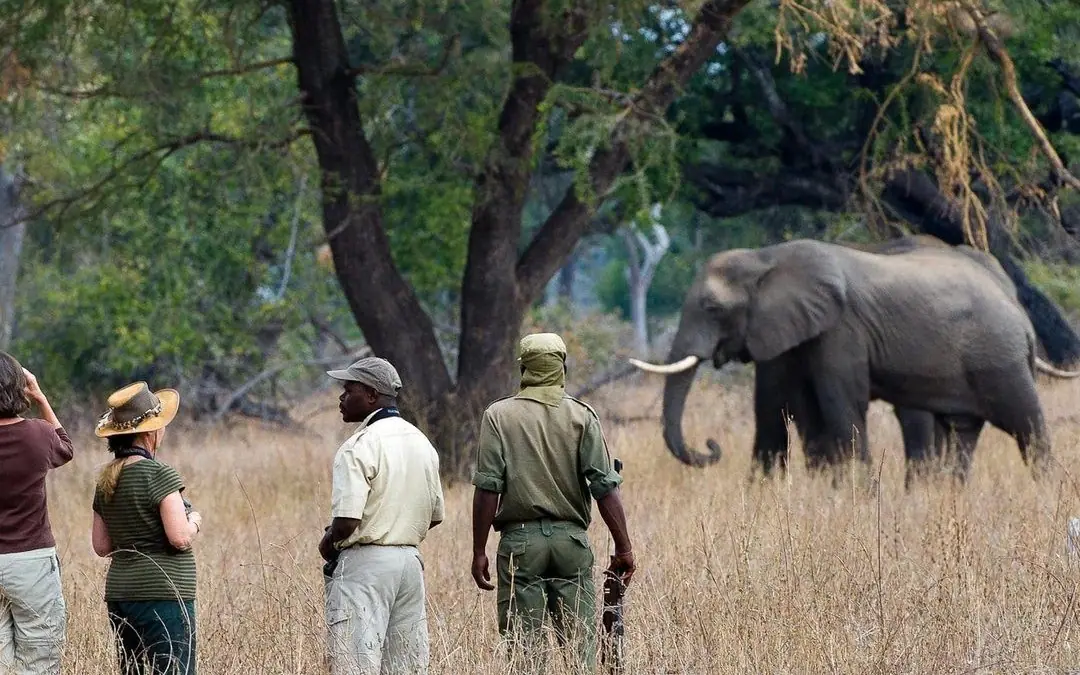 Photo: The Bushcamp Company
Where it began: wildlife that pays its way
The walking safari was born in Zambia's Luangwa Valley in the early 1950s, and its origin story is a conservation story. Norman Carr persuaded Senior Chief Nsefu of the Kunda people to set aside part of his land as a game reserve, and built the first game-viewing camp in what is now Zambia that was open to the public. The proceeds went back to the community [1].
The idea behind it was simple and, at the time, radical: if the people who live beside wildlife earn something from it, they have every reason to protect it. That idea now sits at the heart of conservation across Africa, from Kenya's community conservancies to Rwanda's parks. For the full story, see Who Invented the Walking Safari?
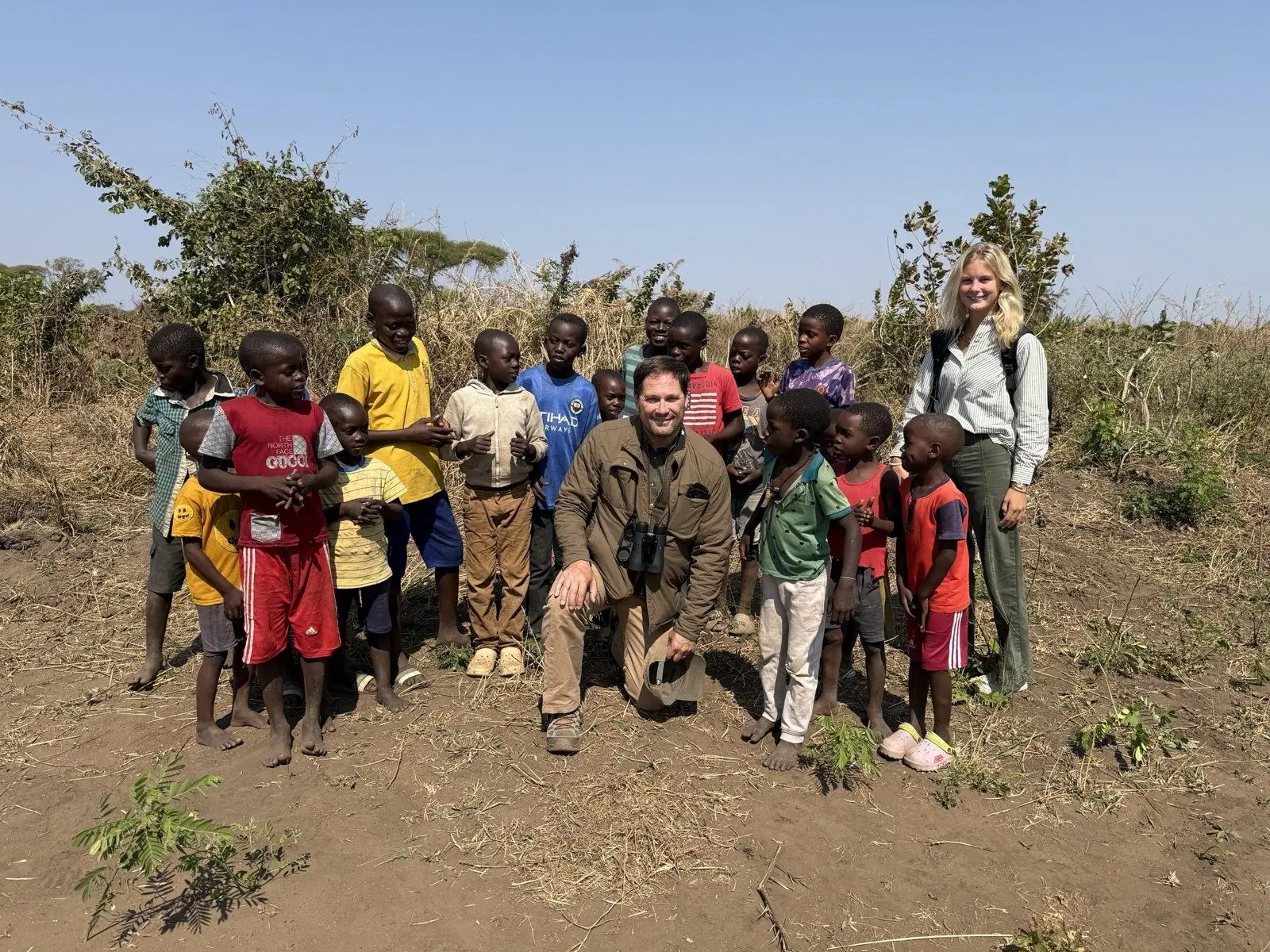 Photo: The Bushcamp Company
High value, light footprint
Conservation needs money, but every visitor also leaves a mark. Walking gets the balance right.
- Same fees, smaller footprint. A walking guest pays the same fees and nightly rate as a guest on a game drive. But a morning walk covers a few kilometers on game paths, where a drive can cover many times that on roads and tracks.
- No engine and no fuel. A morning on foot burns nothing but breakfast.
- No new tracks. Vehicles cut up soil, and new roads split up habitat. Walkers leave footprints that the next rain erases.
- Small groups. Walks are kept small. Kruger's wilderness trails, for example, take eight guests with two guides [9].
- Light camps. Many walking camps across Africa are small and seasonal, built largely from natural materials and closed for the rains. Mobile walking safaris sleep in simple fly camps that are packed up and carried out, leaving almost no trace.
This is the model the best conservation areas aim for: fewer visitors, each paying well, with very little built on the land. Walking needs skilled guides rather than more roads, more vehicles and bigger lodges.
Eyes on the ground
Every walk is, in a small way, a patrol.
A guide and ranger on foot notice things that a passing vehicle misses: a wire snare on a game path, a fresh human footprint where no one should be, vultures circling over a carcass, an elephant limping or a lion with a wire around its neck. Walking groups move through remote areas, off the roads, at hours and on routes that are hard to predict. Their regular presence makes the bush a harder place to poach unseen.
What they find matters, because there is someone to tell. In Zambia's South Luangwa, for example, Conservation South Luangwa works with the national parks authority and has removed more than 10,000 wire snares from the bush and freed more than 250 snared animals. Its wildlife vet is on call around the clock for snared and injured animals [5]. Reports from guides, scouts and camps in the field are part of how that kind of work gets done, there and in parks across the continent.
The people on every walk
A walk cannot happen without people, and that matters.
Rangers and scouts. In big-game country, walks are led or accompanied by armed, trained people. In Zambia's national parks, an armed scout from the wildlife authority must join every walk [2]. Elsewhere, walks are led by armed professional guides or park rangers. Either way, tourism puts trained people in the field and gives their work a visible value.
Guides and trackers. Walking guides train for years and pass demanding exams, and many grew up in the communities around the parks. A good guiding career is one of the most respected jobs in rural Africa, and every guest who walks helps keep that path open. See Why Your Guide Matters.
Camp teams. Behind every walk is a camp: cooks, housekeepers, drivers, builders, mechanics. In remote areas, these are some of the steadiest jobs available. Walking safaris are labor-intensive by nature, and that is a strength: more of what a guest pays turns into local wages.
Where the money goes
When you book a walking safari, part of what you pay goes beyond the camp.
- Park fees go to the wildlife authority that manages and protects the park. Some countries share them directly: Rwanda returns 10% of all park revenues to the communities around its parks, and the program has funded hundreds of local projects, from markets to health centers and clean water [7].
- Conservancy fees. In Kenya's community conservancies, landowners lease their land to tourism partners. Around the Maasai Mara, each landowner has received a monthly lease payment, and the conservancies together bring in millions of dollars a year for local families [8].
- Conservation and community supplements. Many camps add a nightly supplement to each guest's rate for conservation and community work: schools, clinics, clean water, anti-poaching support and projects that help farmers live with wildlife.
- Operator funds and conservation charities. In South Luangwa, a fund set up by the valley's photographic tour operators in 2010 has contributed more than US$1.2 million to Conservation South Luangwa [5], which set up Zambia's first wildlife detection dog team in 2015 [6]. Similar partnerships between camps and conservation groups exist in parks across Africa.
Turning neighbors into partners
Conservation only lasts when the people living beside wildlife are better off for it. Elephants raid crops, lions take cattle, and land that could be farmed is left wild. If wildlife brings nothing but cost, it is hard to argue against snares and plows.
Tourism changes that sum. When a community earns jobs, school fees and clinics from visitors who come to walk among its wildlife, wild land becomes worth more than cleared land, and poaching becomes something that harms the neighbors, not just the state.
Kenya shows how far this can go. In 1996 a Maasai community at Il Ngwesi, in Laikipia, moved its cattle off part of its land and built its own eco-lodge, which it owns and runs. Guests come for walks, including rhino walks, as well as drives. Lodge income has helped pay for a secondary school, a health clinic and school bursaries, and wildlife including endangered Grevy's zebra and African wild dogs has returned [10]. Around the Maasai Mara, conservancies built on the same idea now hold some of the highest lion densities in Africa [8].
Seeing the whole ecosystem
A game drive tends to be about big animals. A walk is about everything else too.
On foot, your guide stops for a dung beetle rolling its ball, a termite mound that shelters a dozen species, a tree whose seeds feed elephants, a bird call that warns of a leopard. You learn how the small things hold up the big ones: how soil, insects, plants and water make the lion possible.
That changes what visitors care about. People who have walked tend to come home caring about whole landscapes, not just a list of animals, and that is exactly the kind of support conservation needs. See What Will You See on a Walking Safari?
Honest about disturbance
It would be wrong to say walkers leave animals untouched. Research shows that animals react to people. In one study of kangaroos approached by tourists, the animals fled 75% of the time when people came on foot, compared with 41% when they came by car [3]. Many animals have simply learned to ignore vehicles. A review of studies on human disturbance found that animals become more watchful near walkers and hikers, though their feeding was not significantly affected [4].
This is exactly why the rules of a walking safari exist. Good guides:
- Keep their distance and approach from downwind, so animals are not surprised.
- Read behavior and back off at the first sign of stress.
- Never chase or crowd an animal for a better view or photograph.
- Keep groups small and quiet.
Done this way, a walk is brief and gentle: a small group passes through and moves on, without the crowds of vehicles that can gather at a big sighting. See Walking Safari Etiquette: How to Behave on Foot.
In tune with how people live here
Across Africa, people living around the parks have always shared the land with wildlife on foot. They walk to fields, to school and to fetch water through country shared with elephants, buffalo and hippo. They read tracks, watch the wind and know where animals feed and drink.
A walking safari puts you, briefly, in that world. You learn the same skills: noticing, listening, giving animals space. It is a quieter, humbler way to see the bush than from a vehicle, and it helps visitors understand both the beauty and the real cost of living alongside wildlife, from crop-raiding elephants to the risk on a walk home after dark.
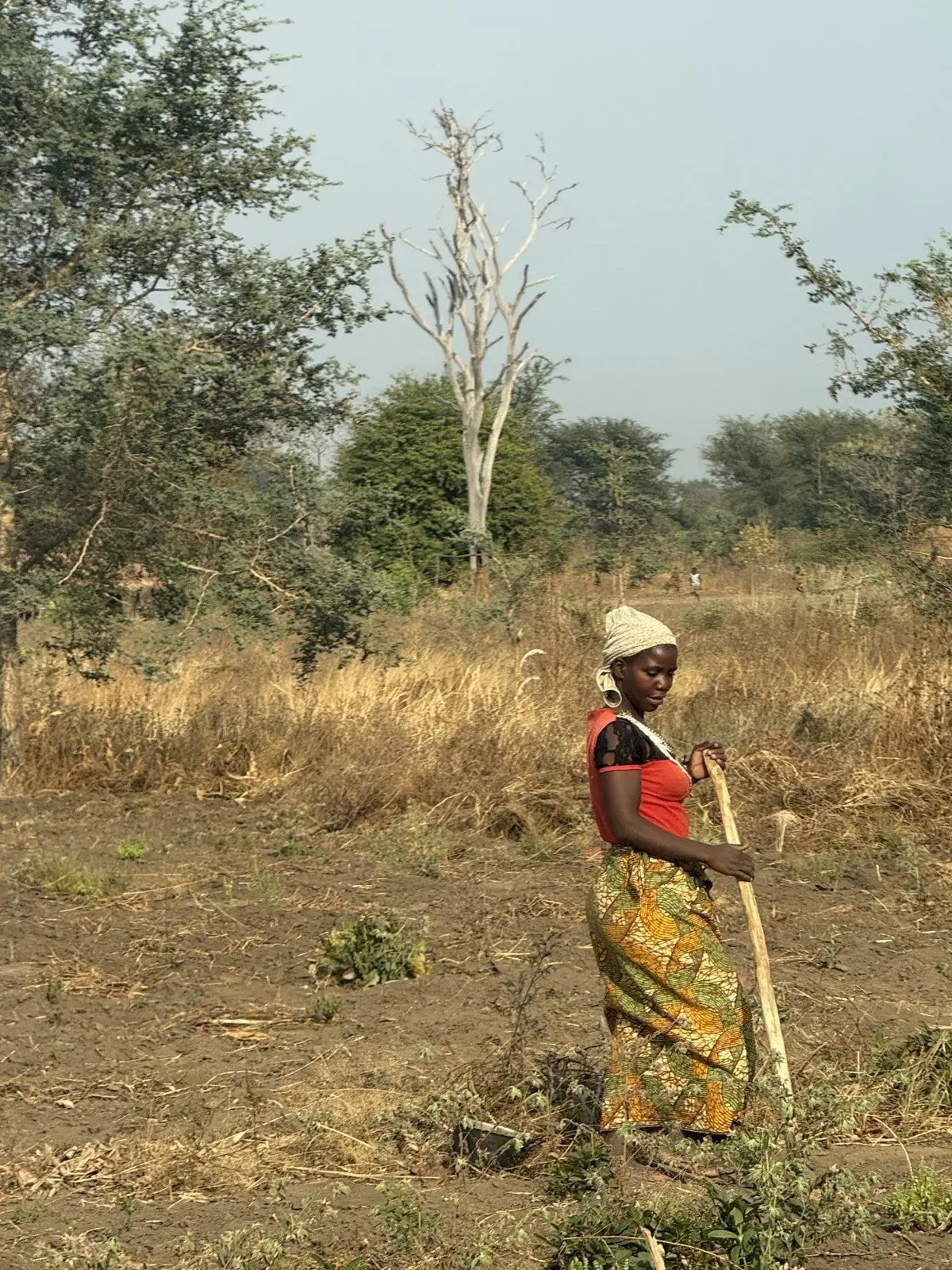 Photo: The Bushcamp Company
Why it matters as much as anywhere
Africa's most famous parks draw huge numbers of visitors and attract large conservation budgets. Many of the best walking areas are different: wilder, quieter and visited by far fewer people. Places like South Luangwa, Mana Pools, Ruaha and the conservancies of northern Kenya depend on a relatively small number of guests. There, every visitor makes a bigger difference. The fees, the supplements, the jobs and the donations carry a large share of the work of keeping the land protected and the communities around it on side.
So a walking safari is not a lesser contribution to conservation. In the places where walking is the main way people visit, it may be one of the most important.
How to make your walk count
- Choose camps that are open about their impact. Ask what their conservation or community supplement funds.
- Pay your fees with a good heart. They keep the parks and conservancies running.
- Follow your guide's lead on distances and behavior.
- Tell your guide if you spot anything unusual: a snare, an injured animal, a strange track.
- Visit a community project if your camp offers one, and see the work for yourself.
- Give directly to a local conservation group if you want to do more.
- Tip your guide, ranger and camp team. It is part of how their work is valued.
The bottom line
The walking safari began with a chief, a game reserve and the idea that people should benefit from the wildlife around them. Seventy years on, across Africa, every walk still employs guides and rangers, keeps eyes on the ground, funds the parks and their neighbors, and leaves a lighter mark than a wheel. Walk, and you are part of the reason the wild places are still there.
Sources
- Wikipedia, Norman Carr — https://en.wikipedia.org/wiki/Norman_Carr
- The Bushcamp Company, Walking safaris — https://bushcampcompany.com/products/walking-safaris
- Wolf and Croft, Minimizing disturbance to wildlife by tourists approaching on foot or in a car, Applied Animal Behaviour Science (2010) — https://groupware.sinanet.isprambiente.it/parchi-nazionali/library/impatti-attivita-sportive_materiale-da-luciana/wildlife_e_altro/2010_disturbance_kangaroos_on_foot_or_by_car/download/en/1/2010_Disturbance_kangaroos_on_foot_or_by_car.pdf
- Africa Live, How wildlife responds to human disturbance, and what it means for ecotourism — https://africalive.net/article/do-tourists-scare-wildlife-what-the-data-says/
- Zambia Tourism, Conservation South Luangwa — https://www.zambiatourism.com/about-zambia/conservation/conservation-south-luangwa/
- Wildlife Worldwide, Conservation South Luangwa — https://www.wildlifeworldwide.com/journal/conservation-south-luangwa
- KT Press, How Rwanda invested tourism revenues in communities near parks (2022) — https://www.ktpress.rw/2022/08/kwita-izina-2022-how-rwanda-invested-back-rwf7-9bn-of-tourism-revenues-in-developing-communities-near-parks/
- Mongabay, Local conservancies create new hope for wildlife in Kenya's Maasai Mara (2018) — https://news.mongabay.com/2018/03/local-conservancies-create-new-hope-for-wildlife-in-kenyas-maasai-mara-commentary/
- WWF South Africa, Put a Kruger wilderness trail on your bucket list — https://www.wwf.org.za/our_news/our_blog/put_a_post_lockdown_kruger_wilderness_trail_on_your_bucket_list
- ATC News, Il Ngwesi Community Lodge celebrates 20 years — https://atcnews.org/il-ngwesi-community-lodge-celebrates-20-years/
Spotted an error? Tell us. How we classify camps: our methodology.