
Why Walk
Photography on a Walking Safari
A walk gives you photographs a vehicle never will: eye-level animals, tracks, textures and the people you walk with. It also asks you to travel light and put the walk first.
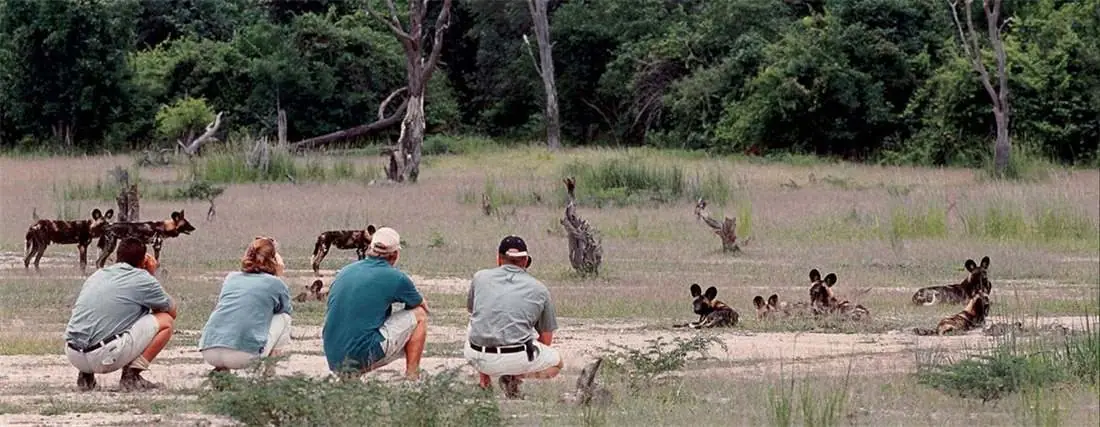 Photo: The Bushcamp Company
What changes on foot
From a vehicle you can carry several lenses, rest them on a beanbag and wait. On foot you carry everything, you are hand-holding, and you are part of a group that keeps moving. Animals also keep a greater distance from people on foot than from a vehicle, so a walk is rarely the place for frame-filling close-ups of big cats.
What you gain is perspective. You shoot at eye level, from the ground the animals walk on, with real foregrounds and real scale. And because the guide stops to explain small things, you get pictures most safari-goers never take.
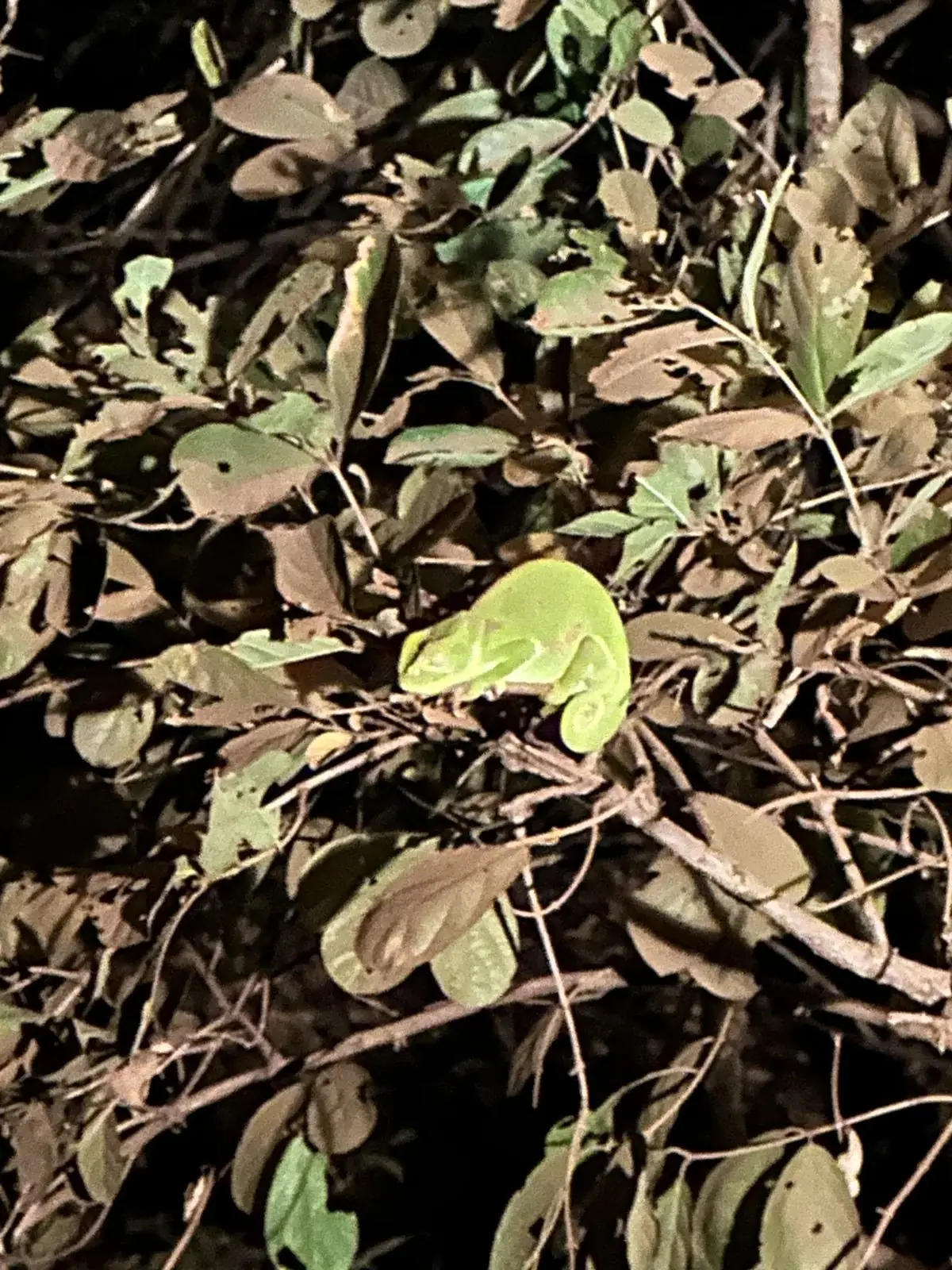 Photo: The Bushcamp Company
What to bring
One body, one lens. A mirrorless camera is lighter than a DSLR, which matters both on foot and on the small aircraft that serve many parks, where luggage limits are often around 20 kg [1].
A versatile zoom. A mid-range zoom (around 24–105 mm) is ideal for landscapes, groups and nearby animals. If you want wildlife at a distance, a light telephoto zoom (around 100–400 mm) with image stabilization is the most useful single lens [1]. Choose one; do not carry three.
A phone is fine. For landscapes, close-ups of tracks and people in the scene, a modern phone does a good job and weighs nothing.
Small extras: a spare battery and memory card in a pocket, a lens cloth for dust, and a soft strap so the camera rides quietly. Leave the tripod at camp.
How to shoot on a walk
Get the settings right before you set off. Fast shutter, auto ISO, continuous autofocus. You will not have time to fiddle when something appears.
Shoot during stops, not on the move. When the guide stops the group, that is your moment. Keep your place in the line and shoot from where you are.
Stay low and still. If the guide crouches, crouch. A lower angle often makes a better picture anyway.
Be quiet. Silent shutter modes are worth using; the click of a mirror can turn an animal's head the wrong way.
Respect the distance. The guide decides how close the group goes. Never edge forward for a better angle.
Know when to put it down. If the guide signals you to move, or an animal is unsettled, the camera goes down at once [2]. The most memorable moments of a walk are often the ones you watch rather than photograph.
Pictures a walk does best
- Tracks and signs: a fresh lion print, a dung beetle at work, a termite mound, a bird's nest.
- Small life: chameleons, insects, flowers and fungi that you would drive straight past.
- The landscape: open floodplains, river crossings, great trees, with walkers in the frame for scale.
- People: your guide reading a track, the group in single file, tea under a tree.
- Light: early-morning light is soft and warm, and walks start at first light.
Combine walking and driving
The best photographic trips do both. Walk in the morning for intimacy, scale and the small things; drive in the afternoon and evening for big-animal portraits, sunset and the night drive. A Walking Camp, where walking and driving are equal choices, gives you both. See Walking Safari vs Game Drive: Why the Best Trips Do Both.
The bottom line
Travel light, shoot fast and quietly, and let the walk lead. You will come home with pictures that look and feel different from everyone else's safari photos, because you took them standing on the ground.
Sources
- African Safari Mag, Safari photography — https://www.africansafarimag.com/safari-photography
- Responsible Travel, Safety and practicalities on a walking safari — https://www.responsibletravel.com/holidays/walking-safaris/travel-guide/safety-and-practicalities
Spotted an error? Tell us. How we classify camps: our methodology.