
Why Walk
Walking Safari Etiquette: How to Behave on Foot
A walking safari has very few rules, and every one of them has a reason. Learn them before your first walk and you will be the guest every guide hopes for.
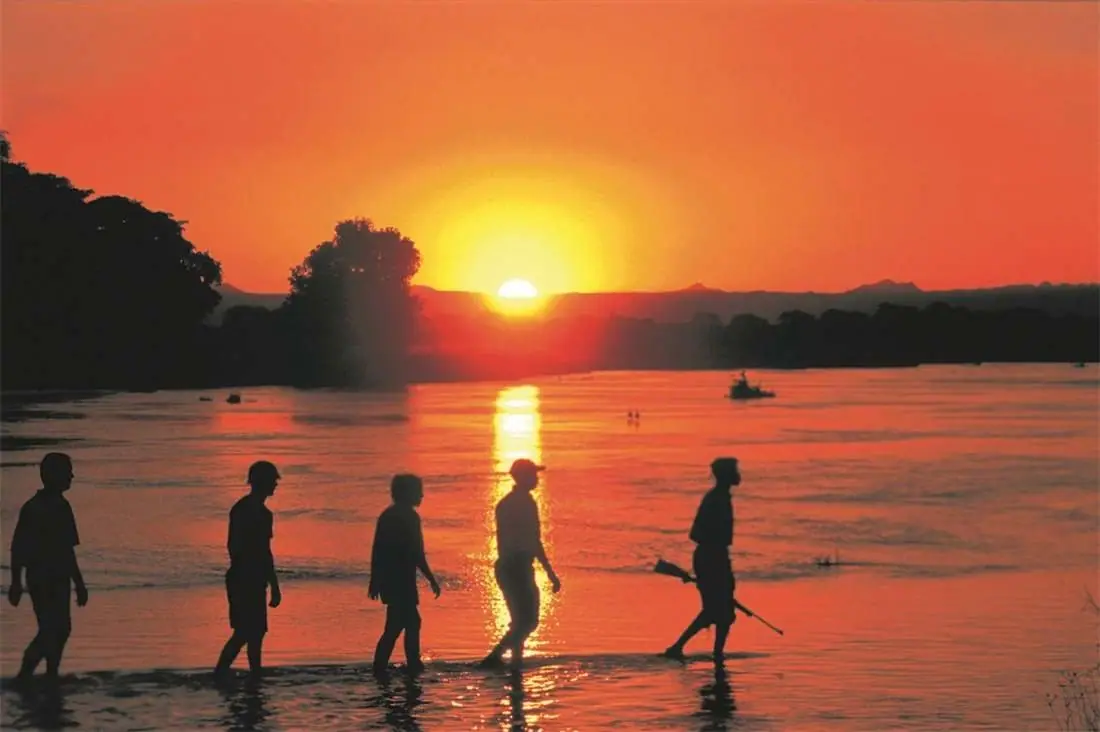 Photo: The Bushcamp Company
Why the rules matter
On a game drive, animals see the vehicle, not the people in it. On foot, you are part of the scene. A group of quiet, slow-moving people in a line looks like one large, calm animal, and most wildlife watches it, then carries on. A scattered, noisy group looks unpredictable, and that is when animals get nervous.
Almost every rule on a walking safari comes back to that: look like one calm unit, and let the guide read the situation.
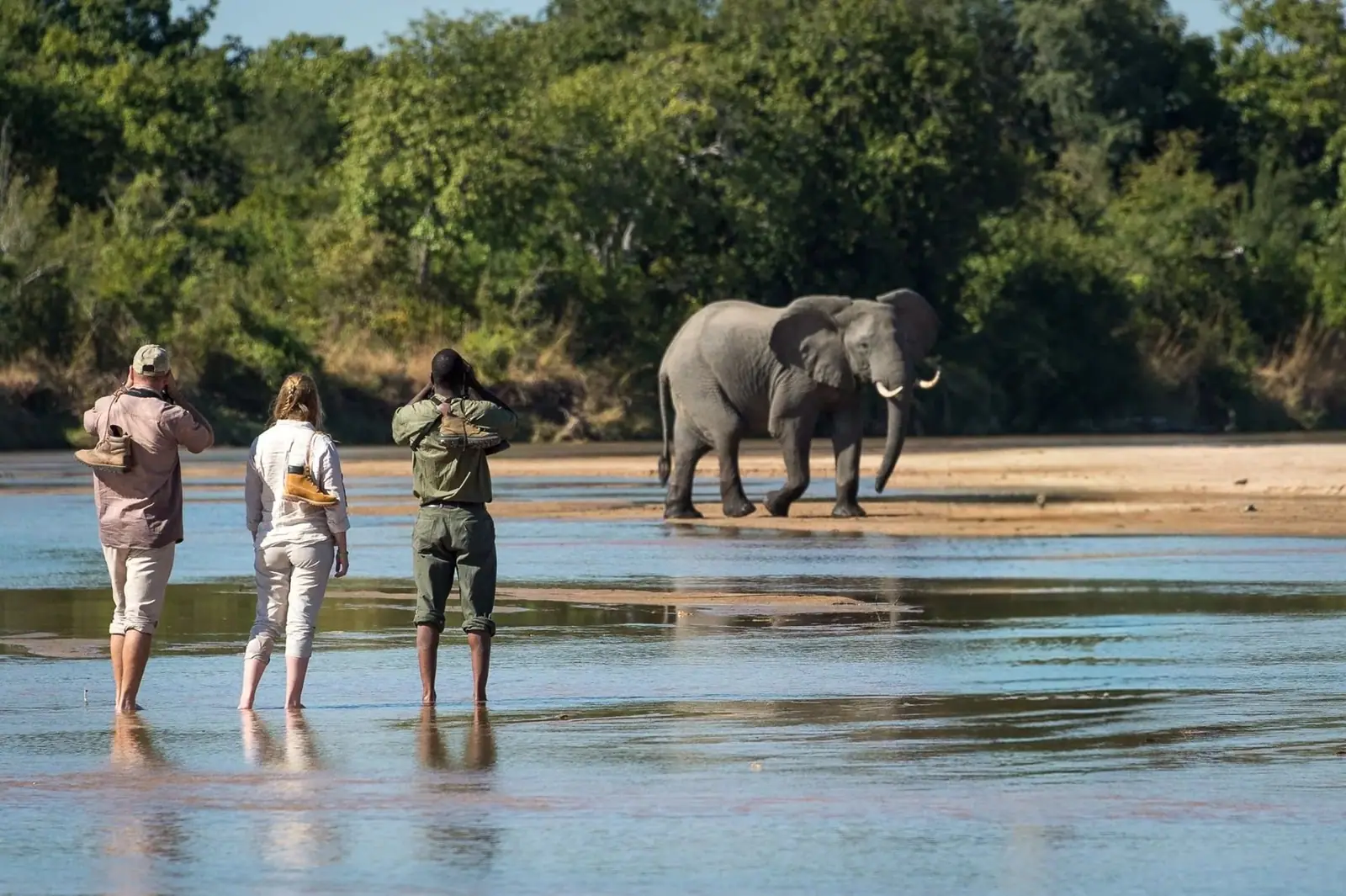 Photo: The Bushcamp Company
Before you set off
The briefing. Every walk starts with one. The guide explains the order of the line, the hand signals for stop, come forward and crouch, and what to do if an animal becomes startled or aggressive [1]. Listen even if you have walked before: each guide and each area is a little different.
Tell the guide about anything that matters. A bad knee, a fear of heights on a riverbank, a heavy camera. It changes how they plan the route.
Dress for the bush. Muted bush colors blend in. White stands out to animals, bright colors do too, and dark blue and black attract tsetse flies in parts of Zambia and elsewhere [2][3]. Choose closed, comfortable shoes you have already walked in. See What to Wear on a Walking Safari.
Leave the extras behind. No scent, no rustling plastic bags, phone on silent.
On the walk
Single file, close together. Walk directly behind the person in front, a couple of paces back. Keep the line tight so it stays one shape [1]. In Zambia's national parks, an armed government scout walks with every group, and the guide leads [2].
Quiet voices. Whisper, and save questions for the stops. The quieter the group, the more you hear and the closer you get. Silence is half of what a walk gives you.
Watch the guide, not just the view. The guide is reading the wind, the tracks and the animals' body language the whole time. When they stop, you stop. When they crouch, you crouch.
Stay in your place. Do not step out of the line for a better angle or wander ahead. If you need to stop, tell the person in front in a whisper so the line stays together.
Go slowly. A walk is not a hike. A typical morning covers 3–5 km over three to four hours, with many stops, and much of the time is spent learning about tracks, plants and smaller animals rather than walking [4].
If an animal reacts
This is rare, and guides plan walks so it stays that way. They approach downwind, keep a respectful distance and back off long before an animal is uncomfortable. But knowing what to do is part of the etiquette.
- Stop and stand still when the guide signals. In one widely shared account of a lion encounter, the whole group "just froze and stood completely still" as instructed [1].
- Stay together behind the guide. A tight group looks bigger and more confident.
- Never run. Running triggers a chase response in predators and turns you from part of a group into something to follow.
- Do exactly what the guide says, at once. That may be to back away slowly, to move to the trees, or simply to wait [1].
- Keep quiet. No shouting, no sudden movements.
Most "charges" are mock charges: a warning, not an attack. The guide's calm and the group's stillness are usually all it takes for the animal to turn away.
Photography on foot
Taking pictures is welcome, but the walk comes first. Keep the shutter sound quiet, never stop the line for a shot, and put the camera down the moment the guide asks you to move [1]. For more, see Photography on a Walking Safari.
Respect for the place
- Take everything out that you brought in.
- Do not pick plants or move things like bones and shells without asking the guide.
- Do not get closer to animals than the guide decides. The distance protects you and the animal.
- Tip the team, not just the guide, where tipping is the custom: the scout and the tea porter are part of the walk.
The bottom line
Listen to the briefing, walk in single file, keep quiet, stop when the guide stops and never run. Follow those five and you will have the best kind of walk: one where the animals barely notice you, and you notice everything.
Sources
- Responsible Travel, Safety and practicalities on a walking safari — https://www.responsibletravel.com/holidays/walking-safaris/travel-guide/safety-and-practicalities
- The Bushcamp Company, Walking safaris — https://bushcampcompany.com/walking-safaris/
- Zambia Tourism, Insects, mosquitos and tsetse flies in Zambia — https://www.zambiatourism.com/self-drive/insects-and-mosquitos/
- Kafunta Safaris, Walking safari Zambia: what to know — https://kafuntasafaris.com/walking-safari-zambia-what-to-know/
Spotted an error? Tell us. How we classify camps: our methodology.