
Why Walk
Why Your Guide Matters Most on a Walking Safari
Three things shape a safari: where you go, where you stay, and who guides you. The third can outweigh the other two.
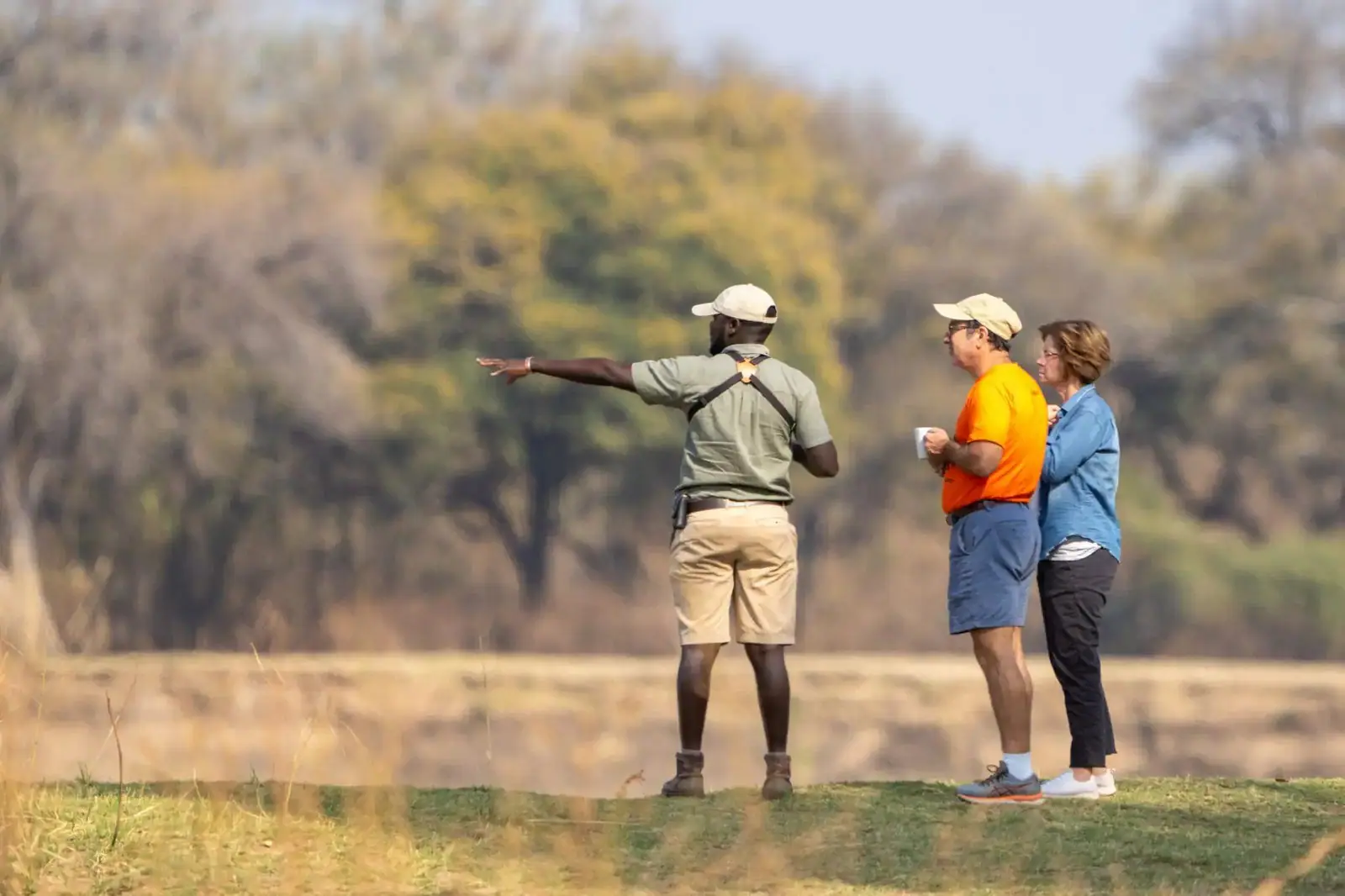 Photo: Lion Camp
The three things that make a safari
Ask anyone back from a safari what made it, and the answers fall into three groups.
The destination. The park, its landscape and the quality of its game viewing. Some parks are famous for predators, some for great herds, some for wilderness without other vehicles. The season matters as much as the place.
The lodging. The camp or lodge, its food, its comforts and, above all, how it makes you feel. Some travelers want to feel pampered, some want to feel they are sleeping in the wild, and many want a little of both: a comfortable bed in a tent with only canvas between you and the night.
The guide. The person who takes you out each morning and evening, finds the animals, explains what you are seeing, and keeps you safe.
The first two are what most people compare when they book. The third is the one they talk about when they get home.
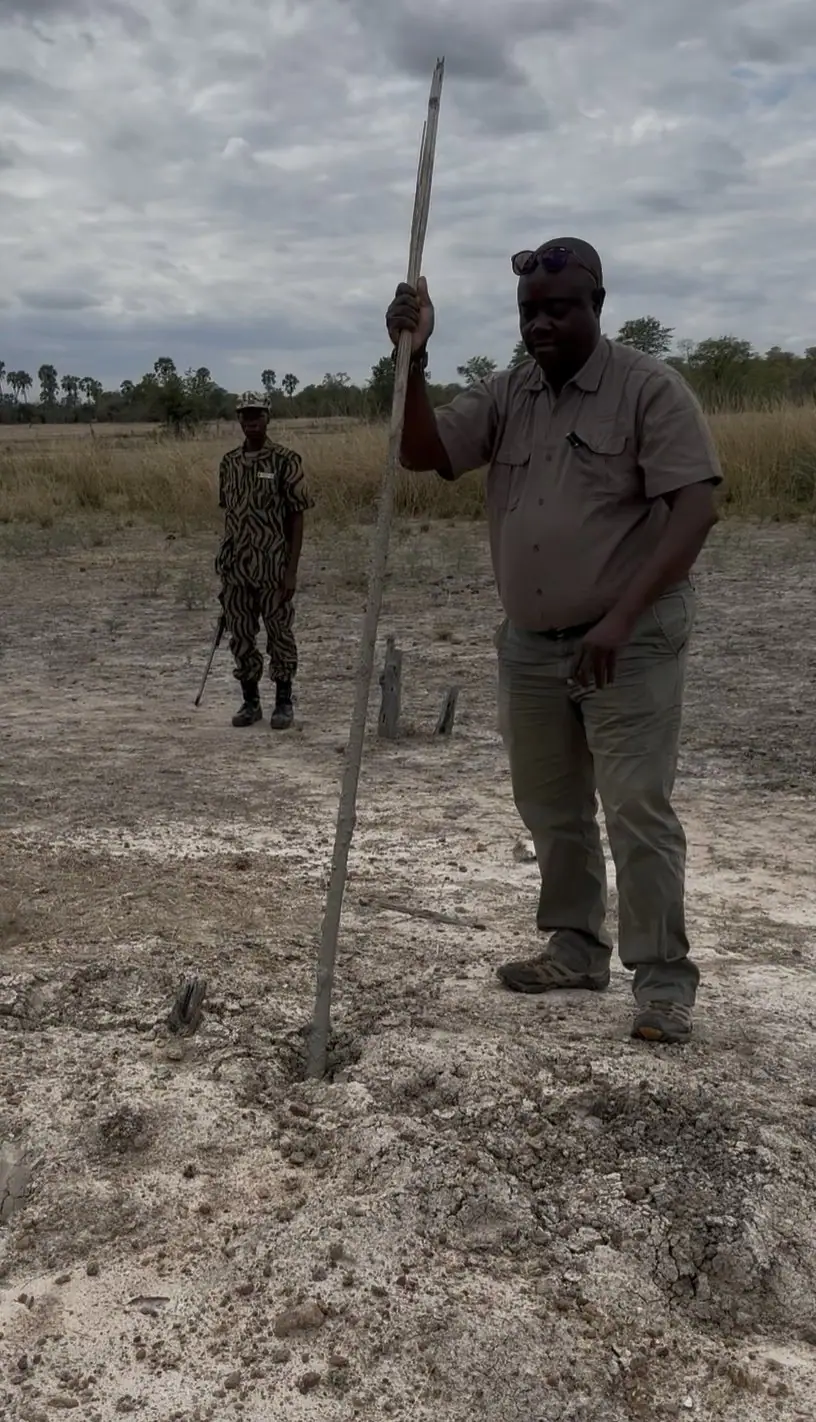 Photo: The Bushcamp Company
Why the guide can outweigh everything else
A great park guarantees nothing. Animals move, weather turns, and some days are quiet. On those days a good guide still makes the morning memorable: a set of fresh tracks read like a newspaper, the story of a termite mound, the alarm call that tells you a leopard is near before you ever see it.
A great lodge cannot make up for a guide who drives from sighting to sighting with little to say. And a simple camp with a brilliant guide is often the one guests remember most fondly. The guide is the one part of a safari that can lift everything else, or let it down.
Why it matters even more on foot
On a game drive the vehicle does a lot of the work. Animals are used to it, it gives you height and distance, and it can move away quickly. On foot there is none of that.
On a walk, the guide is:
- Your eyes and ears. Spotting the buffalo lying in long grass, the elephant behind the thicket, the snake on the path.
- Your interpreter. Most of what you meet on foot is small: tracks, dung, birds, insects, plants. Without a guide to explain it, a walk is just a walk. With a good one, the bush comes alive.
- Your safety. Reading the wind, the ground and an animal's mood long before you notice anything, and keeping the group at a distance the animal will accept. A well-led walk should never need the rifle.
That is why walking guides train for years, and why in most countries a second armed person walks with the group. See Who Leads Your Walk? for how each country licenses them.
How walking guides train
Training differs by country, but the best systems share a long apprenticeship, hours logged on foot, and a hard practical test.
- Zambia. Guides hold a Professional Guide's License; an apprentice may not take clients on walks without a licensed professional guide [1]. Walking is tested as a separate skill in park-level guide exams [2], and walking guides are commonly reported to train for about two years before earning a walking license [3]. An armed government scout from the Department of National Parks and Wildlife (DNPW) walks with every group in a national park [3].
- Zimbabwe. A full Professional Guide must pass written exams, serve an apprenticeship of at least two years, pass a dangerous-game shooting test and an oral exam, and complete a seven-day practical proficiency exam held once a year [4][5]. The license is widely described as one of the most demanding in Africa, with high dropout and failure rates [5][6].
- South Africa. FGASA trails guides log 200 hours on foot as apprentices, including at least 40 dangerous-game encounters, before they may lead [7]. The senior Professional Trails Guide grade requires at least 600 walking hours and 300 dangerous-game encounters [8].
- Kenya. The Kenya Professional Safari Guides Association grades guides Bronze, Silver and Gold. Gold needs at least six years' experience and is rare [9].
- Botswana. Guides hold a government Professional Guide license, renewed each year after theory and practical exams [10].
A license is the minimum, not the measure. The best guides keep learning long after they qualify.
What makes a great walking guide
1. Deep knowledge of the natural world
Not just the names of animals and birds, but trees, grasses, insects and the soil itself, and how they all fit together. Why the elephants are in this patch of woodland this month. Why the puku gather on that floodplain. What the fruiting of one tree means for half a dozen animals. A great guide sees an ecosystem, not a checklist.
2. The ability to read the bush
Tracks, dung, broken branches, flattened grass, the smell of an animal on the wind, the alarm calls of birds and monkeys. On foot, this is how you find animals, and how you avoid surprising them.
3. Attention to safety
Briefing every guest before setting out. Positioning the group, watching the wind, keeping a disciplined distance, and turning back without hesitation when an animal shows it is uncomfortable. A good walking guide is calm, alert and in charge, and makes it look easy.
4. Communication
Clear instructions when they matter, and silence when it matters more. Explaining things at the right level for each guest, whether a first-timer or a lifelong birder. Listening as well as talking.
5. Storytelling
The best guides bring the bush to life: the history of the valley, the lives of the animals you are watching, the old guiding tales, the things they have seen in decades on foot. A good story turns a sighting into a memory.
6. Experience
There is no substitute for years on foot in big-game country. Experience shows in small things: where a guide chooses to stand, how early they read a situation, how relaxed the group feels. Ask how long your guide has been walking, not just guiding.
7. Consideration
For guests: setting a pace that suits the group, checking in on the person at the back, knowing when someone has had enough. For animals: never pushing for a closer look, never disturbing an animal for a photograph, and leaving every sighting as it was found.
8. Patience and flexibility
The ability to sit quietly for half an hour waiting for something to happen, and to change the plan when the bush offers something better. Great guides shape each outing around what their guests most want to see and learn.
9. Humility
The best guides are the first to say "we don't know" and the first to back away. Respect for the animals, and for the limits of what anyone can predict, is the mark of a master.
Where the great walking guides are
South Luangwa, Zambia. The commercial walking safari began in the Luangwa Valley in the early 1960s (see Who Invented the Walking Safari?), and generations of guides have learned their craft there since. The park also has more walking-led camps than any other we track, about half of its commercial camps [11]. More walking camps means more guides who walk every day, season after season. The result is a deep guiding culture, and more than its fair share of excellent walking guides.
Zimbabwe. The Professional Guide license sets a very high bar, and the guides who earn it, particularly in Mana Pools and Hwange, are among the most respected in Africa [5][6].
Everywhere else. Kenya, Tanzania, South Africa, Botswana and Malawi all have their own masters: handfuls of guides who have devoted their lives to the craft. They are worth seeking out wherever you go.
Questions to ask before you book
- Who will guide us, and how many years have they been leading walks?
- What license do they hold?
- Will the same guide be with us for the whole stay?
- How many guests walk with each guide?
- Can we spend a whole morning on foot, or tailor walks to what we most want to see?
A good camp will be proud to answer. And if a guide made your trip, tell the camp. Guides are the heart of every safari, and they deserve the credit.
From The Bushcamp Company's Guide to the Luangwa: Why South Luangwa's Guides Are Some of the Best in Africa
Sources
- ZambiaLII, Statutory Instrument No. 46 of 2003, Zambia Wildlife (Licences and Fees) Regulations — https://zambialii.org/akn/zm/act/si/2003/46/eng@2003-05-09/source
- Zambia Tourism, Lower Zambezi guide exams (Conservation Lower Zambezi, April 2014) — https://www.zambiatourism.com/?p=9968
- Kafunta Safaris, Walking safari Zambia: what to know (Feb 2025) — https://kafuntasafaris.com/walking-safari-zambia-what-to-know/
- ZPGA, Education — https://zpga.org/areas-of-focus/education/
- Whole Earth Education, Becoming a professional guide in Zimbabwe — https://wholeeartheducation.com/becoming-a-professional-guide-in-zimbabwe/
- Journeys by Design, Wildlife guiding in Zimbabwe — https://journeysbydesign.com/dispatch/194-wildlife-guiding-in-zimbabwe-rigorous-tough-inspiring
- FGASA, What do I need to begin my trails guide journey — https://www.fgasa.co.za/?p=1715
- FGASA, Professional Trails Guide (2023) — https://www.fgasa.co.za/wp-content/uploads/2023/11/FGASA-Professional-Trails-Guide-2023.pdf
- Duma Explorer, Safari guide qualifications: FGASA, KPSGA and TALA — https://www.dumaexplorer.com/blog/safari-guide-qualifications-fgasa-kpsga-tala-wfr
- Government of Botswana, Licence for professional guides — https://gov.bw/natural-resources-and-environment/license-professional-guides
- walkingsafaris.com research: camp directory and walking share by park (November 2026)
Spotted an error? Tell us. How we classify camps: our methodology.